13. Pages and Figures of Dominican History.

The "Pages and Figures of Dominican History" category is dedicated to the history of the Dominican Republic and key historical figures. This section includes materials on Christopher Columbus and his connection to the island, the work of Dominican missionaries, prominent figures in Dominican history, Bartolomé de las Casas's accounts of the colonial period, as well as biographies of diplomats and other prominent figures who influenced the country's political and cultural life.

This category includes articles on events and figures that provide a better understanding of the formation of Dominican society, its colonial past, and the development of the state.

015. CHRISTOPHER COLUMBUS (1451-1506).
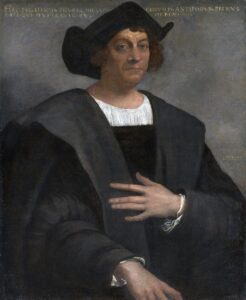
Sebastiano del Piombo. «Портрет, приписываемый Христофору Колумбу», 1519. Metropolitan Museum of Art / Wikimedia Commons, public domain.

Columbus is one of the most famous figures in world history. Yet many mysteries in his life remain unsolved. And the navigator’s fate did not end with his death. Columbus’s travels continued … even after he passed away. The fate of his remains is also unclear and mysterious…


REFERENCE: A Ligurian is a native of Liguria, the historic region surrounding Genoa. In the language of the 16th century, the antipodes was a poetic name for a distant edge of the world—the New World, America.


His appearance remains a mystery as well. Not a single portrait of Columbus was painted during his lifetime. They were created later, based on descriptions left by his contemporaries.
016. Columbus’s travels after death.

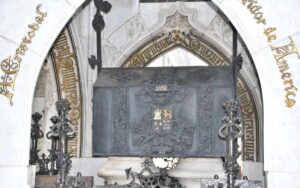
Саркофаг Христофора Колумба в Мавзолее Фаро-а-Колон в Санто-Доминго. Доминиканская Республика

Surprisingly, the travels of Christopher Columbus continued even after his death. In 1506, Columbus died in the small Spanish city of Valladolid, where he was buried. But his journeys (and adventures) did not end there…


Some time later, the navigator’s remains were transferred to a monastery near the city of Seville. About thirty years passed… In 1537, at the request of the widow of Columbus’s son, the remains of Christopher Columbus and his son Diego were placed aboard a ship and transported to the island of Hispaniola, where they were interred in the crypt of the Cathedral of Santo Domingo. Later, the island came under French control, and it was decided that the Admiral should be reburied on Spanish territory—namely, in Cuba. Thus, in 1795, Columbus once again sailed across the sea aboard a ship and was reburied in Havana Cathedral…

273. Books of the Dominican missionary.

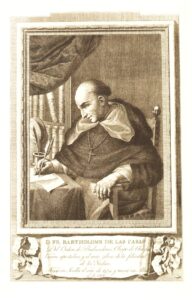
Портрет Бартоломе де Лас Касас в технике гравюры.

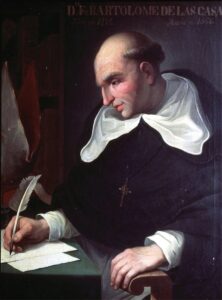
Bartolomé de Las Casas was the author of numerous volumes on the history and ethnography of Central and South America. For fifty-one years, Las Casas lived in Latin America as a missionary—on Cuba, in Venezuela, Guatemala, and on the Caribbean island of Hispaniola. He also served for six years as a bishop in Mexico. The books of Bartolomé de Las Casas are a living chronicle of the discovery of America and its conquest by Spain.


Although Las Casas wrote many books, only one of them was published during his lifetime. It was the treatise “A Short Account of the Destruction of the Indies” (Brevísima relación de la destrucción de las Indias). The work was essentially a report presented in 1542 to Prince Philip, the future King Philip II of Spain. In it, Bartolomé de Las Casas defended the rights and freedom of the Indigenous peoples. Despite the author’s request, both Prince Philip and King Charles V prohibited its publication.

274. Great figures of Dominican history.

Фрай Бартоломе де Лас Касас. Портрет. Сидит за столом. Пишет.

Bartolomé de Las Casas (1474–1566). One of Spain’s most renowned humanist historians. He was born in Seville and received an excellent education by the standards of his time. At the age of twenty-eight, he sailed to Latin America—then commonly known as “the Indies.” He arrived in Santo Domingo. At the age of thirty-seven, he heard a sermon delivered by a Dominican friar who condemned the conquistadors (conquistador—Spanish for “conqueror”) for their inhumane treatment of the native population. That day became a turning point in his life… Bartolomé de Las Casas began his lifelong struggle for the rights of the Indigenous peoples.

285. Sad pages of Dominican history by Bartolomé de Las Casas.

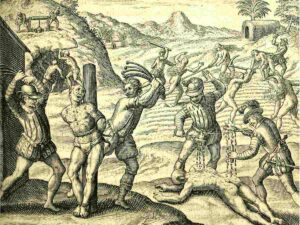
Гравюра 17 века. Жестокость испанских конкистадоров.

Please BE WARNED. This section is best avoided by pregnant women and children. The antique engravings by Theodor de Bry for Bartolomé de Las Casas’s book A Short Account of the Destruction of the Indies (Latin: Narratio regionum Indicarum) depict scenes of violence. They tell of the brutal treatment of the Indigenous people by the Spanish conquistadors. The engravings show how Europeans perceived the tragedy of the native peoples of the Caribbean and Hispaniola…


“Hispaniola” is the old Spanish name of the island on which the Dominican Republic is located. It was the first island reached and settled by European colonists during the great age of Columbus. For the Indigenous people who lived on the island… this turned out very, very badly…

348. Columbus Lighthouse (Faro a Colón).

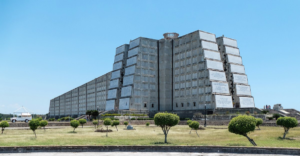
Маяк Колумба (Фаро-а-Колон) в Санто-Доминго. Доминиканская Республика

And one more short posthumous journey of Columbus. A magnificent memorial complex known as the Faro a Colón (Columbus Lighthouse) was built in the capital city of Santo Domingo. It stands on a hill (across the Ozama River) in the eastern part of the city.


It was first conceived in the 19th century. At the 1923 Conference of Latin American Nations, delegates approved the idea of creating a monument honoring “Christopher Columbus—the discoverer of America and benefactor of mankind.” Between 1929 and 1931, several rounds of an international architectural competition were held. A total of 450 architects from 48 countries submitted designs. The winner was the young Scottish architect Joseph Lea Gleave.