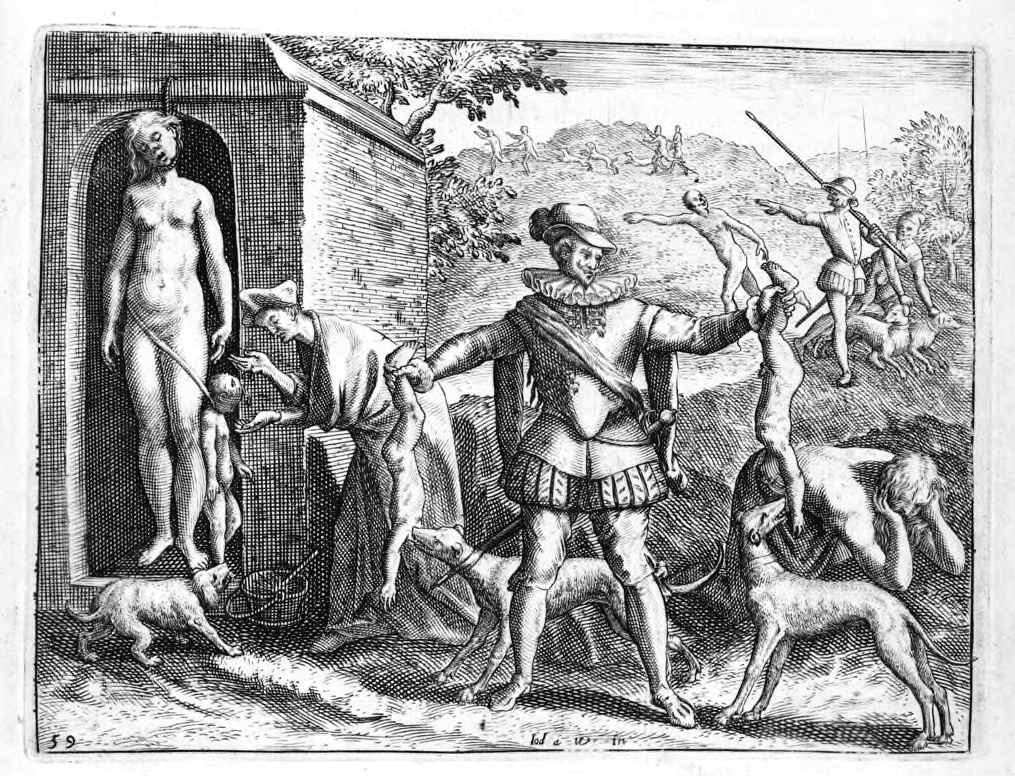
Please BE WARNED. This section is best avoided by pregnant women and children. The antique engravings by Theodor de Bry for Bartolomé de Las Casas’s book A Short Account of the Destruction of the Indies (Latin: Narratio regionum Indicarum) depict scenes of violence. They tell of the brutal treatment of the Indigenous people by the Spanish conquistadors. The engravings show how Europeans perceived the tragedy of the native peoples of the Caribbean and Hispaniola…
“Hispaniola” is the old Spanish name of the island on which the Dominican Republic is located. It was the first island reached and settled by European colonists during the great age of Columbus. For the Indigenous people who lived on the island… this turned out very, very badly…
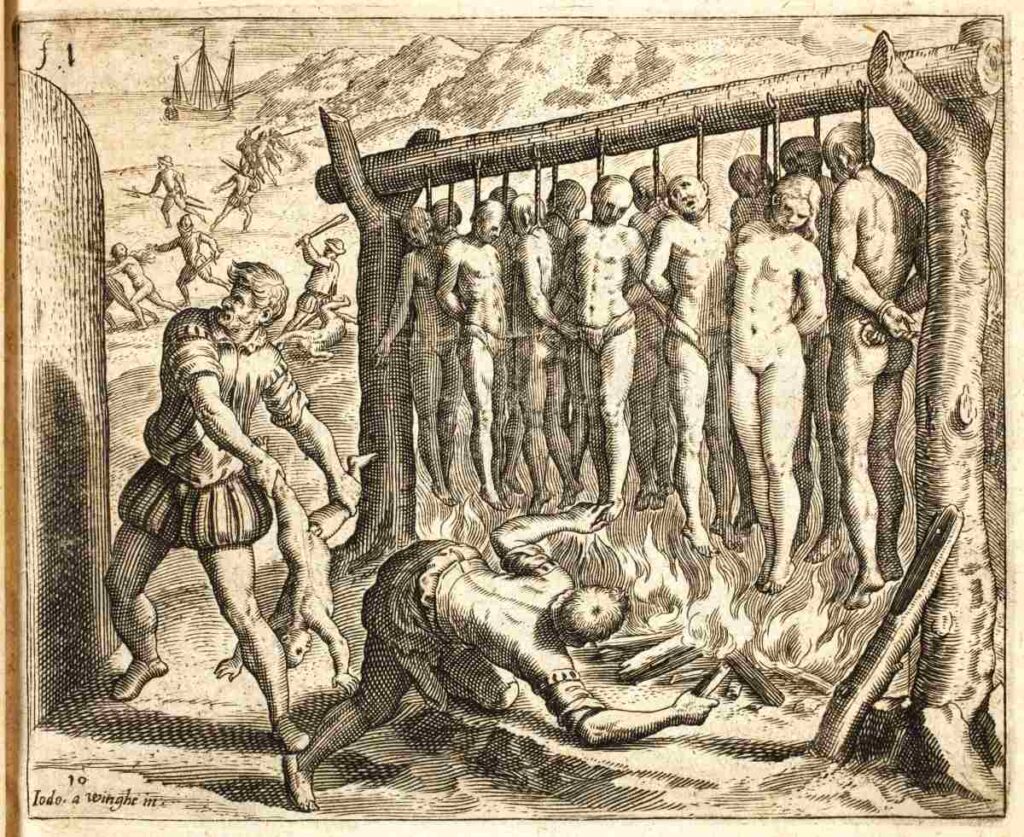
What happened is described in detail in the extensive book History of the Indies. It was written by an eyewitness to those events—Bartolomé de Las Casas. He arrived on the island of Hispaniola with Christopher Columbus’s second expedition… In its time, the book exploded like a bomb. The fact was that the Spaniards portrayed their arrival in the American hemisphere as a great civilizing mission. They had brought civilization to backward peoples… But the accounts of participants and eyewitnesses decisively refute this legend…
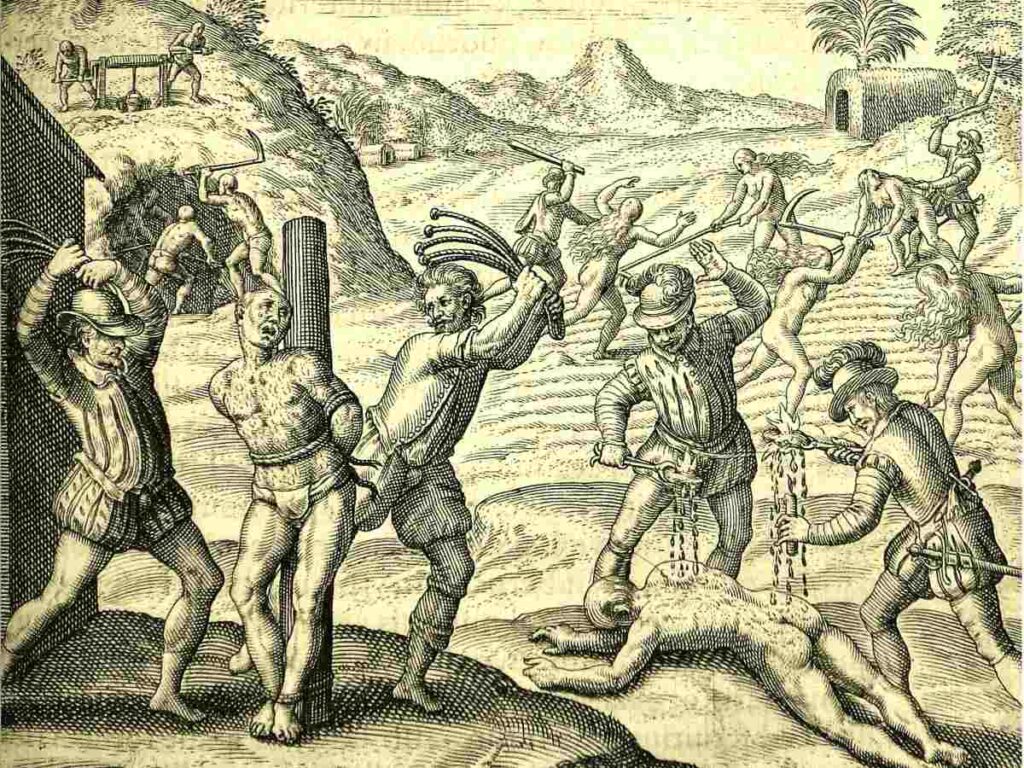
Drawing on what he had seen and experienced, Bartolomé de Las Casas tells the story of the conquest of the Indies. It was a series of wars of aggression, the extermination of the native population, and the ruthless plundering of natural resources. The book History of the Indies is filled with sincere compassion for the Indigenous people. And it is priceless to scholars because it contains a detailed account of their everyday life, customs, and culture.
This is what Las Casas says about those times: “This can only be attributed to divine providence… that despite their [the Taíno people’s] lack of weapons and their extraordinary natural gentleness… they were not lacking in courage… Had they possessed weapons such as ours, and horses, and arquebuses, it would not have been so easy to eradicate their people and wipe them from the face of the earth, as we did…”
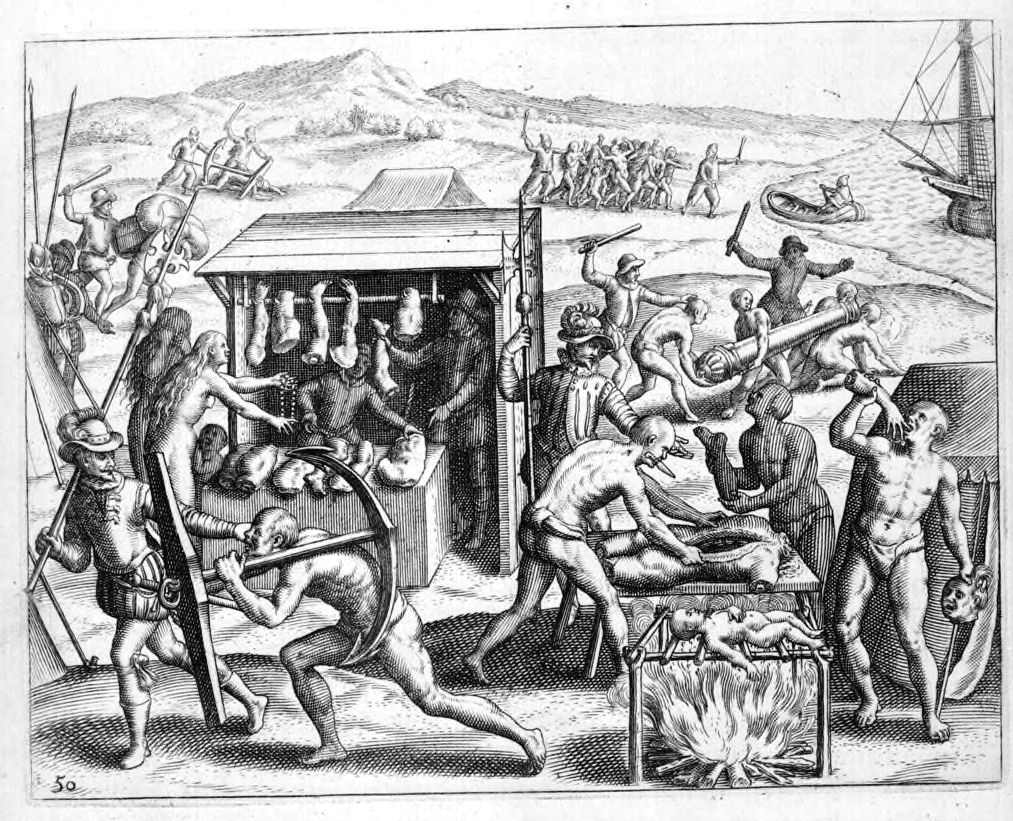
And from the same work: “There were five great Indigenous nations on Hispaniola, ruled by five powerful chiefs… One of these nations was called Xaragua. It was regarded as the center of the whole island. The people of Xaragua were the aristocracy. They were famous for their beauty, refinement, courteous and elegant speech, nobility, and generosity. Their ruler was Behechio, and he had a sister named Anacaona [the widow of the cacique Caonabo, who died as a result of Spanish treachery]. Both of them rendered great services to the monarchs of Castile…
After Behechio’s death, Anacaona became the ruler. The governor of the island [Nicolás de Ovando] arrived there with his army—60 horsemen and 300 foot soldiers… At the governor’s invitation, 300 caciques [chiefs] assembled. He deceived the poor men into entering a thatched hut, then ordered it set on fire, and all of them were burned alive. All the others were cut down with swords, while Lady Anacaona, as a special mark of honor, was hanged!…” (The translation is fairly free, but it accurately conveys the full tragedy of the Taíno people’s situation.) These events in Dominican history are known as the “Xaragua Massacre” of 1503.
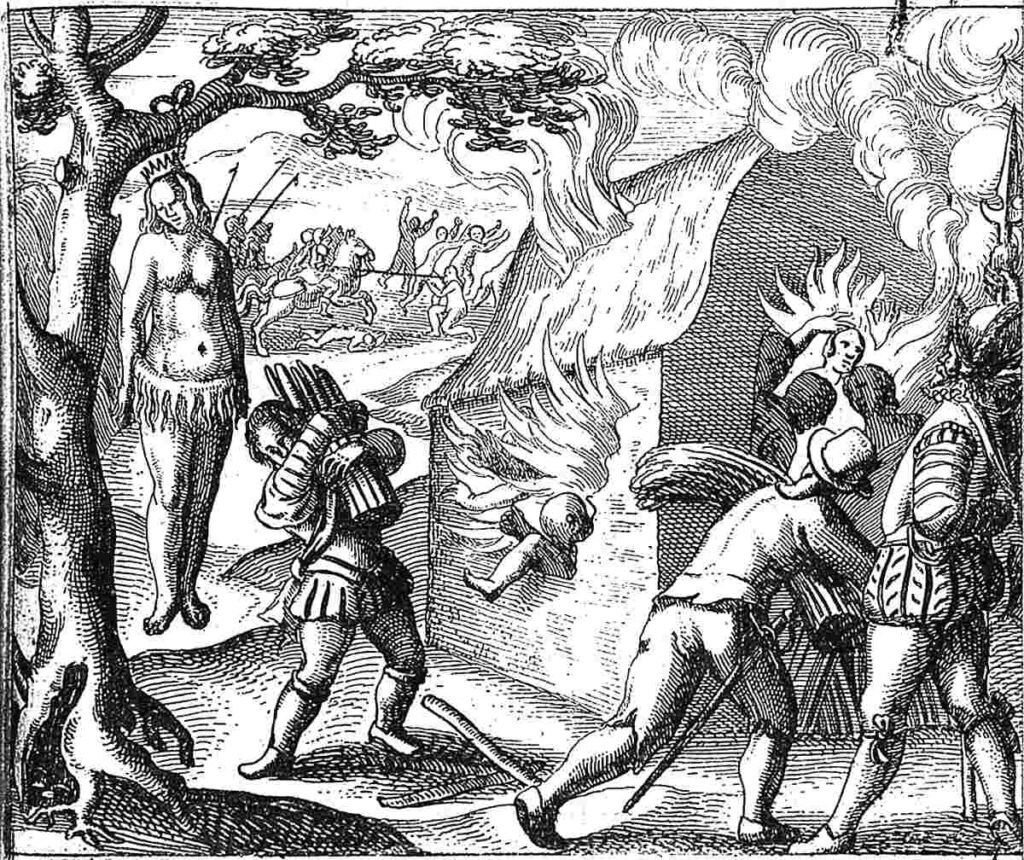
It is said that even after she had been captured, Anacaona responded to everything that had happened with these lines: “Murder does not create respect, and endured tragedy does not cleanse honor. Let us build a bridge of love, so that our enemies may cross it and leave the marks of their heels behind…”
The Indigenous people tried to flee from these unheard-of atrocities, but the governor ordered them all to be captured and enslaved… At that time, the Kingdom of Higüey on Hispaniola was ruled by an elderly queen, Lady Higuanamá. She, too, was later hanged… And so, almost none of the native people remained on the island of the present-day Dominican Republic… Such is the story…