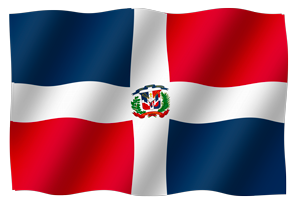
Columbus is one of the most famous figures in world history. Yet many mysteries in his life remain unsolved. And the navigator’s fate did not end with his death. Columbus’s travels continued … even after he passed away. The fate of his remains is also unclear and mysterious…
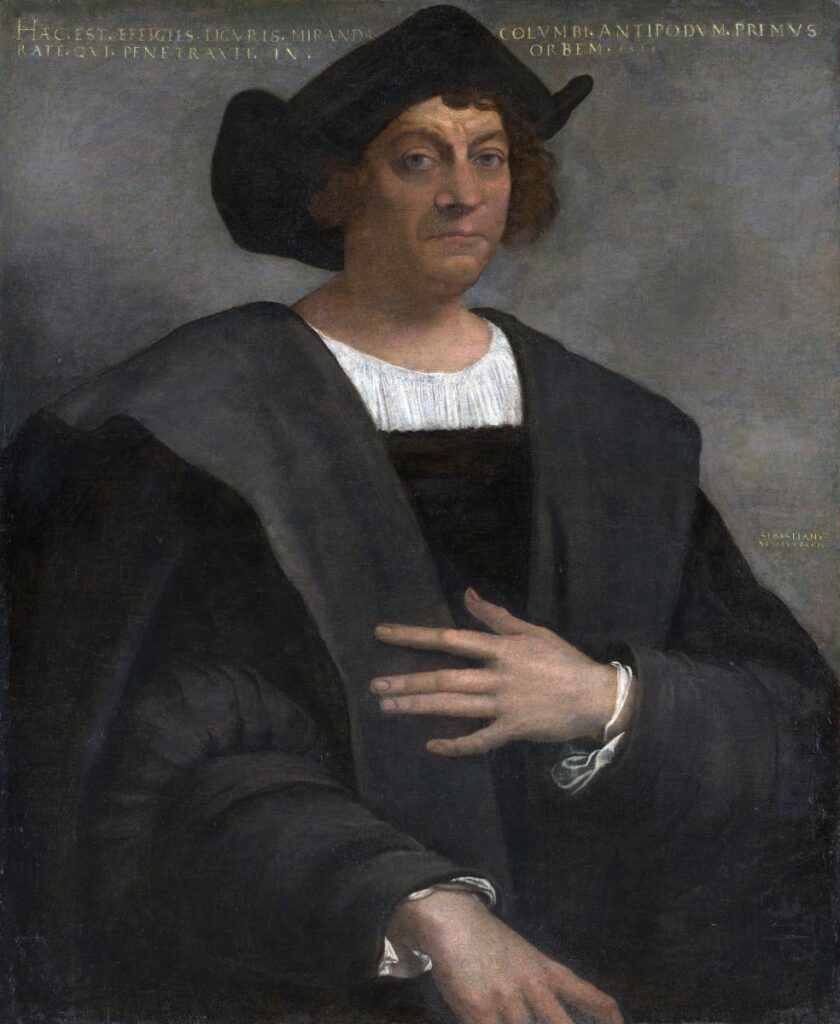
REFERENCE: A Ligurian is a native of Liguria, the historic region surrounding Genoa. In the language of the 16th century, the antipodes was a poetic name for a distant edge of the world—the New World, America.
His appearance remains a mystery as well. Not a single portrait of Columbus was painted during his lifetime. They were created later, based on descriptions left by his contemporaries.
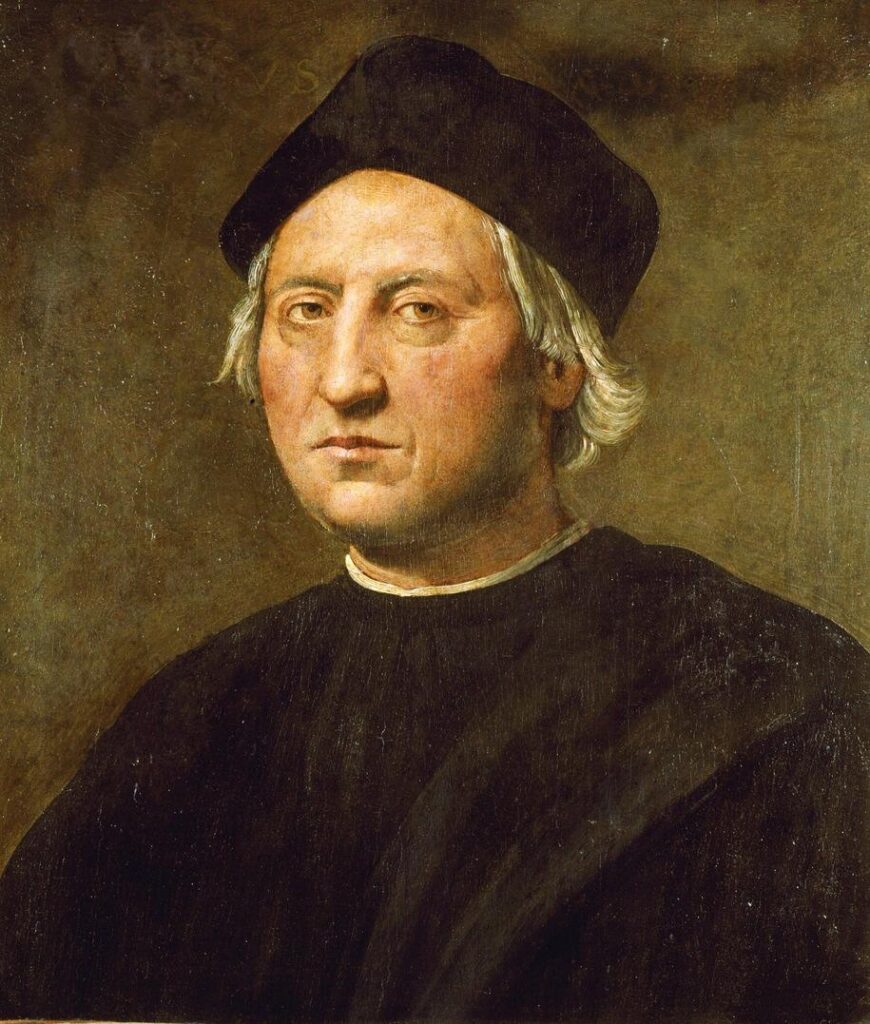
One such description says that Columbus, then in his early forties, “was tall, above average in height, with a long and dignified face, an aquiline nose, blue-gray eyes, and fair skin with a reddish complexion. In his youth, his beard and mustache were reddish, but they turned gray from hardship and toil”… All known portraits of Columbus differ from one another. It is difficult to judge what he actually looked like from them—they are simply too different…
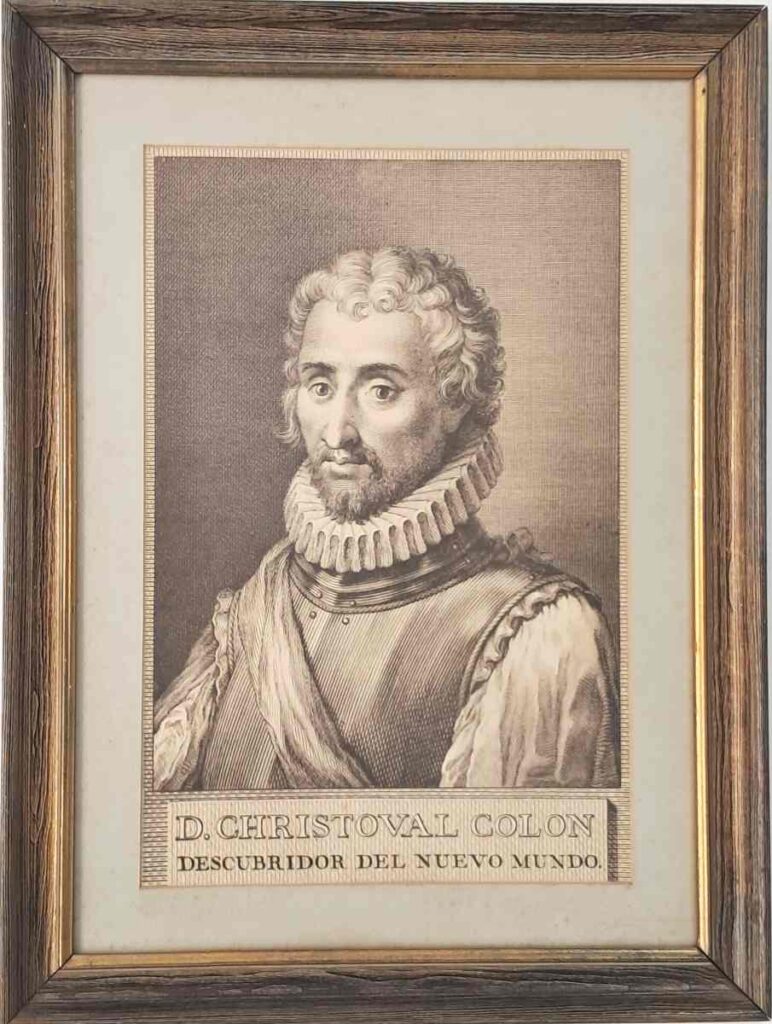
But let us take things in order. We shall begin with his name. It is usually given in several forms: (Latin) Christophorus Columbus, (Italian) Cristoforo Colombo, and (Spanish) Cristóbal Colón. The explanation is simple: this man’s true origin has still not been established.
Most encyclopedias nevertheless describe Columbus as Italian. According to the most widely accepted version, Christopher Columbus was born in the Republic of Genoa, Italy, sometime between August 26 and October 31, 1451. The exact date of his birth remains a matter of debate among historians. But was Columbus really Italian? It is known that he almost never used the Italian language in his letters…
Alternative theories suggest that he came from Corsica, Madeira, Catalonia, Poland… According to one version, Columbus may have been the illegitimate son of someone from the Spanish royal bloodline… A Spaniard of noble birth? Stylistic analysis of his writings, as well as his handwriting, suggests that he was a well-educated and cultured man.
It has also been suggested that Columbus may have been a native of the island of Mallorca. He supposedly concealed this because, in his youth, he had served as captain of a corsair vessel and fought against the King of Aragon—the father of the future Spanish king Ferdinand. Columbus’s letters contain themes resembling those found within the large Christian community that existed on Mallorca at the time.
Interestingly, Columbus once worked in cartography and calligraphy—professions commonly associated with Jews in that era… There is also an opinion that Columbus may not have been so much a highly educated man as a gifted self-taught observer, with a talent for precise observations and bold empirical conclusions…
And perhaps Columbus was guided by religious fanaticism… Since antiquity—through Pythagoras, Aristotle, Eratosthenes, and Ptolemy—the model of a spherical Earth had been considered proven. It was accepted by medieval scholars and church thinkers alike. But Columbus imagined the Earth not as a perfect sphere, but as slightly “pear-shaped,” with a bulge near the Garden of Eden… In his ship’s journal during his third voyage in 1498, he attempted to combine scientific geography with religious cosmology. He assumed that, closer to the elevation on which the Garden of Eden stood, the ocean itself also began to rise—the “Mountain of the Sea”… Powerful currents and strange atmospheric phenomena in that hemisphere strengthened his belief that he had reached the very gates of the Earthly Paradise…
REFERENCE: Columbus’s intuition turned out to be almost correct. Modern science defines the shape of the Earth as a geoid—a figure slightly flattened at the poles due to rotation… And because of gravitational anomalies and the uneven distribution of mass, the Earth really is somewhat “pear-shaped.” The North Pole is slightly flattened, while the South Pole is slightly elongated.
In 1571, “The History of the Life and Deeds of Christopher Columbus” was published in Venice by the Spanish printer Alfonso de Ulloa. He claimed to have translated it from a Spanish original written by the admiral’s second, illegitimate son, Ferdinand Columbus, who died in 1539. The original manuscript has not survived. Ferdinand’s notes and diaries had already been lost by that time… Researchers point to the romanticized details in the narrative as an attempt to embellish Columbus’s origins and life. Debate over the reliability of this biography continues to this day…
REFERENCE: The navigator had only one lawful wife—the Portuguese noblewoman Filipa Moniz Perestrelo. She gave birth to his son Diego Columbus. After her death, his life companion—but not his lawful wife—was the Spanish woman Beatriz Enríquez de Arana, who bore him a son, Ferdinand…
The story of Columbus’s life is a succession of difficult sea voyages and complicated turns of fate. Here is one small detail that helps explain just how difficult it was to organize maritime expeditions… In modern terms, Columbus spent a long time searching for sponsors for his voyages. At first he appealed to Portugal, and then to Spain… At that moment, the Spanish royal couple was occupied with a war. When it ended, Columbus received a vague reply—something like a half-hearted blessing for the undertaking. King Ferdinand maintained that there was no money for sea expeditions and that, therefore, they were impossible. Queen Isabella, on the other hand, reasoned quite practically that additional lands would certainly do no harm, and that she might temporarily pawn her jewels to finance the voyage…
In the end, however, she did not have to do so. Instead, she graciously permitted Columbus to raise funds from state tax revenues that had not yet been paid to Her Majesty, the Queen of Castile… And according to the agreement, Columbus himself was required to cover one eighth of the expenses… although he did not have a penny to his name… And yet the expeditions took place.
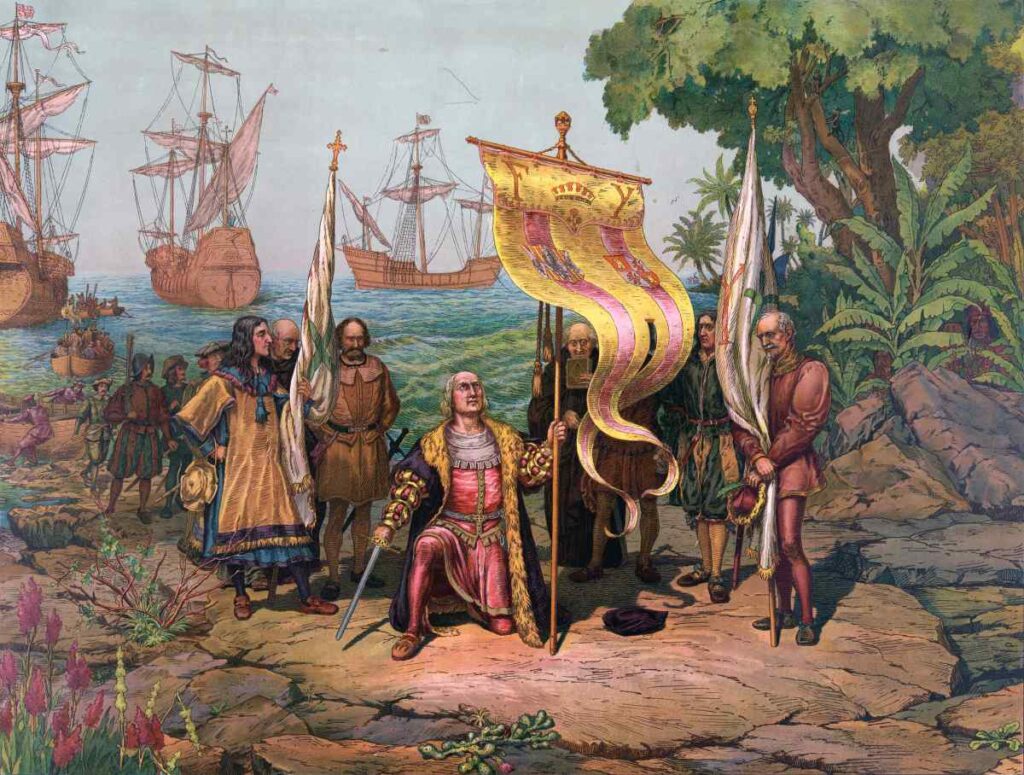
The First Voyage (1492–1493) has survived only in an abridged copy prepared by the chronicler Bartolomé de las Casas. In order to justify the expedition and ensure profits for the Spanish Crown, the Admiral personally controlled trade with the native islanders. Gold, parrots, and cotton thread obtained from the Indians were exchanged for glass beads, little bells, and other inexpensive European trinkets. When peaceful trade was no longer sufficient, it gradually gave way to forced labor. According to Las Casas, Columbus also introduced a system of tribute. Every native over the age of fourteen was required, every three months, to deliver a fixed quota of gold or cotton, receiving in return a small copper token to wear around the neck. Those found without the token, or those who failed to meet the required quota, faced brutal punishments—even execution… Thus tragedy came to the peoples of Hispaniola…
A later letter written by the navigator to a noble lady of the royal court, who enjoyed the special favor of Queen Isabella, has also survived. In it, Columbus attempted to justify himself:
“I solemnly swear that in the Indies there have appeared many people who do not deserve, in the eyes of God and of all the world, the waters of Holy Baptism, and now they are coming here…”
(The newly discovered lands were then known as the West Indies.)
However, this letter was written during the years when Columbus had already fallen out of favor with the royal couple. Historians of the future will still have to unravel the many subtleties and determine how much of this account is genuine…
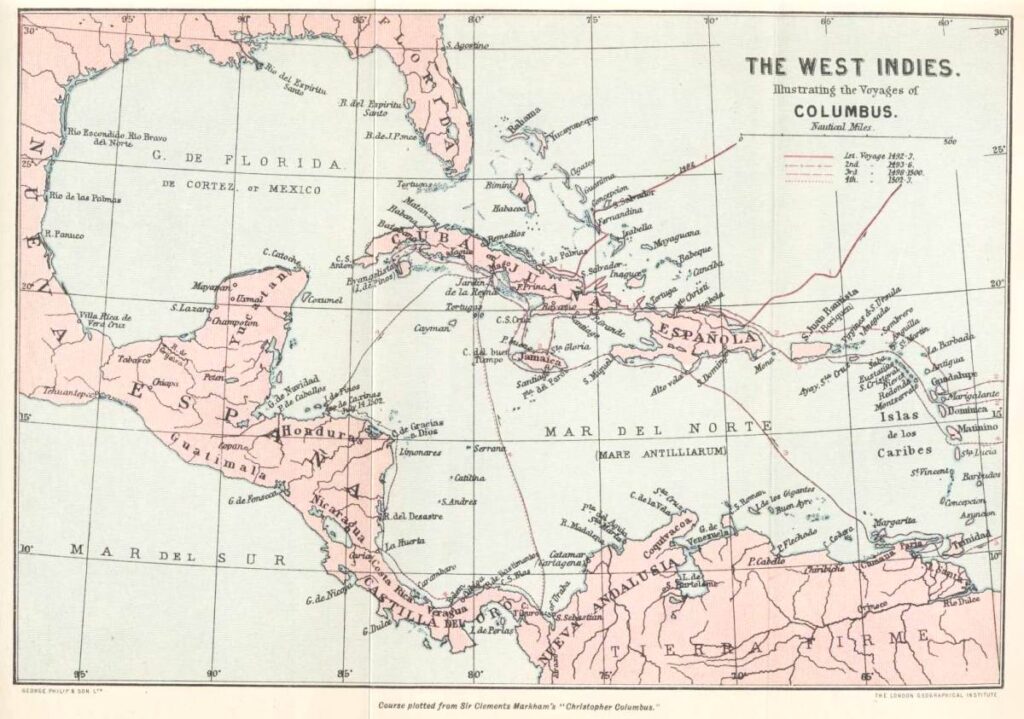
IN BRIEF: THE CHRONOLOGY OF COLUMBUS’S VOYAGES
FIRST EXPEDITION (1492–1493). The total crew numbered about ninety men. Three ships—the Santa María, the Pinta, and the Niña—crossed the Atlantic Ocean through the subtropical zone and reached islands of the Bahamas in October…
On December 6, Columbus discovered the island he named Hispaniola and sailed along its northern coast. At the end of December, the flagship Santa María struck a reef.
In January 1493, aboard the Niña, Columbus completed the exploration of Hispaniola’s northern coast… There was no room for all the sailors on the two remaining ships. Therefore, the wreckage of the Santa María was hastily used to build a small fort where part of the crew could remain. Leaving behind the first Spanish settlement on the island, Columbus returned to Castile in March.
SECOND EXPEDITION (1493–1496). Columbus now sailed as Admiral and Viceroy of the newly discovered lands. This expedition consisted of seventeen ships carrying more than 1,500 men.
In November 1493, Columbus discovered the islands of Dominica and Guadeloupe. Turning northwest, he went on to discover about twenty more islands of the Lesser Antilles. By the end of November he reached Puerto Rico and then returned to the northern coast of Hispaniola. Instead of the settlers he had left behind, he found only ruins—and increasingly hostile natives…
In March 1494, while searching for the gold promised to the Spanish Crown, Columbus launched a military campaign into the interior of Hispaniola, crossing the Cordillera Central mountain range.
In May, with three ships, Columbus sailed along the southeastern coast of Cuba and discovered Jamaica. In June, he turned eastward and surveyed the entire southern coast of Hispaniola.
Throughout 1495, the conquest of Hispaniola continued. From March to June 1496, Columbus returned once again to Castile.
THIRD EXPEDITION (1498–1500). The expedition consisted of six ships, three of which Columbus personally led across the Atlantic.
In July 1498, he discovered the island of Trinidad, entered the Gulf of Paria from the south, and found the mouth of the Orinoco River—thus beginning the European discovery of South America.
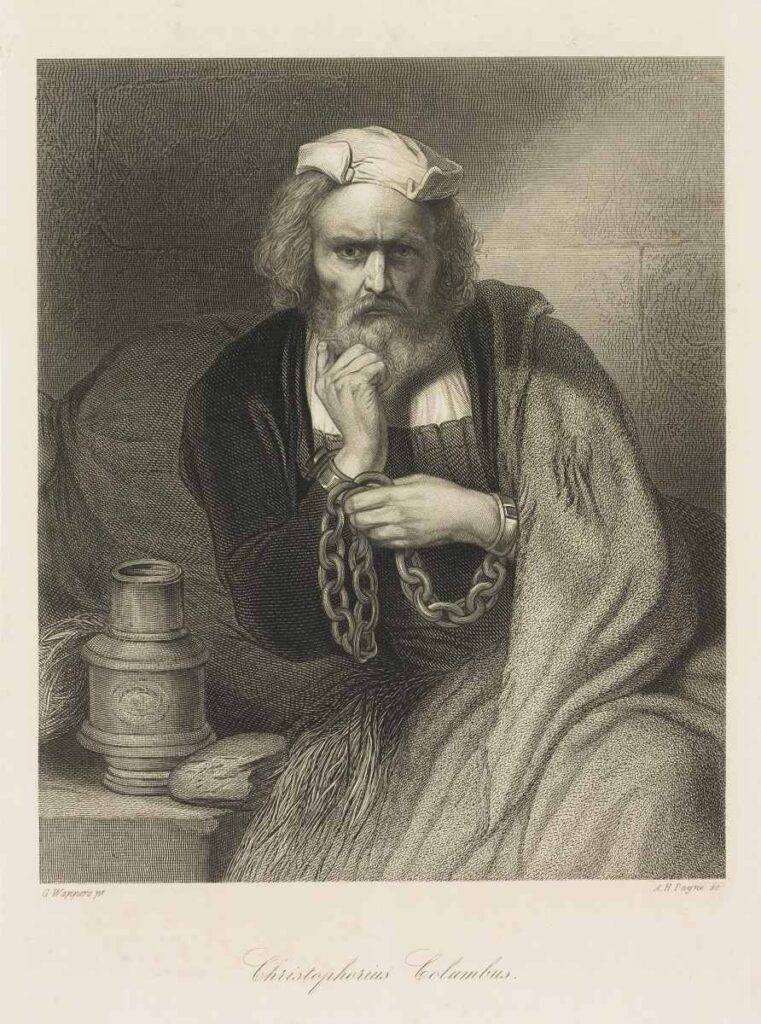
In August, he arrived in Santo Domingo. In 1500, following accusations made against him, Columbus was arrested and sent to Castile in chains, where he was eventually released.
FOURTH EXPEDITION (1502–1504). Having obtained permission to continue searching for a western route to India, Columbus sailed with four ships and reached the island of Martinique. From July 1502 until May of the following year, he explored the Caribbean coasts of Honduras, Nicaragua, Costa Rica, and Panama.
In June 1503, he was shipwrecked off the coast of Jamaica. Help from Santo Domingo did not arrive until an entire year later. Columbus finally returned to Castile in November 1504…
Columbus shared the fate of many outstanding people whose true achievements were recognized only long after their deaths. His biographers often describe the final years of his life as a time of “poverty and oblivion”—although, strictly speaking, he retained both his titles and a certain degree of wealth.
The death of Christopher Columbus passed almost unnoticed by the world. He died convinced that he had discovered nothing more than a new route to the long-known Indies…
Only decades later did scholars gradually come to realize that another, entirely new continent lay between Europe and Asia. Yet even until the end of the 16th century—and well into the 17th century—many people still believed that America was connected to Asia. It took much longer before Columbus finally received the recognition that history would ultimately grant him.
Yet even after his death, the great navigator’s journey was far from over.
According to his will, Columbus was first buried in Valladolid, Spain. A few years later, his remains were transferred to the monastery of La Cartuja near Seville. In 1542, honoring his final wish to rest in the New World, his bones were transported across the Atlantic to Santo Domingo, then the capital of the Spanish colony on Hispaniola.
For more than two centuries, Columbus was believed to rest in what is now the Dominican Republic.
But history took another unexpected turn.
In 1795, after Spain ceded Santo Domingo to France, the Spanish authorities removed what they believed were Columbus’s remains and transferred them to Havana, Cuba. Following the Spanish-American War in 1898, those same remains were taken once again—this time to Seville Cathedral in Spain, where they remain today.
It would seem that the story had finally reached its conclusion.
But it had not.
In 1877, while restoration work was being carried out in Santo Domingo Cathedral, workers discovered a lead casket bearing the inscription:
“Illustrious and Distinguished Man, Don Christopher Columbus.”
Inside were human bones.
The Dominican Republic declared that these were the navigator’s true remains, and that Spain had unknowingly taken someone else’s bones to Havana centuries earlier.
Spain firmly rejected this claim.
To this day, both Spain and the Dominican Republic maintain that they possess the authentic remains of Christopher Columbus.
In 2003, Spanish scientists conducted DNA tests on the remains preserved in Seville. They confirmed that those bones belonged to a close relative of Columbus and were highly consistent with being his own remains.
The Dominican Republic has repeatedly declined proposals for DNA testing of the remains preserved in Santo Domingo, explaining that opening the casket could damage the fragile contents.
As a result, one of history’s greatest navigators still seems to be traveling… even after his death.
Today, visitors to Santo Domingo can pay tribute to Columbus at the magnificent Columbus Lighthouse (Faro a Colón), one of the Dominican Republic’s most famous landmarks. The monumental memorial is believed by the Dominican authorities to house the navigator’s remains.
Whether that belief is historically correct remains one of the greatest unanswered mysteries surrounding Christopher Columbus.
Perhaps future historians—and future science—will eventually solve it.