1. Dominican Republic Overview

A guide to the Dominican Republic: quick facts, nature, climate, people, holidays, history, police, safety, visas, customs, and tourist information. Useful resources about the Dominican Republic for travelers. Reference information for preparing for your trip and getting to know the country in general.

001. Quick FACTS:

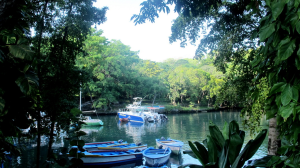
Лагуна Гри Гри Рио Сан Хуан

About the Dominican Republic. It is many different things. Wonderful and surprising, poor and rich, simple and complicated. Different.

QUICK FACTS:

Population: Around 3–3.7 million people live in the capital, Santo Domingo. The population of the entire country is about 11.6 million.

Food: The Dominican Republic produces enough agricultural products to feed itself. And exports quite a lot as well. The quality of the food is excellent. Frozen meat is not sold in the country, only chilled meat.

Tourism: The country welcomes 12 million tourists a year. And the number continues to grow…

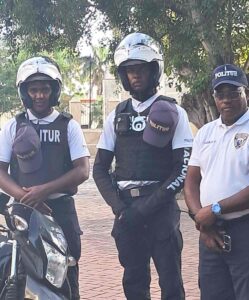
Safety: According to the U.S. Department of State, the Dominican Republic is placed in the same category as popular European destinations such as France and Italy. Travelers are advised to avoid walking alone at night, use reliable transportation, and follow the usual safety precautions… The Dominican Republic has a special tourist police unit called CESTUR. CESTUR provides additional security in the country’s main tourist areas, including Punta Cana, the historic Colonial Zone of Santo Domingo, and Puerto Plata…
007. Independence Day in the Dominican Republic.

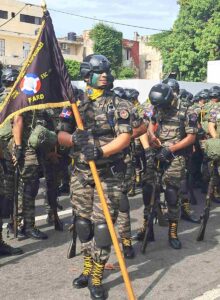
Перед началом военного парада на Малеконе в Санто-Доминго, Доминиканская Республика

MILITARY PARADE.

(A report from Santo Domingo, written in 2009. The photographs are from 2026).


The celebration is supposed to begin at 3:30 p.m. (At least, that is what they promised on the television news.) This year, in addition to the parade of Dominican troops, there is also supposed to be a flyover by Brazilian military aircraft.


We are on the Malecón waterfront. This is where the celebrations are taking place. The broad Avenida George Washington stretches along the waterfront. The shores of the Malecón are a succession of picturesque rocky cliffs. When the sea is rough, Caribbean waves crash against the coastal rocks and scatter beautifully in pearly fans of spray. Immediately beyond the broad coastal avenue begins the first line of the city: many beautiful buildings, enormous hotels, casinos and entertainment centres.

008. CARNIVAL.

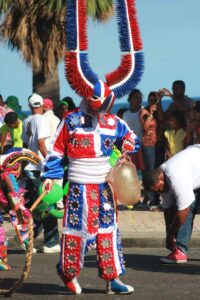
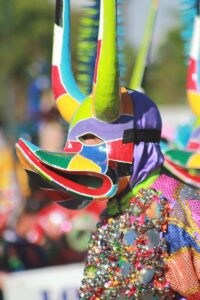
Карнавальные маски и наряды Доминиканской Республики

The main Carnival parade takes place on one of the days following Independence Day. In SANTO DOMINGO, the Carnival festivities are held along the waterfront. The masks you see most often are the Diablos (Devils). They look different in every city, but they all have one thing in common — a frightening devil’s face.


Carnivals here are celebrated on a grand scale. They are not only about bright, expressive costumes, but also about dance performances. There are plenty of beautifully decorated floats and all kinds of theatrical shows.


The masks are made using papier-mâché. The famous Dominican masks are most often created by artists from the city of LA VEGA. It is there that Carnival costumes and masks become especially elaborate — and especially expensive. And only men wear them.

012. POLICE IN THE DOMINICAN REPUBLIC.

Туристическая полиция POLITUR в парке Колон, Колониальная зона Санто-Доминго

The police in the Dominican Republic are friendly and polite. Many visitors have described their impressions in a charming way: Dominican police officers are simply human. They smile at you, try to help, and don’t bother you without reason.


There are several types of police in the country. The Traffic Police regulate road traffic. The National Police (Policía Nacional) are responsible for public safety throughout the country. And to protect and assist those who come to the Dominican Republic as guests, there is the caring Tourist Police — POLITUR. This is a special division that works in resort areas, on beaches, and around major attractions. If you ever run into a problem during your visit, it is usually best to speak with a POLITUR officer. They are used to working with foreigners and generally know how to resolve situations more quickly.

014. HISTORY OF THE COUNTRY.

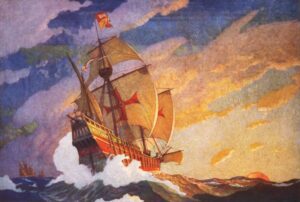
Яркая живописная сцена: парусный корабль Христофора Колумба с крестами на парусах идёт по волнам навстречу восходу солнца.

December 5, 1492. After a long and exhausting voyage across the Atlantic, Christopher Columbus’s ships reached the shore. Thus, the island that the Spaniards named La Española (La Hispaniola) entered European history. At that time the island was inhabited by the peaceful Taíno people, as well as the more warlike Ciguayo and Macorix tribes. In the language of the larger and more developed Taíno civilization, the island was called Quisqueya — “Mother of All Lands.”

Columbus soon sailed back to Spain with joyful news of the newly discovered lands, leaving behind the first European settlers on the island.

130. Dominican Freedom Day. And carnival…

Карнавал в Санто-Доминго, набережная Малекон. Доминиканская Республика

Every year, on February 27, the Dominican Republic celebrates Independence Day on a grand scale. For the country, it is one of the most important national holidays. On this day, freedom-loving Dominicans joyfully celebrate the birth of their own nation — the sunny and peaceful Dominican Republic.

Independence Day commemorates key moments in the country’s history: the division of the island into two independent states — the Dominican Republic and Haiti — and the complete end of the Haitian occupation, followed by liberation from centuries of Spanish colonial rule.


A CHRONOLOGY OF THE HISTORY OF THE ISLAND OF HISPANIOLA (today known as the island of Haiti).