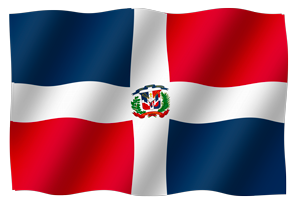
MILITARY PARADE.
(A report from Santo Domingo, written in 2009. The photographs are from 2026).
The celebration is supposed to begin at 3:30 p.m. (At least, that is what they promised on the television news.) This year, in addition to the parade of Dominican troops, there is also supposed to be a flyover by Brazilian military aircraft.
We are on the Malecón waterfront. This is where the celebrations are taking place. The broad Avenida George Washington stretches along the waterfront. The shores of the Malecón are a succession of picturesque rocky cliffs. When the sea is rough, Caribbean waves crash against the coastal rocks and scatter beautifully in pearly fans of spray. Immediately beyond the broad coastal avenue begins the first line of the city: many beautiful buildings, enormous hotels, casinos and entertainment centres.
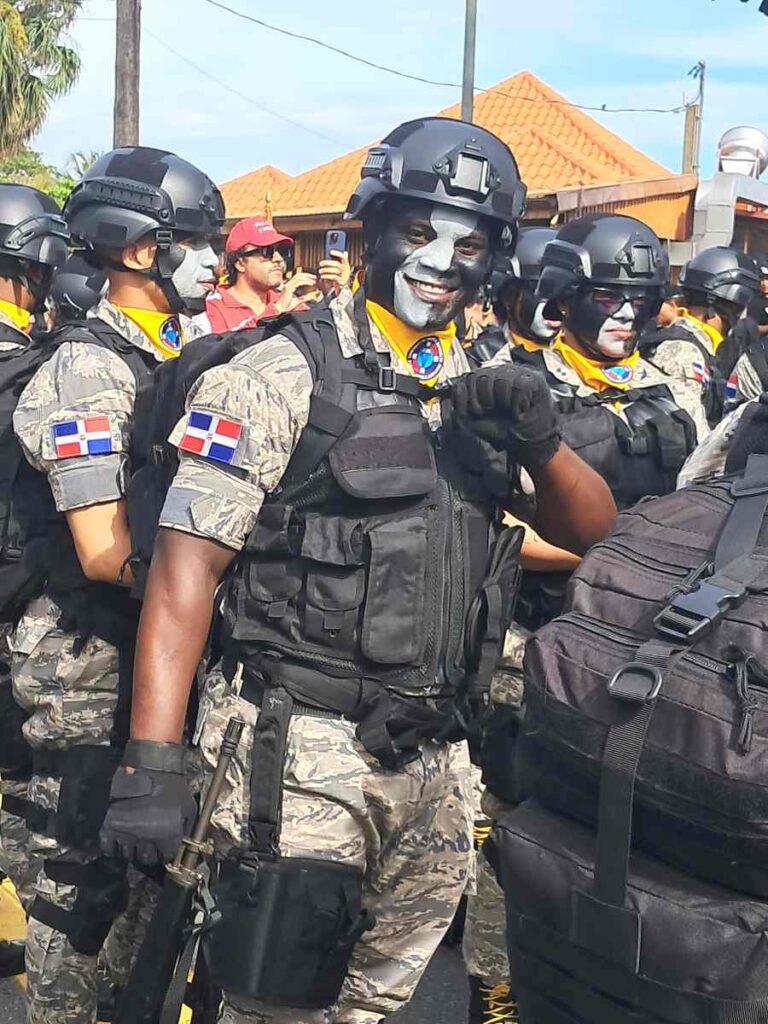
We are now almost at the beginning of the avenue. Here, beside the double monument affectionately known by the locals as “La Muchacha” — “The Girl”, the troops are assembling. Some soldiers are casually shifting from one foot to the other, while others are concentrating on practising their marching step and the main elements of a synchronized military performance.
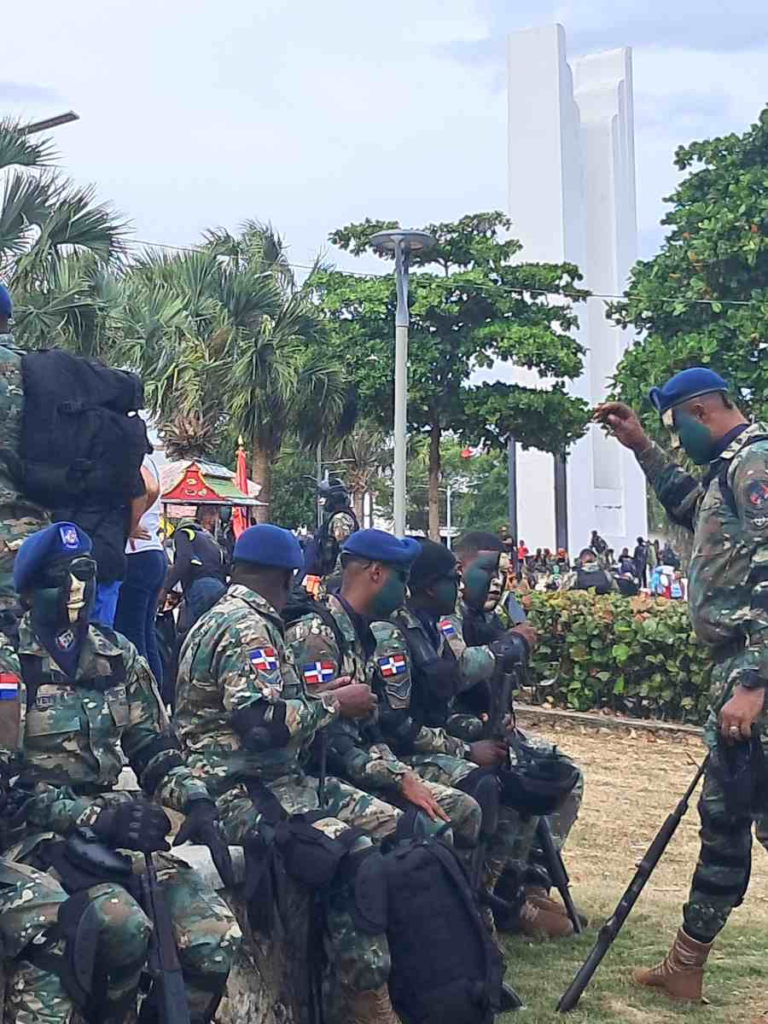
The number of spectators is growing by the minute. The stepped base of the monument — or, more precisely, every shaded part of it — is packed with people sitting down. Whole families come to the celebration. The children are dressed in elaborate carnival costumes: Batmen, Spider-Men, fairies, little leopards, musketeers…
Many of them — surprisingly, boys as well! — are wearing extremely bright, lavish outfits with countless frills and folds. They look like either dresses or long “kaftans”, with tall, elaborately shaped hoods. There are wings and little round mirrors on their backs. The costumes are embroidered with sequins and covered with jingling bells. This extraordinary creation comes in every shade of blue, pale turquoise and white.
We managed to discover that the prototype for all this beauty is a creature from the mythology of the Taíno Indians, the island’s ancient inhabitants.
The commander-in-chief drove past in a pleasantly informal manner and greeted the troops preparing for the parade. They responded with a fairly united, abrupt “bark” and some mysterious rattling noise resembling castanets. Most likely, it was the sound of rifle bolts being worked.
In the commander’s vehicle, besides two high-ranking officers, an unbelievably beautiful woman in military uniform sat on the back seat with an independent expression. His companion or secretary — she certainly added considerable decoration to the general-mobile.
After they drove away, nothing changed.
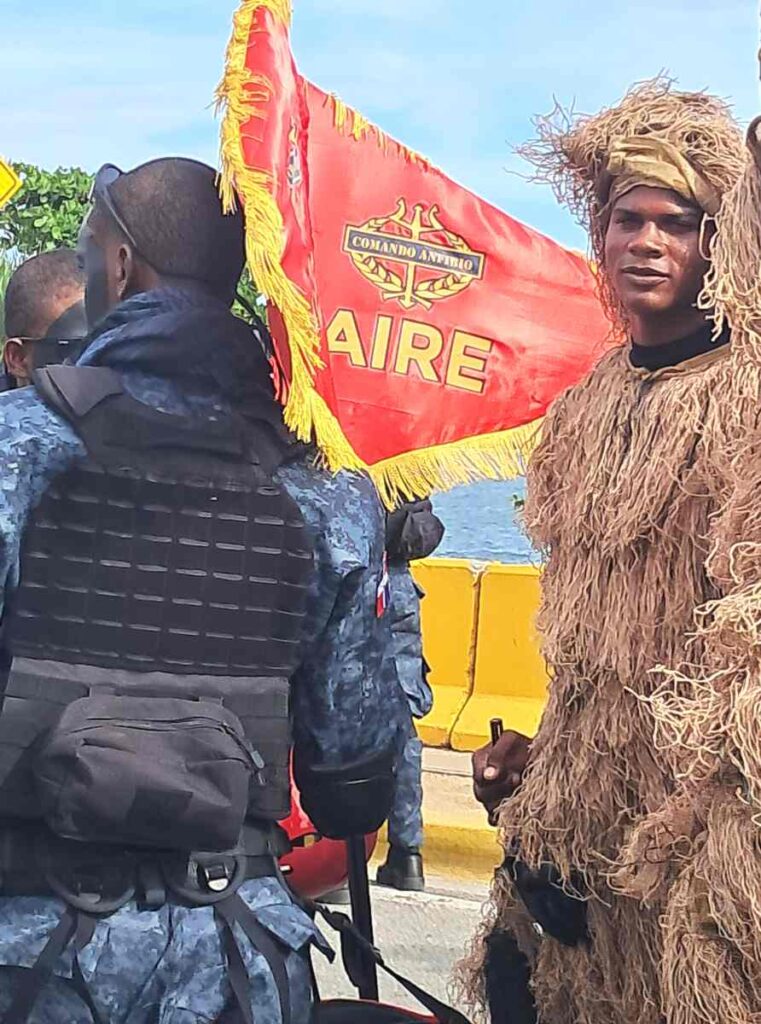
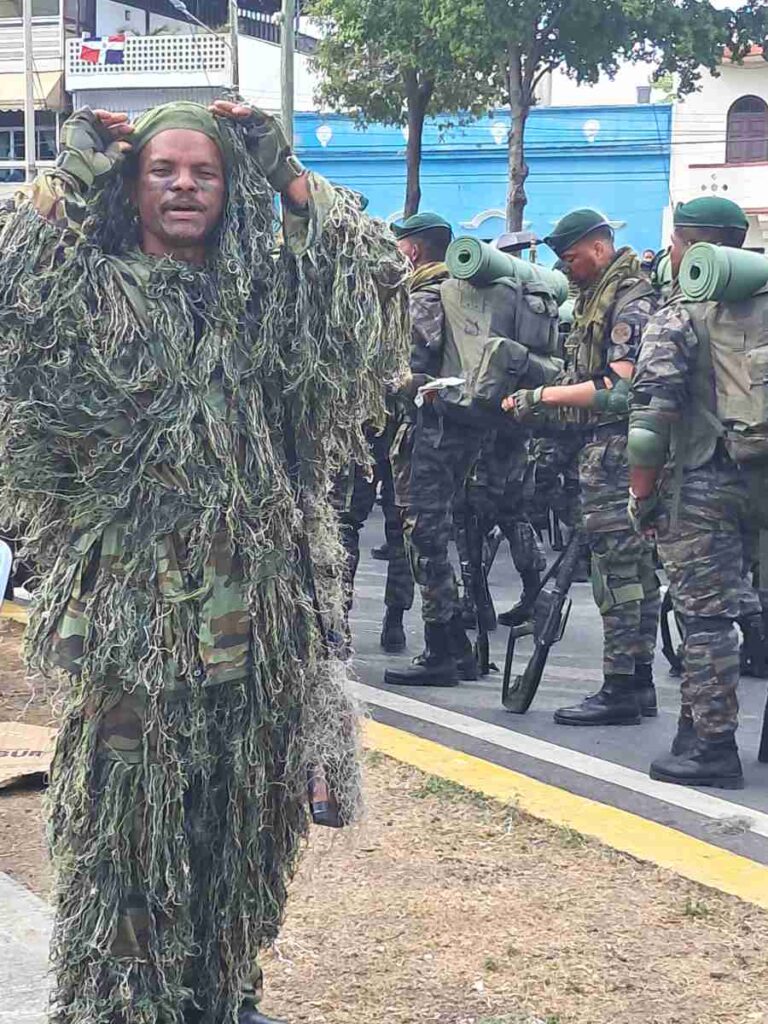
Above the heads of the soldiers, peaceful kites drift serenely through the blue sky…
Meanwhile, on the fortress wall of an old fort, a mysterious character has arranged himself in a highly theatrical pose. When he stood up and moved through the crowd, it became clear that this was not a carnival costume, but a flamboyantly and theatrically dressed, grotesque and highly expressive transvestite.
Exaggerated feminine movements, a substantial bust carried with great pride, enormously high heels and a deliberately twisted walk…
In the Dominican Republic, people are generally very tolerant of such unusual forms of self-expression. Nevertheless, representatives of sexual minorities still organize their own, very peaceful, protest actions. At such gatherings they usually call upon everyone around them to understand them better…
It is already almost half past four. Behind the spectators, along a side street — we only just managed to notice it! — a mounted squadron passed by.
What magnificent horses! And what proud bearing the riders had! An impressive sight.
It is getting close to five. A military band has started moving somewhere. The huge bells of the instruments gleam with gold, and lively marching music fills the air.
At the front walks the military conductor, elegantly stretching and waving his baton in time with the music. He looks so delicate and unearthly, like an elf who has accidentally flown in to visit the human world.
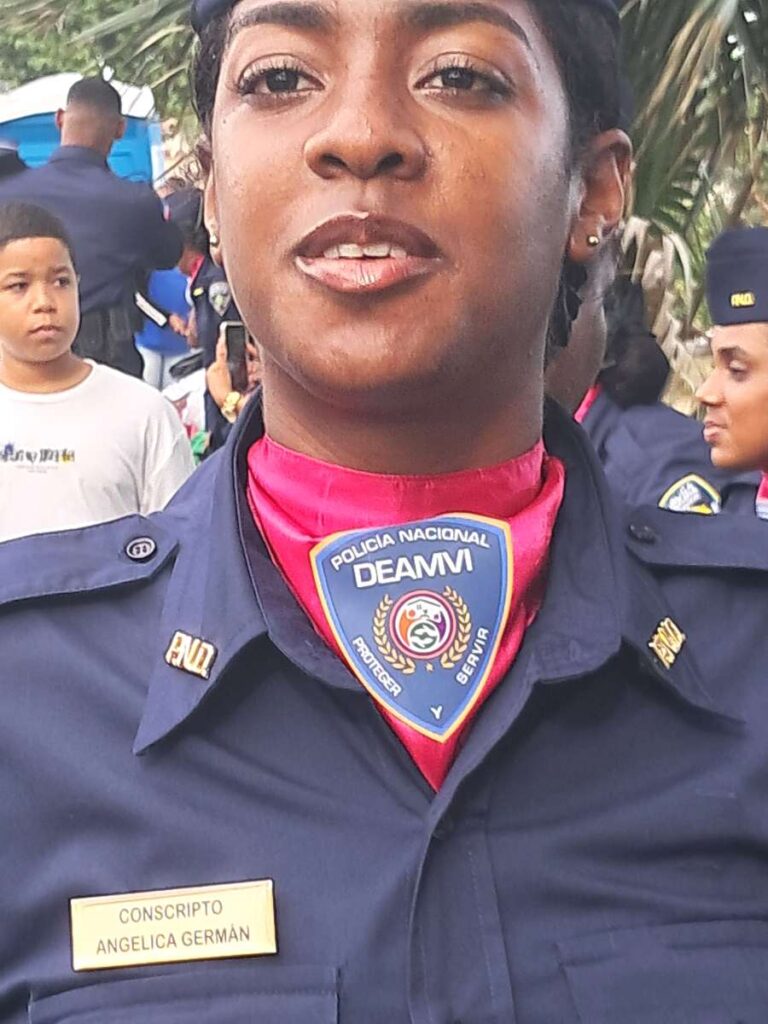
The friendly AMET officers here — the traffic police — informed us that the beginning of the parade had been postponed until 5 p.m…
“Well, well.”
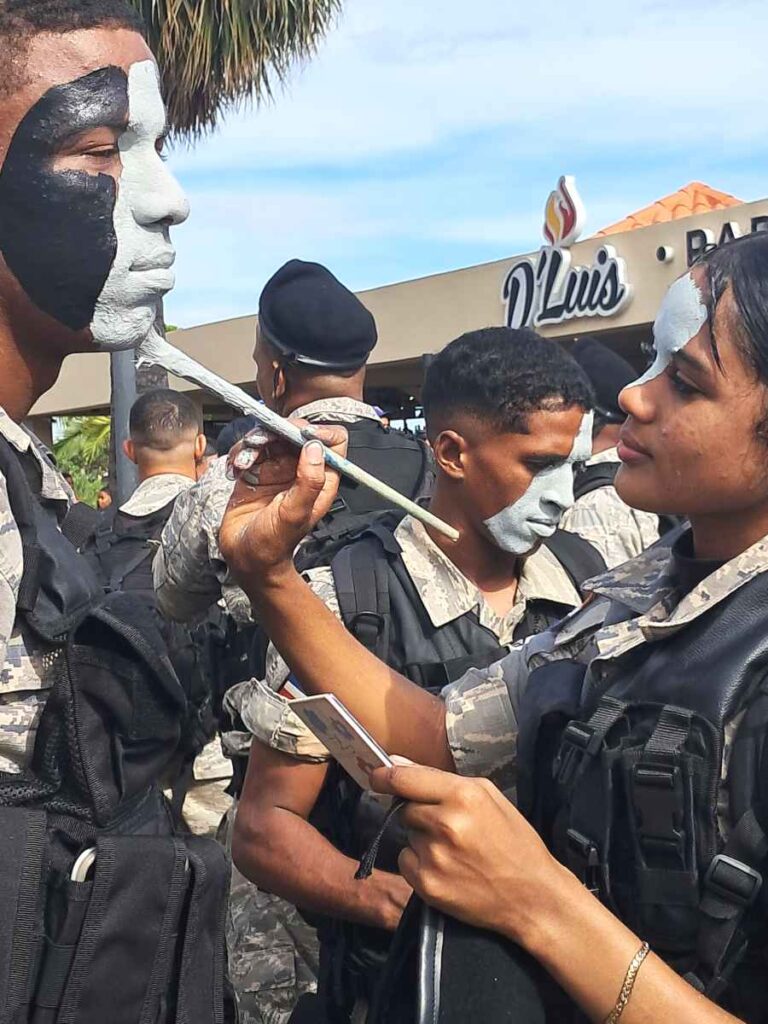
We decided to move to another part of the Malecón to see what was happening there. It was difficult to get through because most of the roads had been closed.
Numerous spectators continued to drift leisurely towards the waterfront. They were walking not only along the pavements but already along the roadway itself.
It was hot. Cold drinks were being sold everywhere: frozen fruit juice, coconut milk, bottles of ice-cold water and beer.
Along the roadside, street vendors had laid out their goods: national flags and little hand flags, sombreros, carnival half-masks and soft masks covering the entire face, kites, balloons, countless stencils accompanied by spray-paint cans so that the designs could be applied immediately, “without leaving the checkout”; beads, necklaces, bracelets…
It would be impossible to list everything.
Fried corn snacks, sweets and ice cream were being sold everywhere. On numerous mobile carts, vendors were frying sausages and something resembling khachapuri.
And there were so many carnival costumes around! The Santo Domingo Carnival was not due to take place until the day after tomorrow, but it already felt as though it had begun.
Here comes a young family. A tall father is carrying a tiny child. The little one can probably barely walk, but he is dressed in a lovingly sewn tiger costume.
A small striped tail dangles from his father’s muscular arm, swinging in time with their steps.
Behind them comes another family with a miniature pinscher. Even the dog is dressed in a costume in the national colours: a little blue leash and a blue, red and white waistcoat.
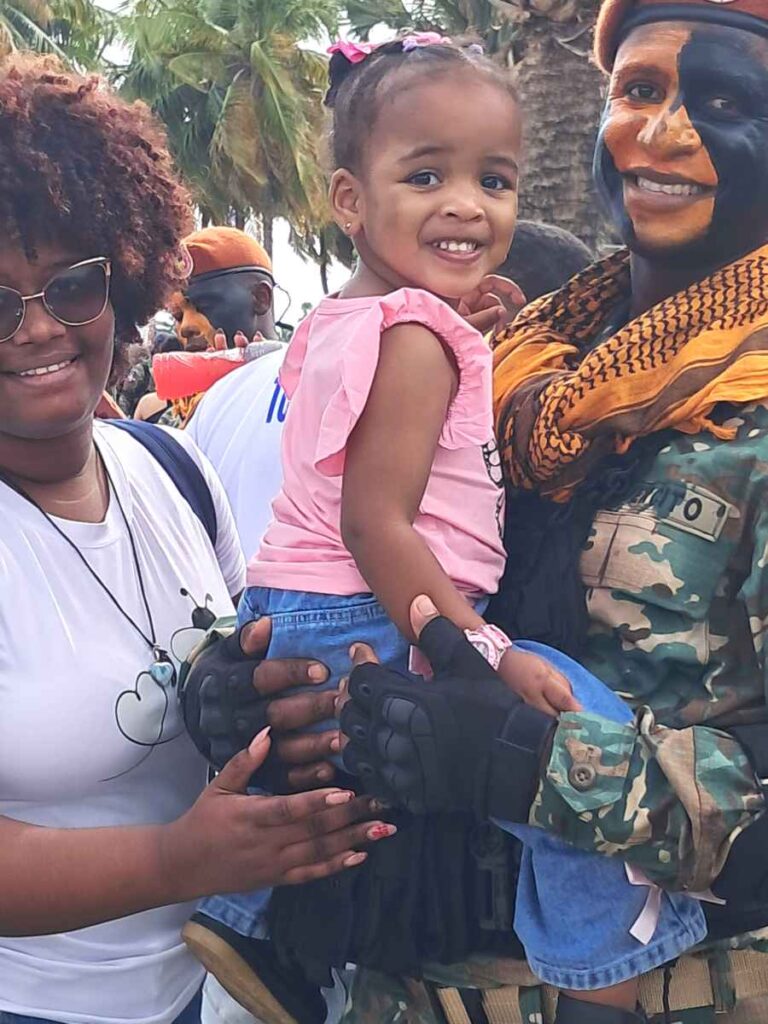
A police officer rides past on a motorcycle. He looks impressive in his black uniform and tall, black lace-up boots.
But to say that he “rides past” does not tell the whole story.
He is not sitting on the motorcycle. He is casually and effortlessly… STANDING.
It looks more like a circus riding trick…
After completing a large circle with a completely expressionless face, still standing in his proud pose, he heads off somewhere else.
It seems he was not actually showing off at all. He was simply looking for someone.
A quarter past five. Instead of the promised Brazilian aircraft, a beautiful formation of pelicans flies slowly across the sky.
Meanwhile, in the waters off the Malecón, we suddenly discover a quiet parade of military boats, all festively decorated with flags and running the risk of remaining completely unnoticed…
They could at least have fired a couple of salutes towards the spectators, just to announce their presence!
A huge, bright-yellow teddy bear approaches a tiny child in the crowd to entertain him. The child, just in case, hides himself between his father’s knees…
The time is 5:20 p.m.…
Four helicopters pass over the sea. Apparently, in order to confuse the observers, the same helicopters fly past several more times…
They leave at an extremely low altitude, almost touching the water.
And then, from far away, the sound of drumbeats begins to grow louder.
This is the parade!
It is getting closer and closer…
But instead of soldiers, carnival characters suddenly come running: demons and devils.
In their hands they carry vejigas attached to long straps, looking rather like baseballs. During Carnival, they use them to smack beautiful girls on the bottom.
The vejiga is swung around like a sling. As a result, the hunters of beautiful women spin like dervishes. Once they have spotted a beauty, they dash into the crowd, give her a slap, and then hurry off in search of the next charming victim…
Vejiga means “bladder” in Spanish. The first vejigas were made from inflated pig bladders…
And now, at last, the troops begin to march.
The standards are carried forward to the beat of the drums. One of the drummers is openly shirking his duties — and grumbling as he walks…
Company after company.
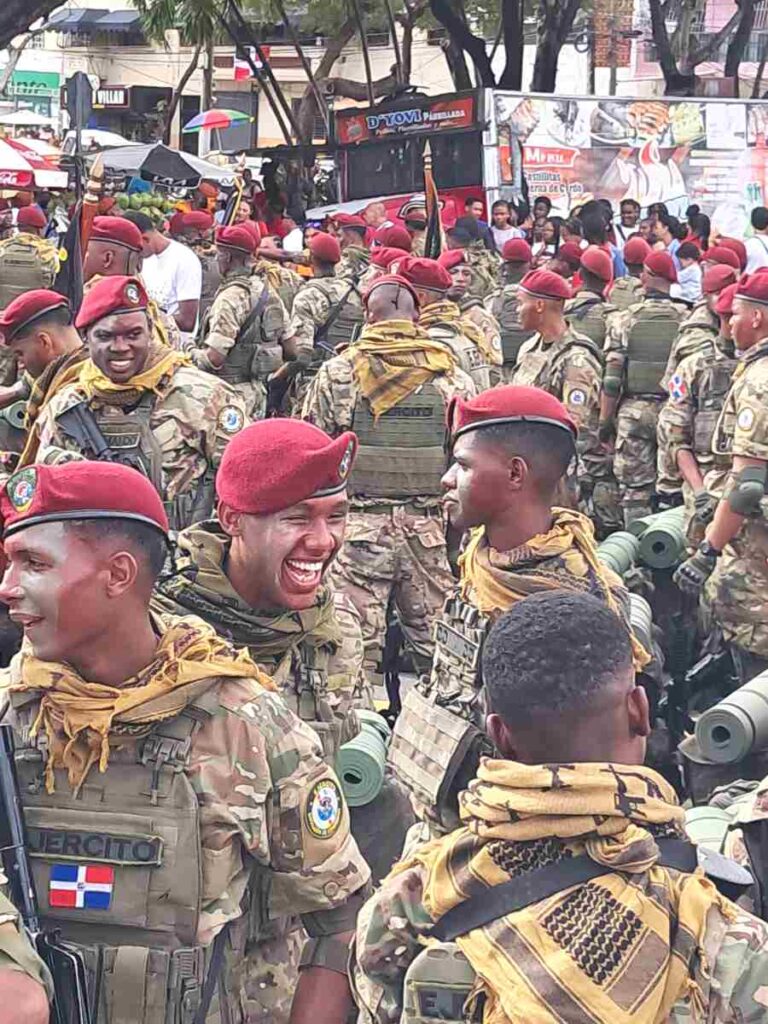
Red berets, black berets, white round hats with upturned brims — retro Panama hats in the style of the 1950s — and AMET’s enormous dark-green hats…
And colourful neckerchiefs: yellow, green, yellow-red-and-white…
Backpacks with rolled blankets strapped to them, automatic rifles and rifles.
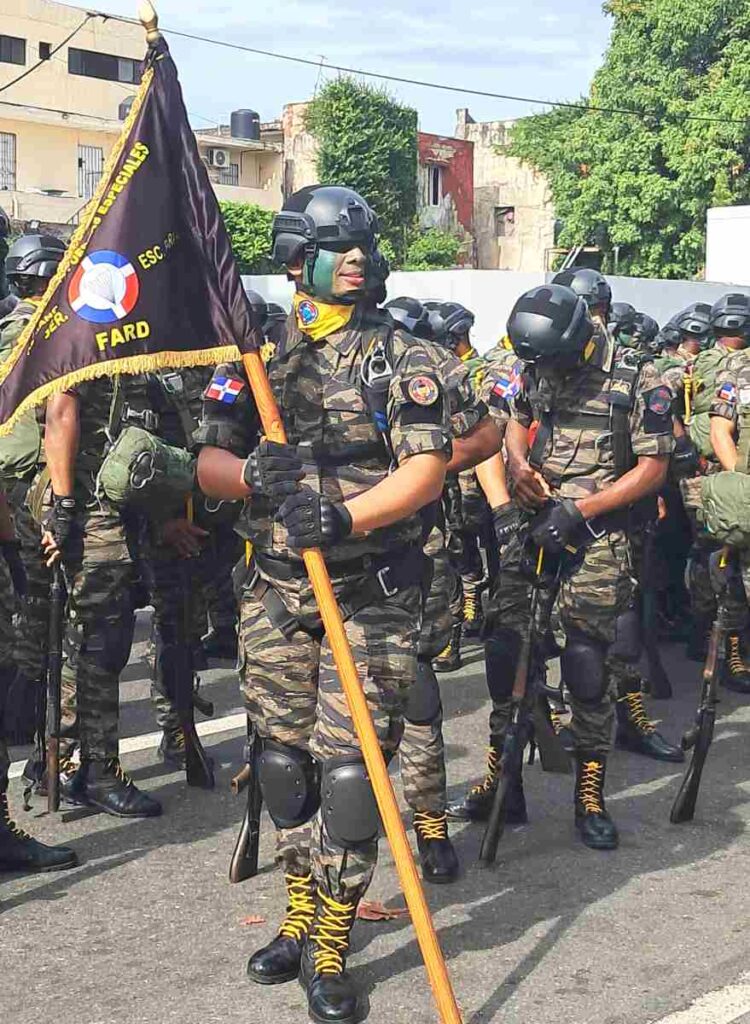
In front of a special-forces company, carried solemnly like a precious battle standard, was…
a LIVE EAGLE sitting on top of a tall staff!!
The eagle remained as calm and untroubled as a true Caribbean resident. Even the delighted roar of the crowd greeting its appearance had no effect whatsoever on the bird’s composure…
With a deafening clatter, the magnificent Cimarrón combat helicopters appeared in the sky, painted in dark-green camouflage.
They flew past in formation: five plus five.
The paratrooper companies and special-forces units looked particularly impressive.
Every one of them seemed specially selected: tall, athletic, handsome men in black lace-up boots, with knee pads worn over their uniforms and neckerchiefs tied with artistically casual elegance.
The soldiers looked completely piratical…
The naval units also looked very smart. They wore snow-white tunics and round white hats, with slightly carelessly tied black neckties and white gloves.
But the crowd’s greatest excitement was caused by the appearance of the women’s battalion.
Although there were also many women in the ranks of AMET.
At a little after six, twilight quietly crept in.
The sky took on the most delicate shades of pinkish violet, soft blue and noble grey…
Here in the Dominican Republic, the pre-sunset sky is beautiful and the dawns are staged with great dramatic effect.
And everything else is equally magnificent: the emerald surface of the sea and ocean, the sky filled with fluffy clouds, and the low green hills with which this land is so generously endowed…
You can stare at this beauty for hours, like the wise Chinese philosopher Lao Tzu…
And then, as it turned out, the long-awaited aerial performance finally began.
Six aircraft passed across the sky with their navigation lights glowing.
Could they really be the Brazilians?
But we were already leaving. We realised that the performance had started only when we saw people in the streets looking upwards.
Hurrying as much as we could, we reached our “penthouse”, where we live.
That is where we have our front-row seats.
From its enormous terrace, it is easy to admire the panoramic views of Santo Domingo. And the sky itself is almost within reach — after all, we live on the top, very high, third floor.
And perhaps it was even a good thing that the Brazilian pilots were late.
What they did in the sky looked especially spectacular against the evening light.
It was true aerobatics.
From certain angles, against the fading sunset, the aircraft looked like silver mythical birds.
They performed loops, spins and barrel rolls with ease…
They also carried out synchronized manoeuvres involving all six aircraft: rolling over their wings, breaking formation and reassembling into new compositions…
At one point, three aircraft flew almost directly above the other three — but the upper three were upside down…
It was wonderful!
But the Brazilian pilots finally conquered everyone’s hearts when they drew a symbol of love in the sky with a trail of coloured smoke: an enormous heart pierced by an arrow!
There is really nothing more to add.
Long live the Dominican Republic!
And may there be joy and love throughout the world.