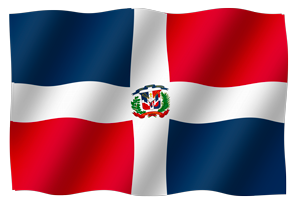
December 5, 1492. After a long and exhausting voyage across the Atlantic, Christopher Columbus’s ships reached the shore. Thus, the island that the Spaniards named La Española (La Hispaniola) entered European history. At that time the island was inhabited by the peaceful Taíno people, as well as the more warlike Ciguayo and Macorix tribes. In the language of the larger and more developed Taíno civilization, the island was called Quisqueya — “Mother of All Lands.”
Columbus soon sailed back to Spain with joyful news of the newly discovered lands, leaving behind the first European settlers on the island.
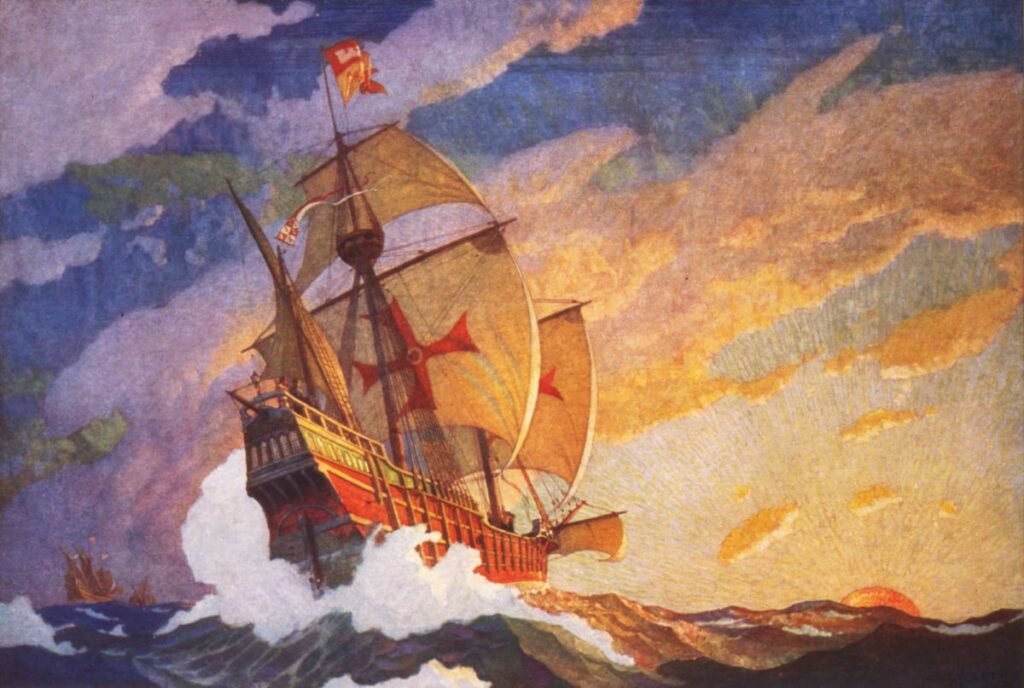
1496. On the western bank of the Ozama River, along the Caribbean (southern) coast of the island, the city of Santo Domingo was founded.
1509. Santo Domingo entered a period of prosperity… But beginning in the 1520s, rich deposits of gold and silver were discovered in Peru and Mexico. A true “gold rush” began, and the island started losing its population. Everyone rushed to the mainland in search of fortune.
1586. The city suffered the pirate attack of Sir Francis Drake. Santo Domingo was mercilessly plundered and almost completely destroyed.
1605–1606. Smuggling flourished. In an attempt to stop it, the Spanish authorities forcibly relocated their own settlers from the northern and western parts of the island to the south. But once the northwest had been abandoned, it quickly attracted French settlers and every kind of pirate imaginable.
1697. Spain ceded the western part of the island to France. Thanks to its booming sugar production and trade, the French west became wealthy, while the Spanish east gradually declined.
1795. Numerous slave uprisings broke out among Africans brought to the French colony.
1804. The Republic of Haiti, the world’s first Black republic, was proclaimed.
A brief historical note: the Dominican Republic gained its independence three different times.
1821. The First Independence… The eastern part of the island (Santo Domingo) declared its independence from Spain under the leadership of José Núñez de Cáceres. The new sovereignty lasted only two months and eight days. Soon afterward, Haiti occupied the territory for the next twenty-two years.
1844. The Second Independence… An anti-Haitian uprising led by Juan Pablo Duarte and Francisco del Rosario Sánchez proclaimed the independent Dominican Republic once again. Pedro Santana became the country’s first president, and February 27 became the national Independence Day.
1863–1865. The Third Independence… At President Santana’s own initiative, Spain annexed the republic. The population rebelled. Under the leadership of Gregorio Luperón, a civil war began, and by 1865 the country’s sovereignty had been restored.
Historical note: The Dominican Republic has had 54 presidents. The nineteenth century was an era of coups and political turmoil. Some presidents remained in office for no more than a single week.
1882. The presidency of Ulises Heureaux. A military leader and dictator, he served three presidential terms. Massive foreign loans fueled economic growth, while at the same time he—and a small ruling elite—became extraordinarily wealthy.
1889. Ulises Heureaux was assassinated. The country was left burdened with an enormous foreign debt.
1916–1924. Under the slogan of securing repayment of foreign debts, the United States occupied the Dominican Republic. During those years roads were built, communications improved, and the education system was modernized. At the same time, American interests secured a share in the country’s mineral resources. Work also began on establishing the modern border with Haiti.
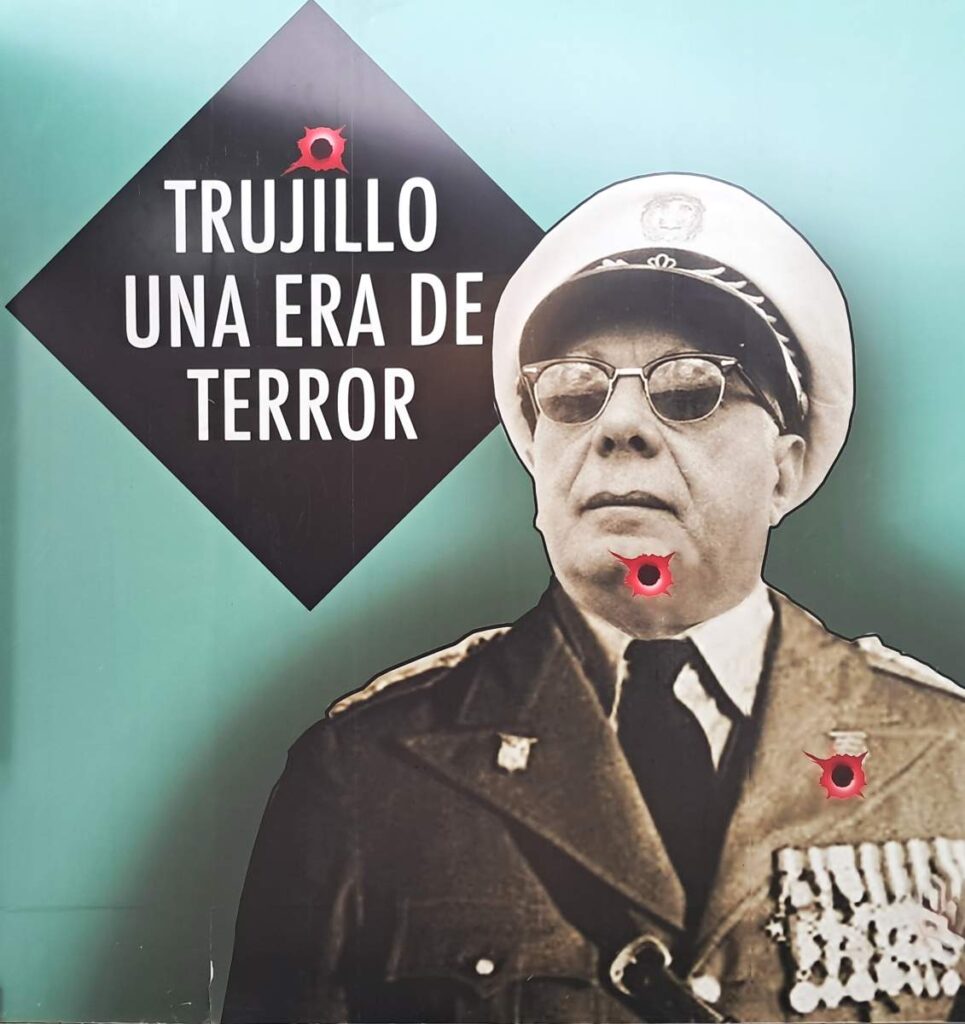
1930–1961. The dictatorship of Rafael Trujillo. His rule was marked by authoritarian brutality. Political opponents and Haitian immigrants living in the country faced persecution, repression, and violent reprisals.
The 1940s. World War II. On December 8, 1941, the Dominican Republic declared war on Japan. Three days later, on December 11, it also declared war on Germany and Italy.
Seven German submarines operated in the Caribbean near the Dominican coast. During May and June of 1942, German U-boats sank British, Brazilian, and American vessels south and east of Santo Domingo. Dominican ships also became victims.
One remarkable incident is remembered: a German submarine stopped the Dominican sailing vessel Ciudad Trujillo, confiscated its cargo of fruit, but released both the ship and her crew unharmed.
German submarines could not use Dominican ports for rest or resupply.
Between 1938 and 1945, the Dominican Republic became one of the very few countries to accept more than six hundred Jewish refugees from Europe.
By 1961. During Trujillo’s presidency, the country’s borders were partially opened to white immigrants as part of his policy of “whitening” the nation.
His government invested enormous resources into developing Santo Domingo. Many of the capital’s modern avenues, buildings, and public spaces date back to that period, marking the beginning of the city’s modern growth.
Trujillo was assassinated in 1961.
1962. Juan Bosch, leader of the Social Democratic Party, came to power. The reforms he proposed were viewed by the United States as leaning toward communism. After only seven months, he was overthrown in a military coup.
1963–1965. A military junta known as the Triunvirate took power. Public dissatisfaction grew. When an attempt was made to restore Juan Bosch to office, the United States intervened militarily once again.
1966. Under President Joaquín Balaguer, foreign investment became an increasingly important part of the Dominican economy. Supported by the United States, Balaguer returned to power again and again. In 1994, at the age of eighty-seven, he won another presidential election by a margin of just one percent. Altogether, he governed the country for eighteen years.
1991. The government carried out a mass deportation of Haitians living in the Dominican Republic who were under sixteen or over sixty years old.
1992. The country celebrated the 500th anniversary of Columbus’s voyage. At the same time, many Dominicans criticized what they considered an excessive glorification of colonization.
2000. Hipólito Mejía became president. His administration supported small businesses, agriculture, education, and housing construction. However, in 2003 the country experienced a severe banking crisis. Inflation rose, the U.S. dollar strengthened, prices increased, and living standards declined.
2004. Leonel Fernández won the presidential election and was later re-elected. During his administration, new highways were built, education improved, schools received computers, and the country’s economic stability strengthened. The Dominican Republic gained a much stronger international profile.
2012. Danilo Medina became president and was re-elected for a second term. His administration introduced major social programs. Funding for public schools increased to 4% of GDP. New classrooms were built, the school day was extended, health insurance became more accessible, medical services expanded, agriculture received greater support and oversight, affordable loans encouraged small and medium-sized businesses, and poverty declined.
However, these social programs required higher taxes, including an increase in the ITBIS value-added tax.
Unfortunately, his presidency was also overshadowed by major corruption scandals, including inflated budgets for the Punta Catalina power plant and hospital reconstruction projects. A wide range of government officials—as well as members of the president’s own family—faced legal investigations.
2020. Luis Abinader became President. His first term began during the COVID-19 pandemic. The country organized a successful nationwide vaccination campaign, hospitals continued to function effectively, and quarantine measures were well coordinated.
The economic impact of the pandemic was softened through loan payment deferrals, tax relief, and financial assistance programs. Overall, the Dominican Republic emerged from the pandemic relatively smoothly.
In 2024, Luis Abinader was re-elected for a second term. His administration continues to focus on strengthening the country’s international standing, enhancing the Dominican Republic’s reputation, attracting foreign investment, and developing tourism—which continues to set new visitor records. Other priorities include infrastructure projects, road construction and renovation, the creation of premium tourism areas, strong trade relations with other countries, close ties with the United States, improvements in healthcare and education, better social welfare, broader access to medical services, and environmental protection through reforestation and urban sanitation projects.