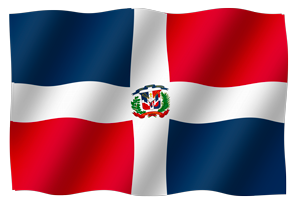
Every year, on February 27, the Dominican Republic celebrates Independence Day on a grand scale. For the country, it is one of the most important national holidays. On this day, freedom-loving Dominicans joyfully celebrate the birth of their own nation — the sunny and peaceful Dominican Republic.
Independence Day commemorates key moments in the country’s history: the division of the island into two independent states — the Dominican Republic and Haiti — and the complete end of the Haitian occupation, followed by liberation from centuries of Spanish colonial rule.
A CHRONOLOGY OF THE HISTORY OF THE ISLAND OF HISPANIOLA (today known as the island of Haiti).
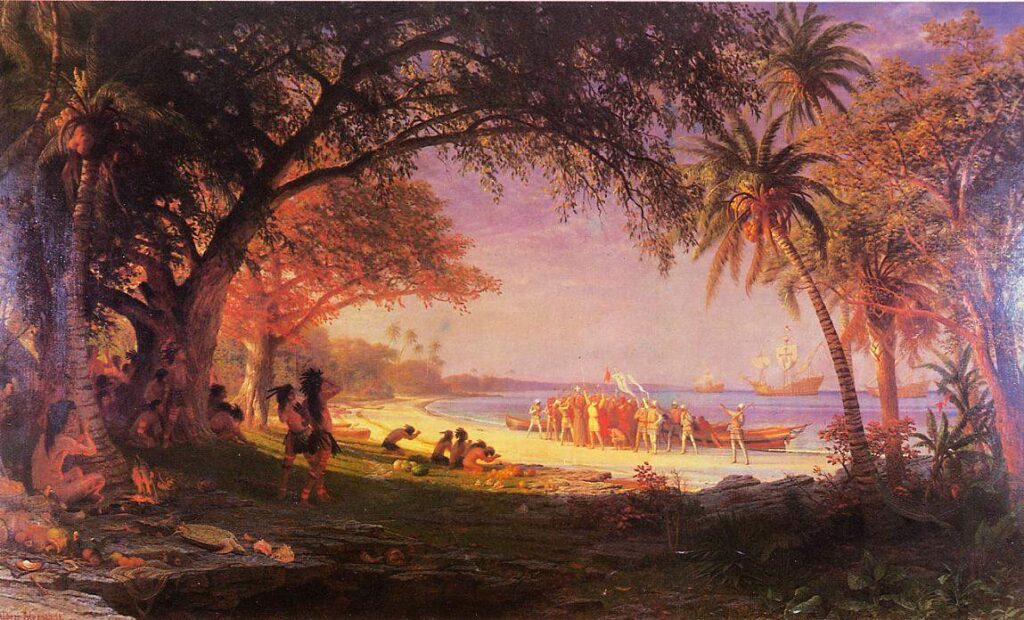
1492 — Columbus discovers the island. From this moment on, the island belongs to Spain…
1655 — The French land on the western part of the island. The island is divided between France and Spain.
1804 — The Republic of Haiti is proclaimed in the French part of the island.
1805 — The Haitian army captures the Spanish (eastern) part of the island. With British support, the Spaniards quickly defeat the Haitians. During this period, the Dominican territory is known as the Independent State of Spanish Haiti.
1822 — Haitian troops once again seize the eastern part of the island (the entire island comes under Haitian rule). This occupation lasts 22 years…
The military government causes enormous damage: Dominican lands are confiscated on a massive scale, heavy taxes are imposed, food is taken away, and the use of the Spanish language is restricted. Poorly supplied Haitian troops engage in widespread looting…
The Dominican resistance movement begins to grow…
1838 — The secret society La Trinitaria is founded. Its goal is to drive out the Haitians and achieve complete independence. The movement is led by Pablo Duarte, Ramón Mella and Francisco Sánchez.
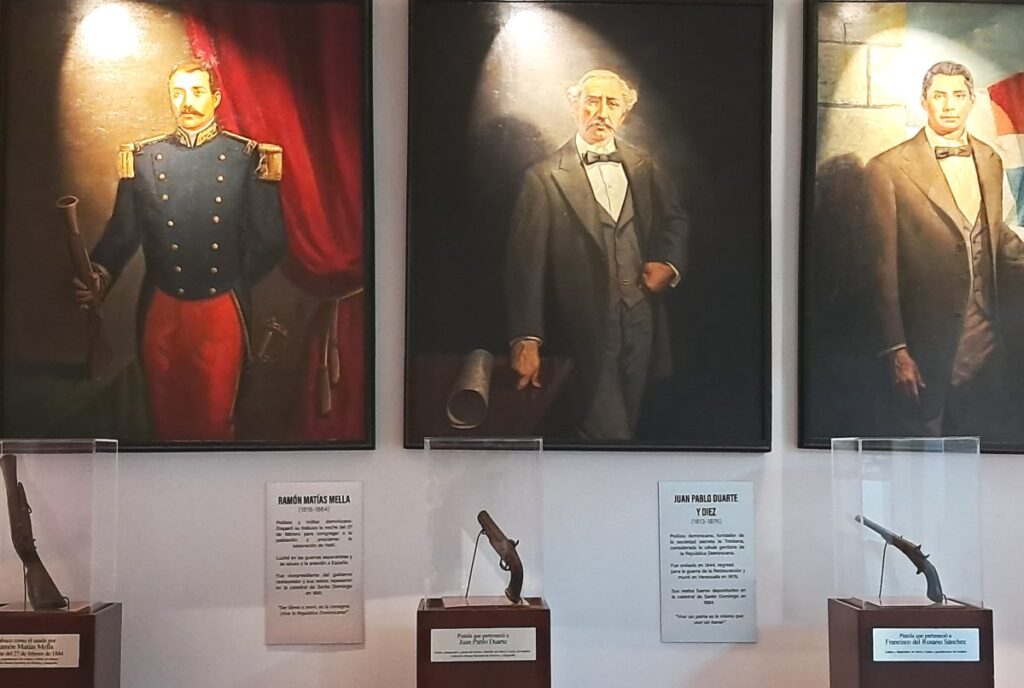
(Patriotic Dominicans decorate their towns with charming images of the Founding Fathers like these.)
1844 — The Trinitarios launch an uprising. They are supported by Pedro Santana, a plantation owner who commands an army of peons working on his estates. The Dominican Republic is proclaimed in the eastern part of the island — autonomous from Haiti and independent of Spain. Pedro Santana becomes the country’s first president…
1861 — President Pedro Santana returns the Dominican Republic to Spanish rule…
1865 — Another uprising begins, this time under the leadership of Gregorio Luperón. The Dominican Republic finally gains its independence from Spain.
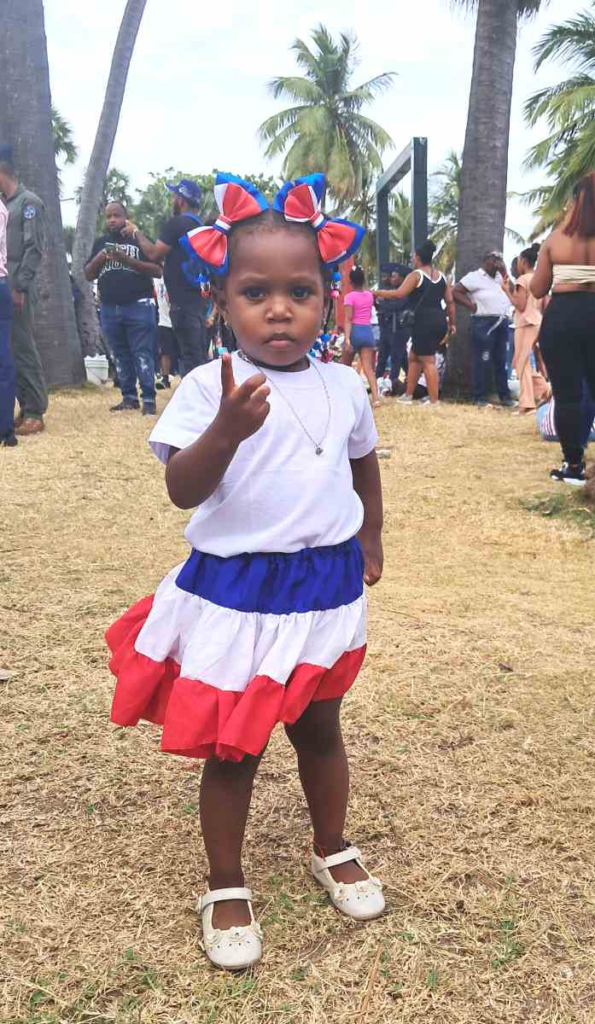
THE DOMINICAN FLAG (Symbolism)
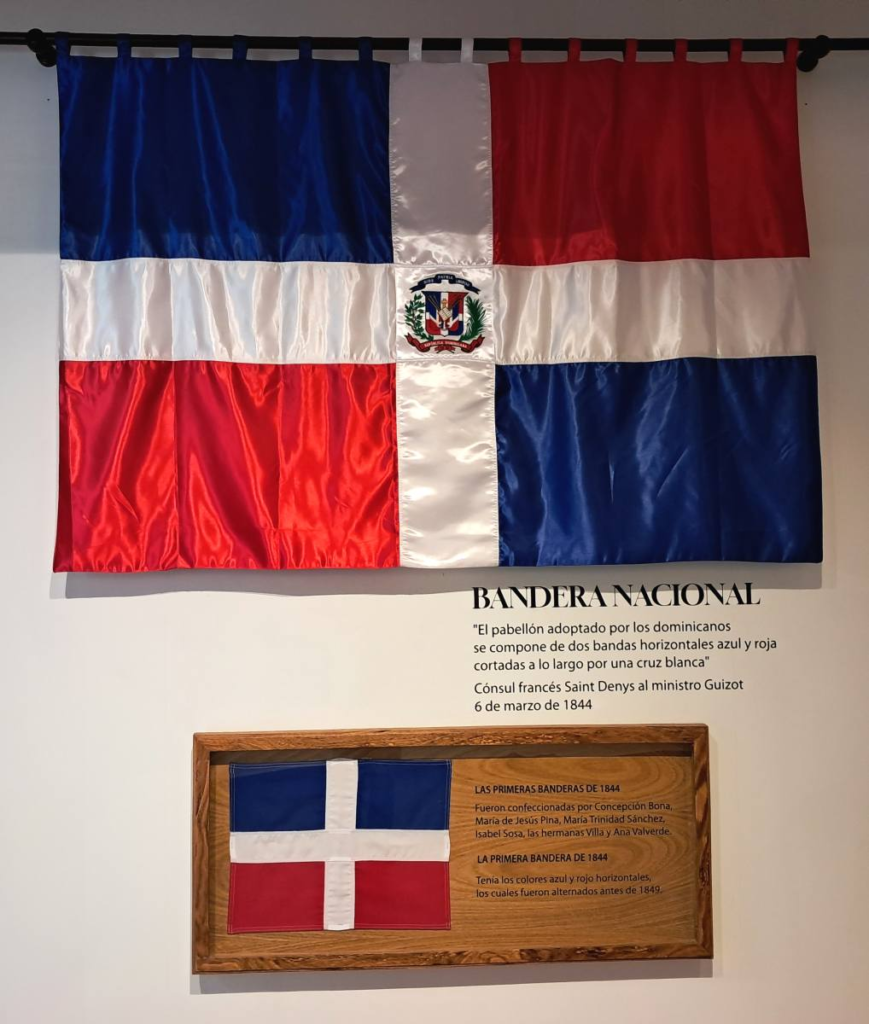
The flag is traditionally attributed to Pablo Duarte (who at that time headed the Dominican resistance movement, La Trinitaria).
The design of the Dominican flag is an interesting symbolic idea. A white cross was superimposed upon Haiti’s blue-and-red flag — itself derived from the blue and red stripes of the French flag.
In this context, the symbolism emphasizes that, unlike Haiti, where African religions have traditionally been widespread, the Dominican Republic identifies itself with the Catholic faith.
The Dominican national flag was officially adopted in 1863.
THE DOMINICAN COAT OF ARMS (Symbolism)
• The ribbon at the top bears the words: God. Fatherland. Freedom. (Spanish: Dios. Patria. Libertad.)
• The book is the Bible, opened to John 8:32: “And you shall know the truth, and the truth shall make you free.”
• The Cross symbolizes liberation from colonial bondage.
• The Spears symbolize the victories of the Dominican people over the Spanish, French and Haitian invaders.
• The laurel and palm branches represent Glory and Peace.
The coat of arms of the Dominican Republic was adopted in 1896. It also appears at the centre of the national flag.
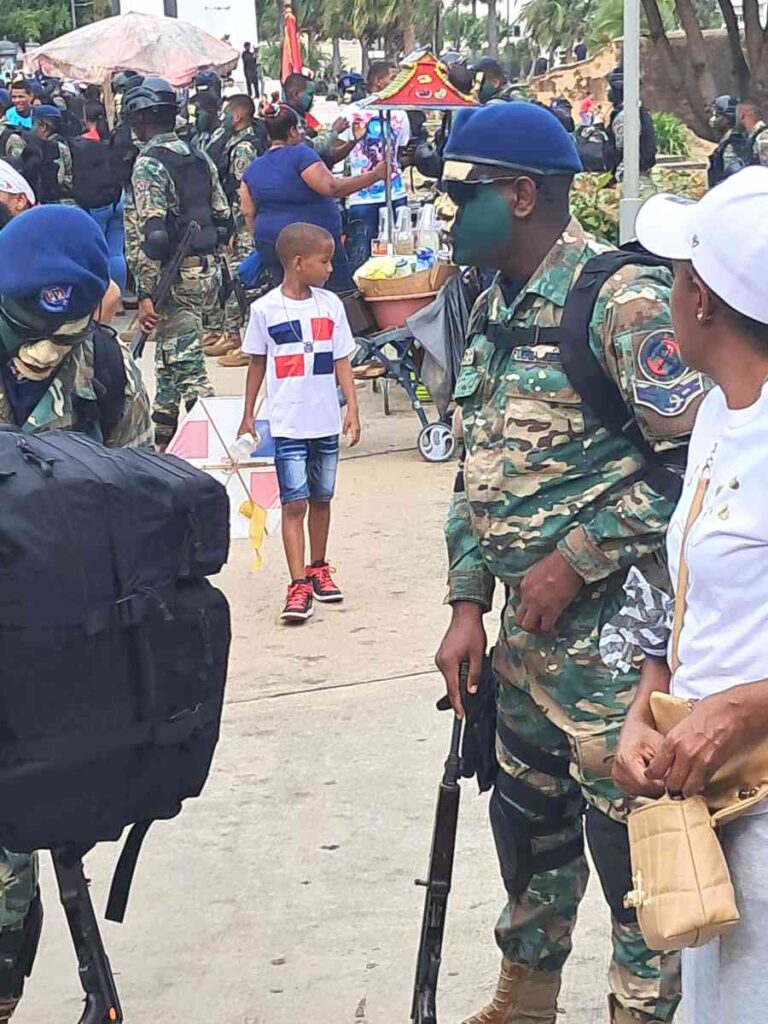
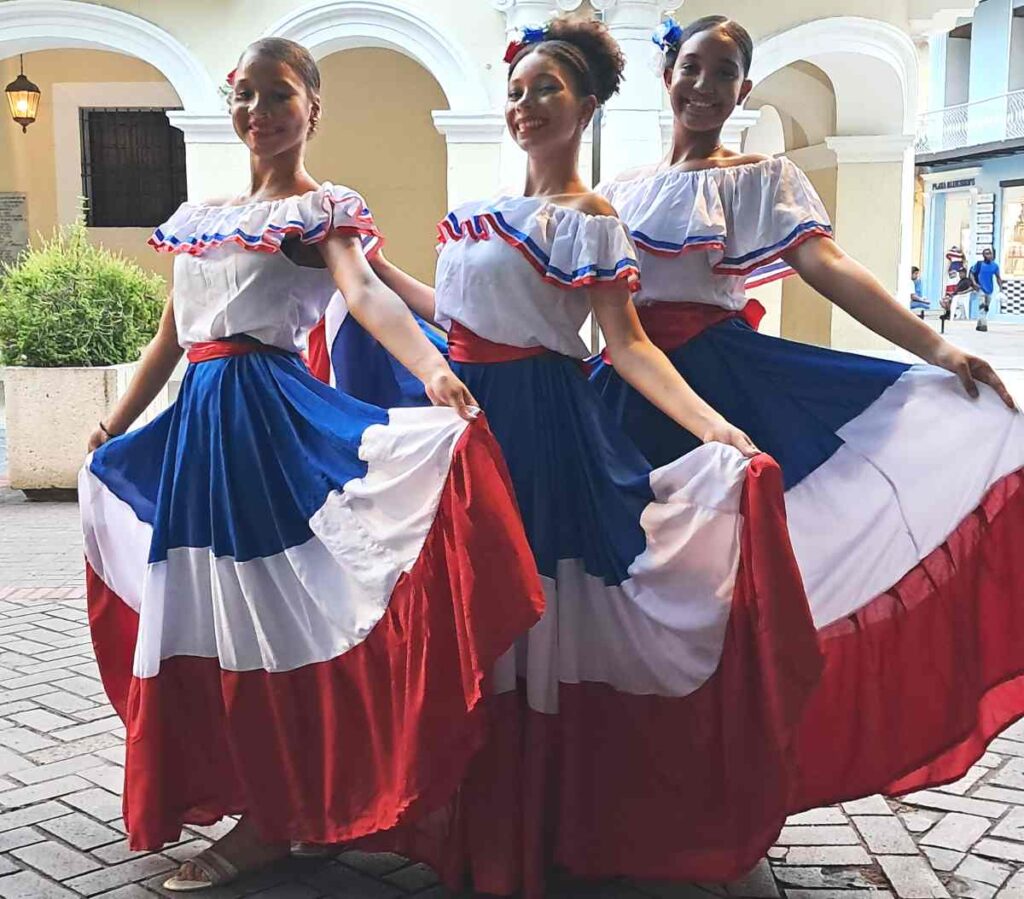
On Independence Day, the Dominican Republic holds a military PARADE. After the parade, there is usually a wonderful air show. Fighter jets and small aircraft paint intricate patterns, funny faces and even hearts in love across the sky.
And don’t be surprised if, during the parade, you also see Carnival characters. The end of February, together with Independence Day, also marks the beginning of the colourful Dominican Carnival processions.
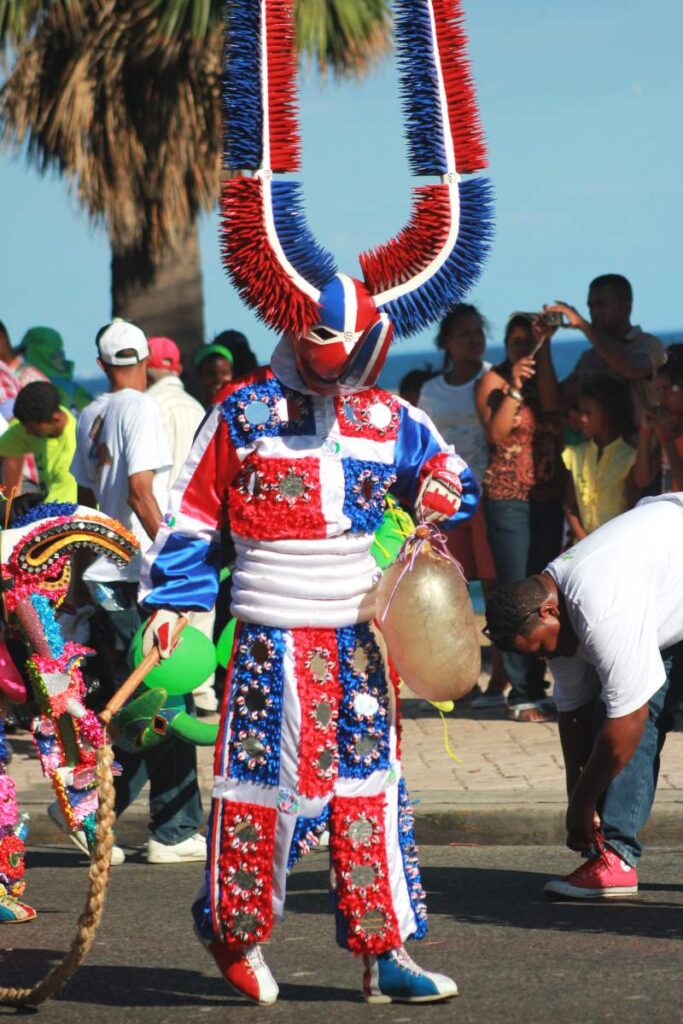
Carnival celebrations traditionally take place every weekend until the middle of March in every province of the country. At the end of the competitions, the very best Carnival groups earn the right to take part in the country’s grand finale in Santo Domingo.
The Dominican Republic’s main Carnival is held along the Malecón waterfront (Malecon, Santo Domingo).
Don’t miss this magnificent and joyful spectacle.