It stands at the same intersection, directly opposite the Museum of the Dominican Family.
This is a pleasant little square, shaded by mature trees, with concrete benches, blooming bougainvillea, and a remarkably expressive monument. The park is enclosed by a tall wrought-iron fence and is usually closed to the public. It opens mainly on weekends, when handicraft fairs and exhibitions featuring Dominican artisans are held here.
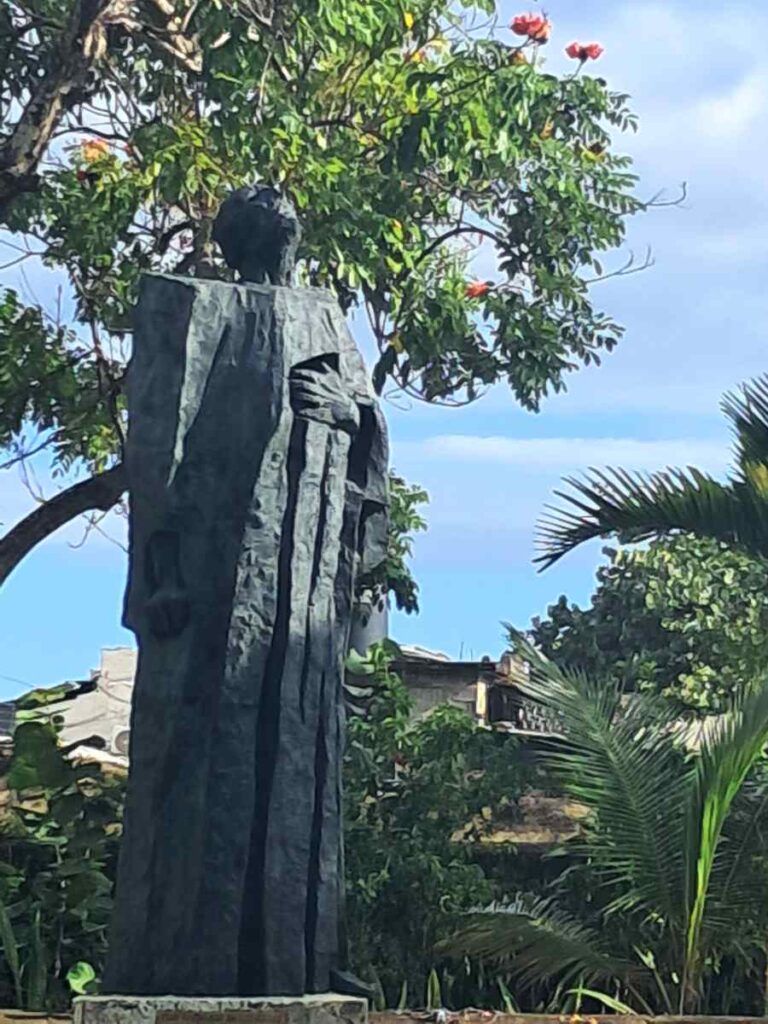
The monument was erected in the 1970s (different sources give different dates). It is dedicated to the monk Bartolomé de las Casas. The bronze statue, about five meters high, stands on a stone pedestal and is executed in a strikingly expressive style. Its author was the renowned Spanish modernist sculptor, architect, and painter Joaquín Vaquero Turcios.
REFERENCE: Bartolomé de las Casas (c. 1484–1566) was a Spanish priest, historian, and chronicler who became known to history as the “Protector of the Indians.” He arrived on the island of Hispaniola in 1502. At first, he owned land and Indigenous slaves. Eight years after his arrival, he was ordained as a priest. Then he heard the famous sermon delivered in Santo Domingo by Fray Antonio de Montesinos—the first open condemnation of the Spanish authorities for their cruel treatment of the Indigenous people. The sermon profoundly changed his life. From that moment on, he devoted himself to defending their rights. Hoping to save the Indigenous population from extinction, he initially proposed bringing enslaved Africans to the colonies—a position he later deeply regretted and publicly repented. Bartolomé de las Casas became the author of several fundamental works on the history and ethnography of the Americas. In his later books, he described the brutality of the Spanish conquistadors as an eyewitness to the events.
This little square also has a story of its own.
Many years ago it was neglected, littered, and rather uninviting. It was our friend John who transformed this forgotten corner of the Colonial Zone into the charming little garden you see today.
We didn’t meet very often, but once we were invited to a wonderful birthday party at his home. We brought him a basket of the freshest oysters we could find, and he was absolutely delighted. They were served immediately. Everyone enthusiastically opened the shells and happily enjoyed this delicious seafood delicacy.
John was always great company. His friends often gathered there too—a Yugoslav banker and his companion, the beautiful Barbora. She always seemed delightfully tousled, just a little nervous, intelligent, and full of mischief…
We would occasionally meet John while walking through the neighborhood or visiting mutual friends. All we really knew was that he was British—although someone later clarified that he was actually Scottish. As John once told us, he had been a vice president of British Airways. He had spent almost his entire life living in hotels and traveling around the world. Only later in life did he finally find a place he could truly call home.
He bought a cozy colonial house with a small courtyard in the heart of Old Santo Domingo and furnished it with remarkable taste. An old wooden cart arrived from Italy, together with a magnificent carved door depicting some elaborate historical scene. Both became beautiful features of the courtyard. Incidentally, guests placed their birthday presents inside the old cart. Many brought fine bottles of wine, and the collection looked wonderfully picturesque.
John was involved in several business projects—sports and restaurants among them—but he also loved wandering through the neighborhood. His house stood directly opposite this little square.
He personally paid for the landscaping and upkeep of the park. Almost every day, a gardener could be seen working there—watering the plants, sweeping the paths, carrying buckets, dragging hoses… Slowly but surely, the neglected corner became a flourishing little garden.
John is no longer with us.
Whenever we pass this square, we remember him with warmth… and with gratitude for leaving behind such a beautiful place.
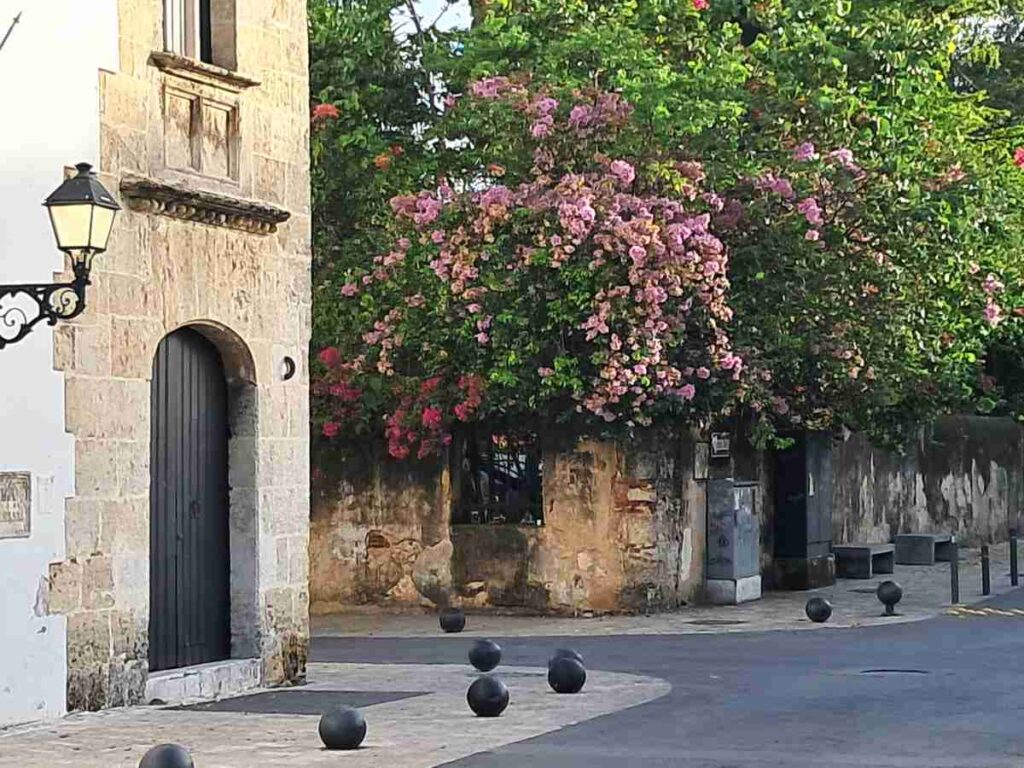
Location: Calle Arzobispo Meriño, corner of Calle Padre Billini. If you continue from this little square toward the waterfront (already visible at the end of the street), you’ll reach a beautifully landscaped park with several small monuments, an old fort, and the enormous monument to that same defender of the Indigenous people—Fray Antonio de Montesinos, whose unforgettable sermon changed the life of Bartolomé de las Casas forever.