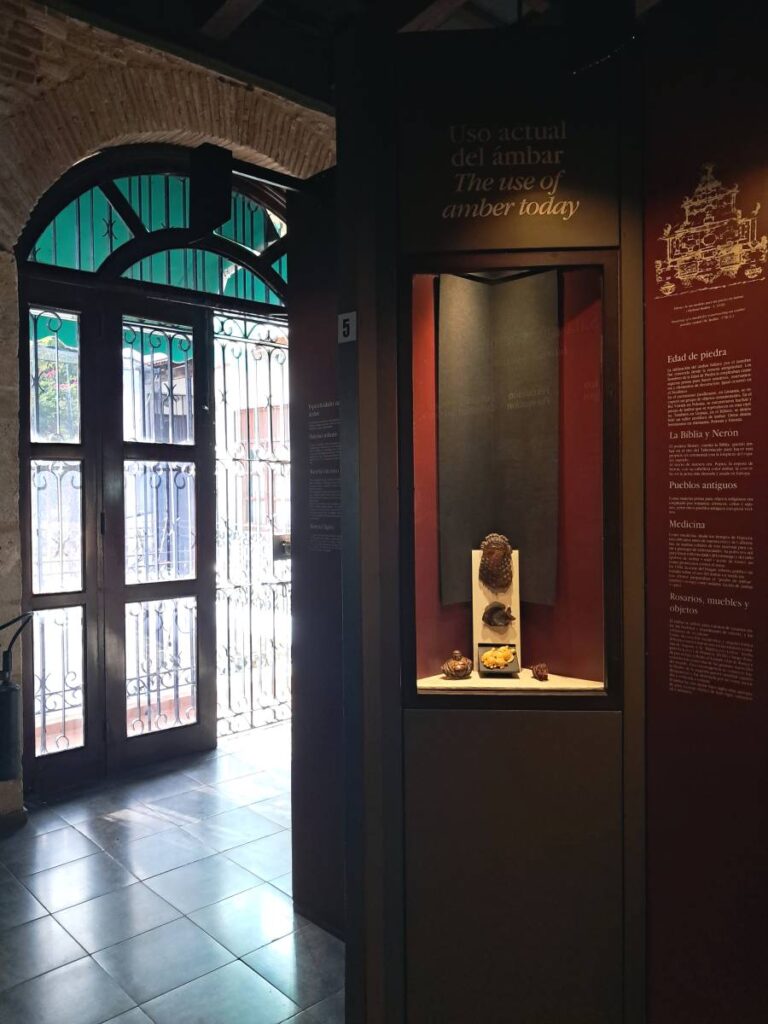
If you continue along Calle Isabel la Católica, then at the next intersection with Calle Restauración, turn left and walk one more block. Right there, on the corner with Calle Arzobispo Meriño, you’ll discover one of the city’s finest museums: the Amber World Museum.
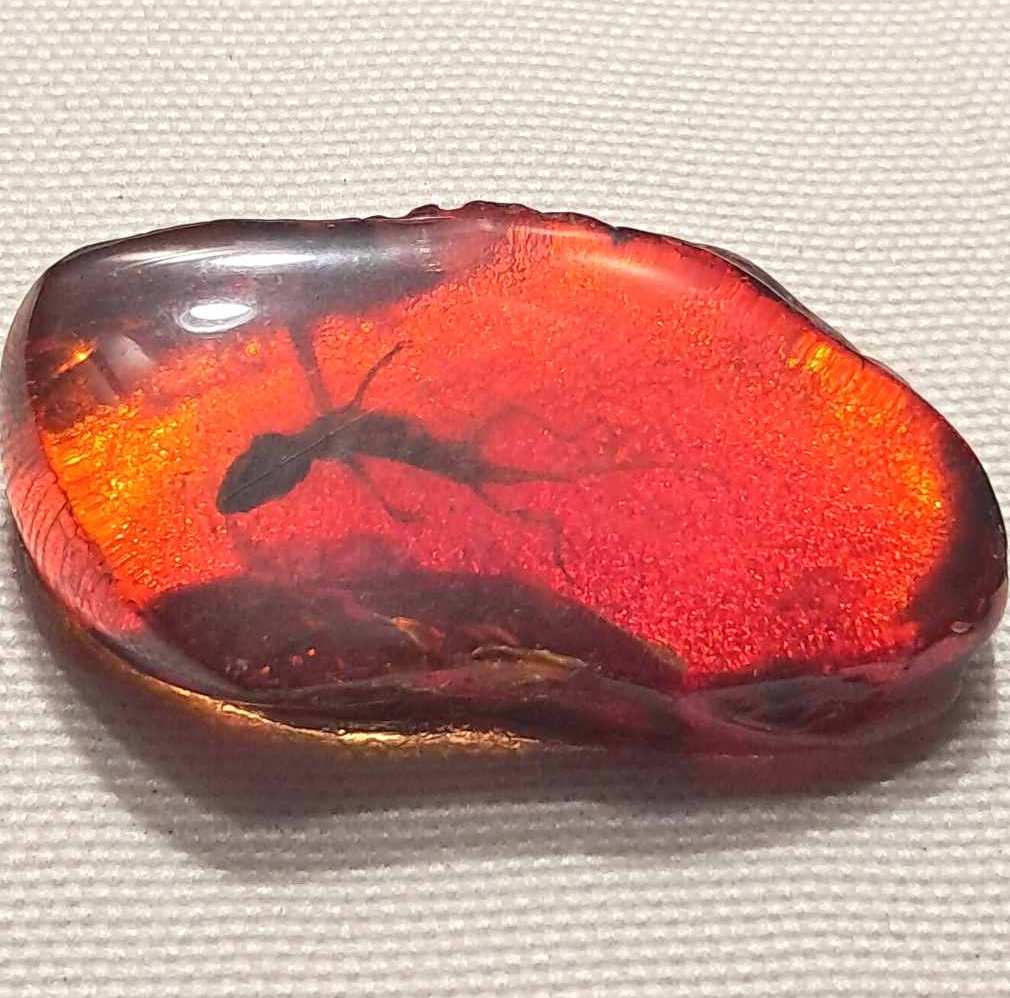
The museum is privately owned. It opened in 1996 at the initiative of Don Jorge Caridad, founder and president of an amber processing company. The Museo Mundo del Ámbar is considered to house one of the world’s largest collections of Dominican amber. An English-speaking guide will introduce you to a magnificent collection of amber in every imaginable color and shade. You’ll learn how to distinguish genuine amber from imitations and be guided through an exhibition full of wonders—amber containing butterflies, ancient plants, and even a lizard. You’ll also discover how amber is mined and in which province it is found. The museum also features educational slides and short videos.
REFERENCE: Amber is not a mineral but an amorphous organic substance. Dominican amber is fossilized resin from the extinct tropical tree Hymenaea protera, a member of the legume family and a distant relative of the acacia. Resin is released when the tree’s bark is damaged. It takes between 5 and 20 million years for the resin to polymerize and become amber. Amber feels warm to the touch, burns, melts, and becomes electrically charged when rubbed. It is quite brittle, yet surprisingly easy to work with.
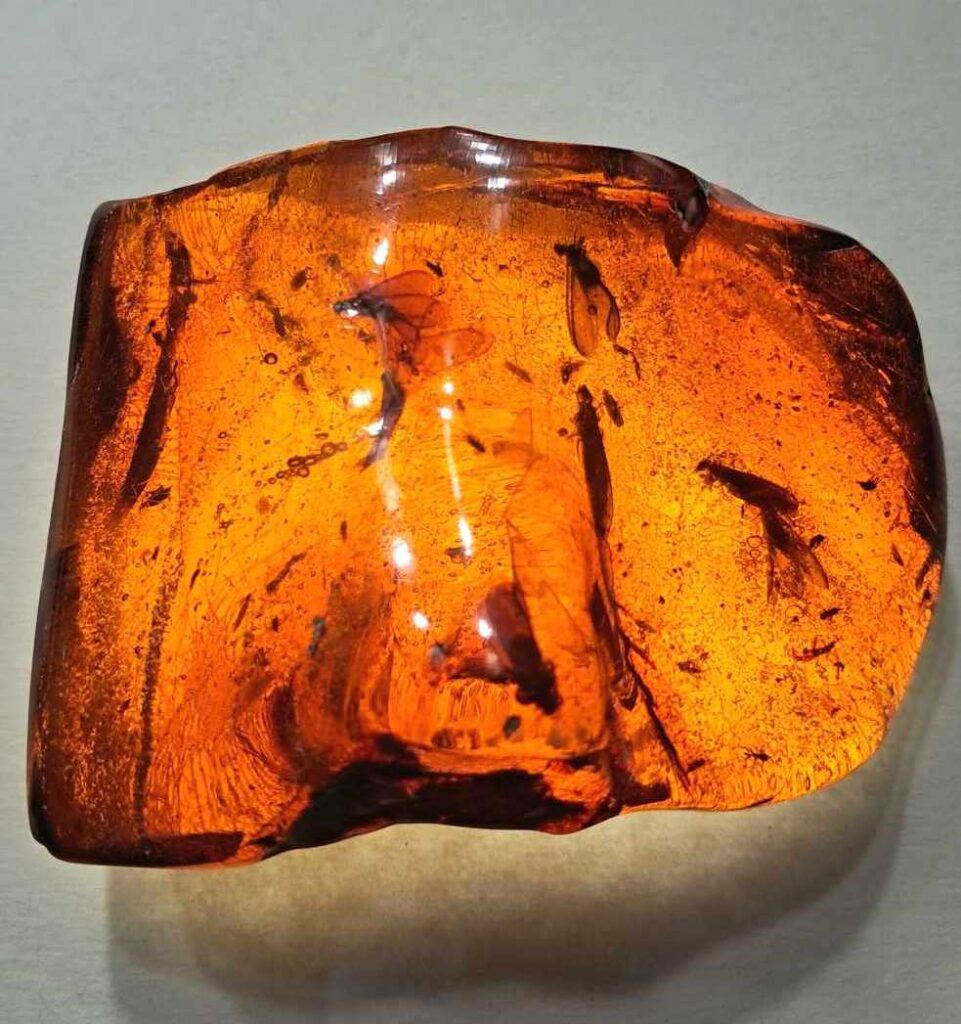
Dominican amber is famous for its extraordinary range of colors, from transparent honey tones to the rarest blue-green shades. In direct sunlight it may glow with a neon-blue hue, while some pieces are almost black. Amber’s natural color is determined by a combination of geological, chemical, and physical processes. For example, natural mud and swamp sediments trapped in the resin create a darker appearance from within, while the absence of oxygen and light underground causes the resin itself to darken chemically. White and cloudy amber contains millions of microscopic air bubbles that scatter light. Iron oxides, pyrite, and even volcanic materials trapped in the liquid resin can produce shades ranging from golden yellow to greenish. And when ancient resin was heated by volcanic activity or forest fires, a compound called perylene was formed. Perylene molecules absorb ultraviolet light, making the amber appear blue to the human eye…
The most distinctive feature of Dominican amber is its remarkable transparency. It also very often contains fascinating inclusions—prehistoric insects and fragments of ancient plants preserved inside.
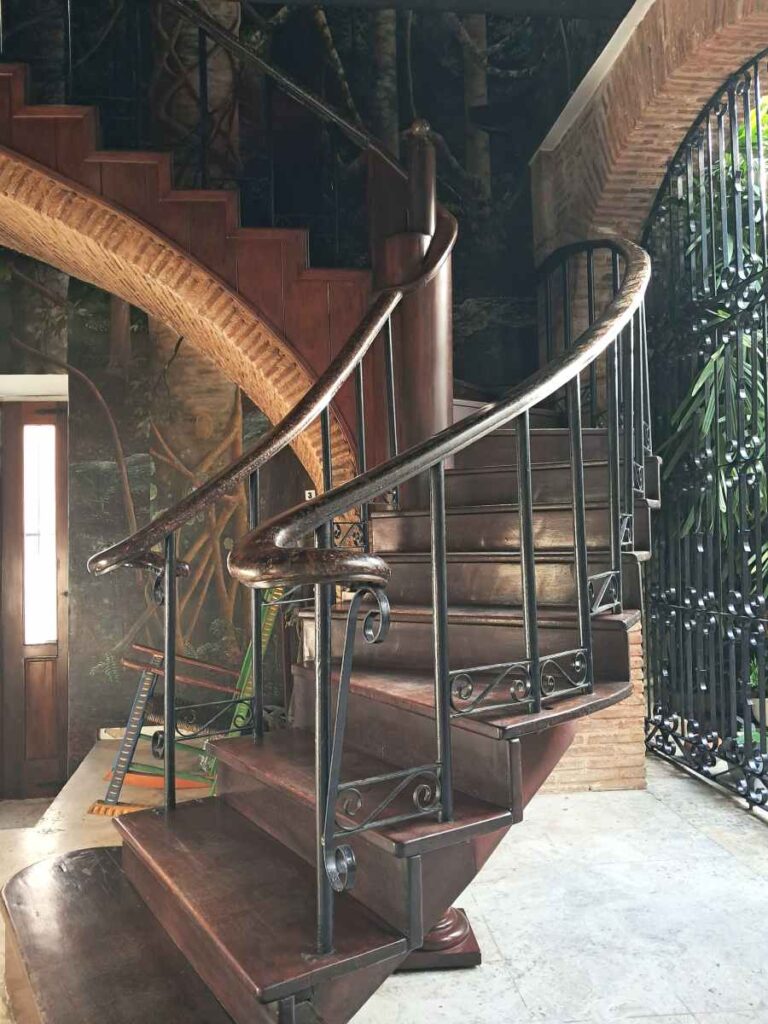
And don’t forget to take a close look at the magnificent staircase leading up to the museum.
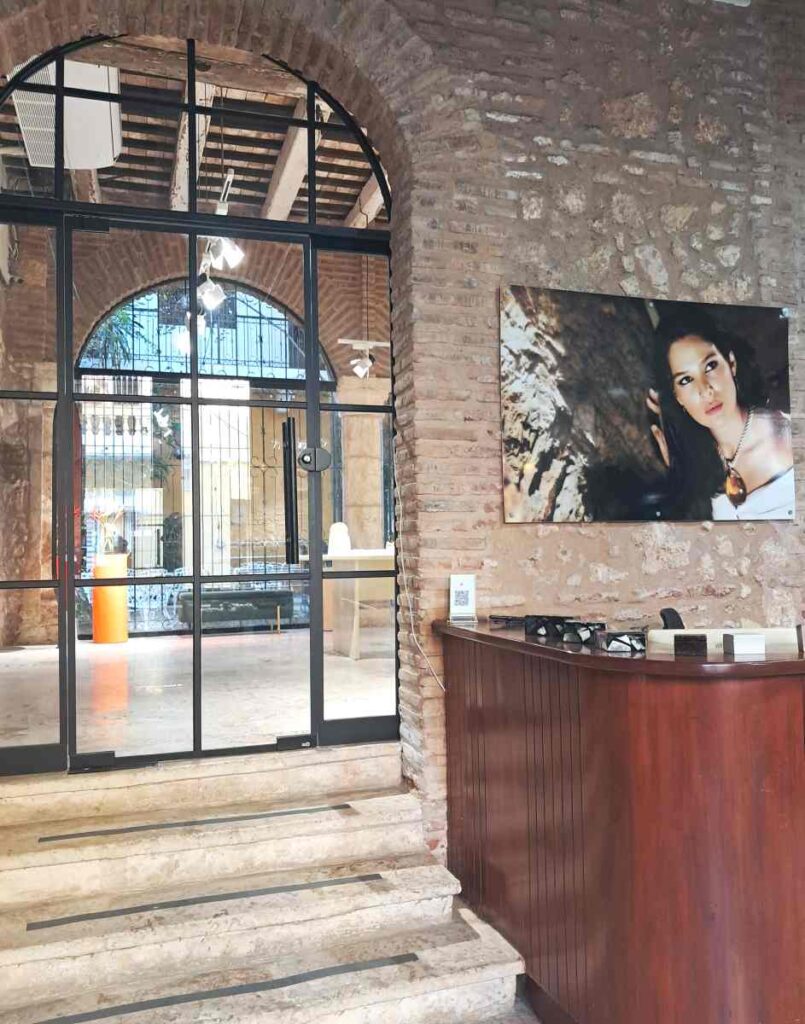
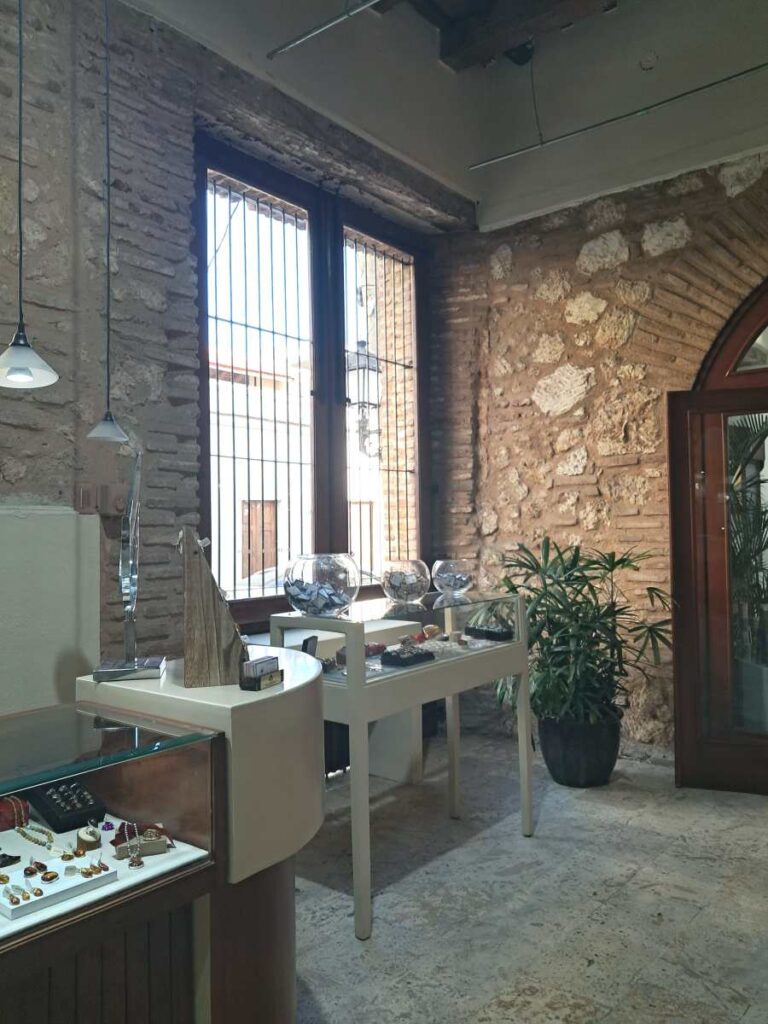
On the ground floor, an elegantly designed shop offers handcrafted jewelry made from Dominican amber and larimar.
Ancient sages believed that amber possessed the power of a protective talisman, bringing both good fortune and protection. According to tradition, these qualities are thought to be strongest when the amber is received as a gift…
Amber World Museum (Museo Mundo del Ámbar), Calle Arzobispo Meriño 452, corner of Calle Restauración. Tel.: +1 (809) 682-3309. Opening hours: Monday–Saturday (9:00 a.m.–6:00 p.m.), Sunday (9:00 a.m.–1:00 p.m.).
Admission is inexpensive. If you’ve enjoyed your guided tour, you may wish to leave your guide a small personal tip.
Continue uphill along Calle Restauración.