In Spanish, “cordón” means “cord” or “rope.” And there it is, right on the façade of the building. The portal is decorated with this carved stone pattern. It belongs to the Isabelline architectural style, a form of late Gothic. The twisted cord is not merely decoration, but a symbol of the Franciscan Order. The monks of the Order of Saint Francis use just such a long cord to tie their robes. Even today, Franciscan monks in long brown habits, with twisted cords around their waists, can occasionally be seen wandering through the streets of old Santo Domingo…
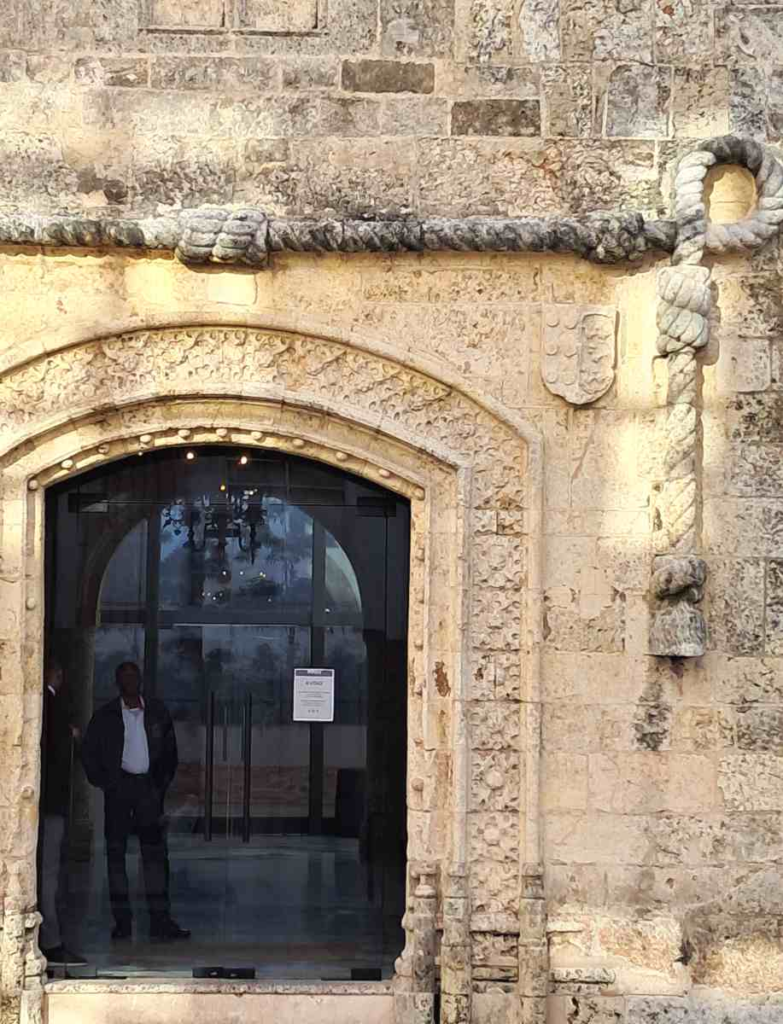
Casa del Cordón is considered one of the earliest two-story stone buildings from the age of Columbus, dating back to 1502. Its first owner was Francisco de Garay. Señor Garay arrived on the island together with Christopher Columbus. He is known to have served as a notary on the island of Hispaniola and amassed an enormous fortune in real estate.
The walls of this building remember Columbus’s son Diego and his wife María de Toledo. They lived here while their palace, the Alcázar de Colón, was being built. Their daughters, Felipa and María, were born in this house. Later, the “royal pirate” Francis Drake also stayed here after sacking the city in 1586…
REFERENCE: In January 1586, Drake’s squadron landed near Haina and occupied Santo Domingo, capturing the Ozama Fortress. The English held the city for about a month. Drake demanded an incredibly large ransom and threatened to burn one district for every day of delay. After negotiations, the Spanish side agreed to pay only 25,000 ducats. An enormous sum for the time, equivalent to many dozens of kilograms of gold… According to Dominican sources, during the occupation of Santo Domingo, Francis Drake used Casa del Cordón as his residence and as the place where negotiations over the city’s ransom were held. In February 1586, after receiving the reduced payment and leaving much of the city devastated, Drake departed, taking Santo Domingo’s artillery, ship bells, and part of the city’s merchandise with him.
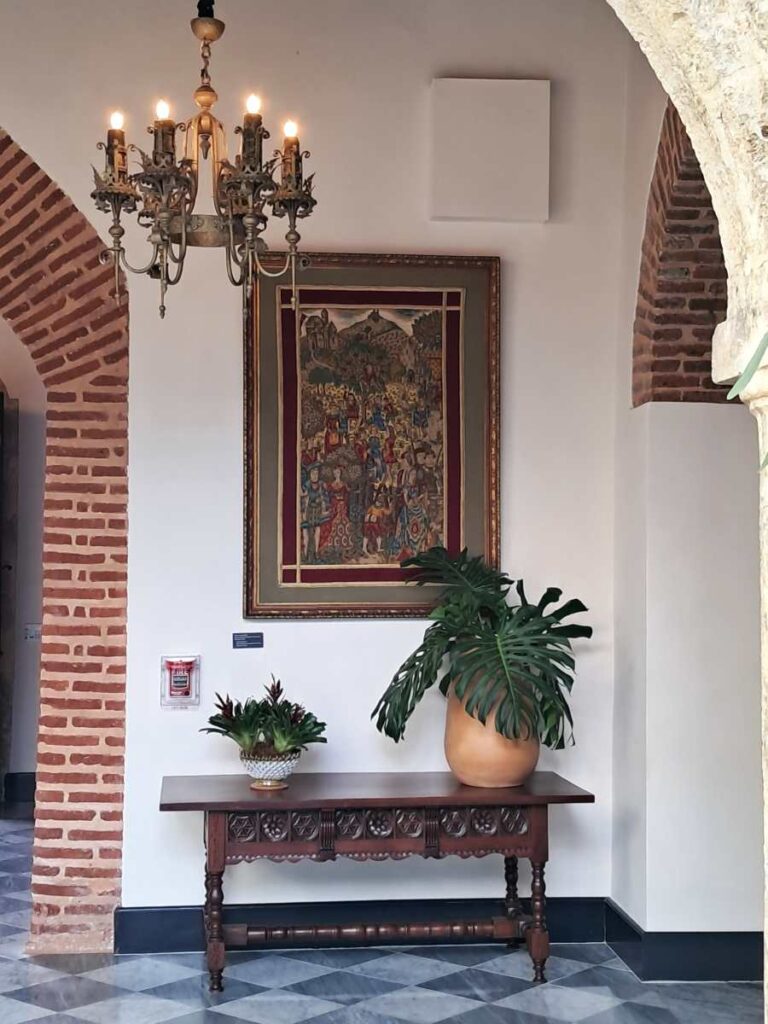
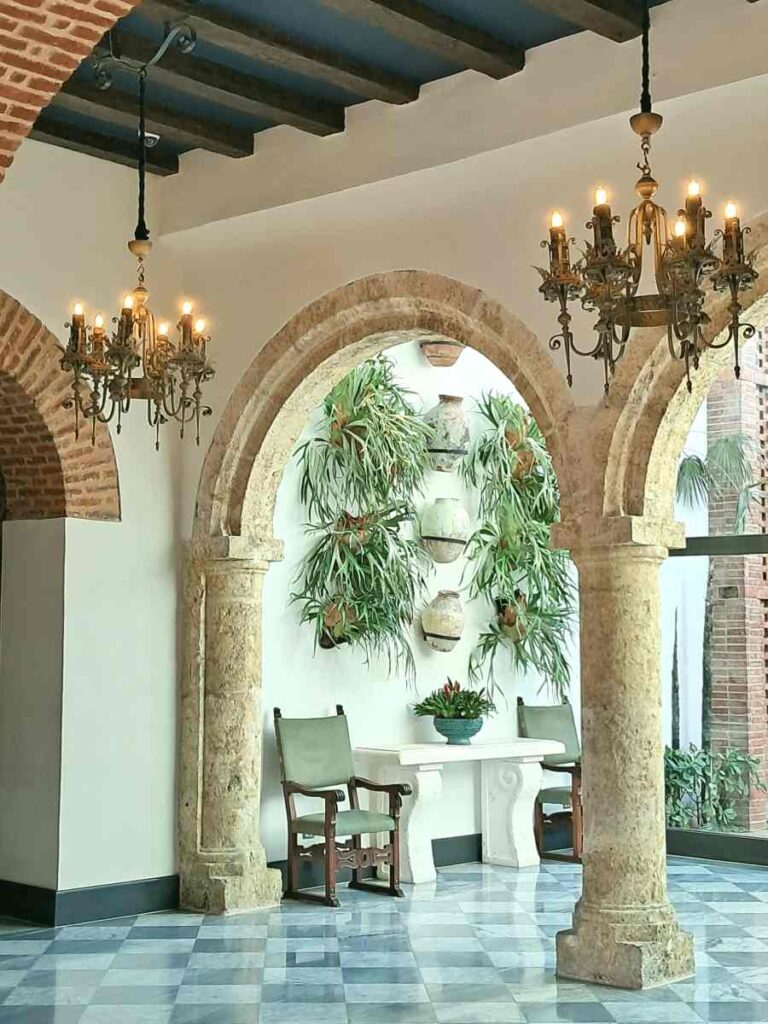
For many years, Casa del Cordón housed a branch of Banco Popular. The bank financed the restoration of the building. It has since moved elsewhere. And from 2024, Casa del Cordón began welcoming visitors… So now the interior and the building’s two inner courtyards can be explored freely during opening hours.
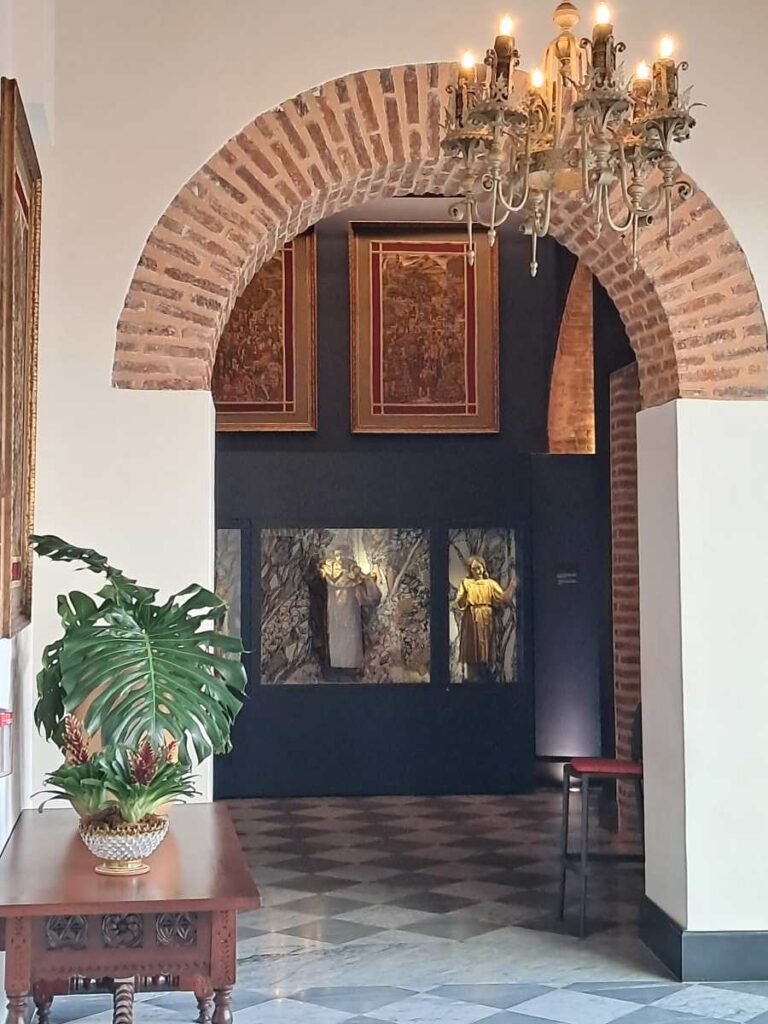
Today, Casa del