In 1505, a monastery of the Order of Saint Francis was established in Santo Domingo. The country’s very first elementary schools began operating there. Children were taught reading, writing, arithmetic, and the fundamentals of the Catholic faith (the catechism). The students included the children of Spanish colonists as well as Taíno Indians who had converted to Christianity… Then, by the middle of the 16th century, the Monastery of San Francisco was completed, and the schools moved there.
The monastery was also home to the city’s very first water supply system. Archaeological excavations have shown that there was a large stone cistern here. From it, water flowed downhill through clay pipes toward today’s Arzobispo Meriño Street, Isabel la Católica Street, the Cathedral, Colón Park, and the Alcázar de Colón. Archaeologists believe that, alongside this early municipal water system, the Colonial Zone also relied on wells found in virtually every house. During excavations in old Santo Domingo, they discovered simple well mechanisms: wooden windlasses with buckets attached by chains or ropes. In those days, slaves turned the handles and drew the water. The well water filled household storage tanks—cisterns and barrels—from which it flowed through clay pipes to kitchens and service courtyards by gravity.
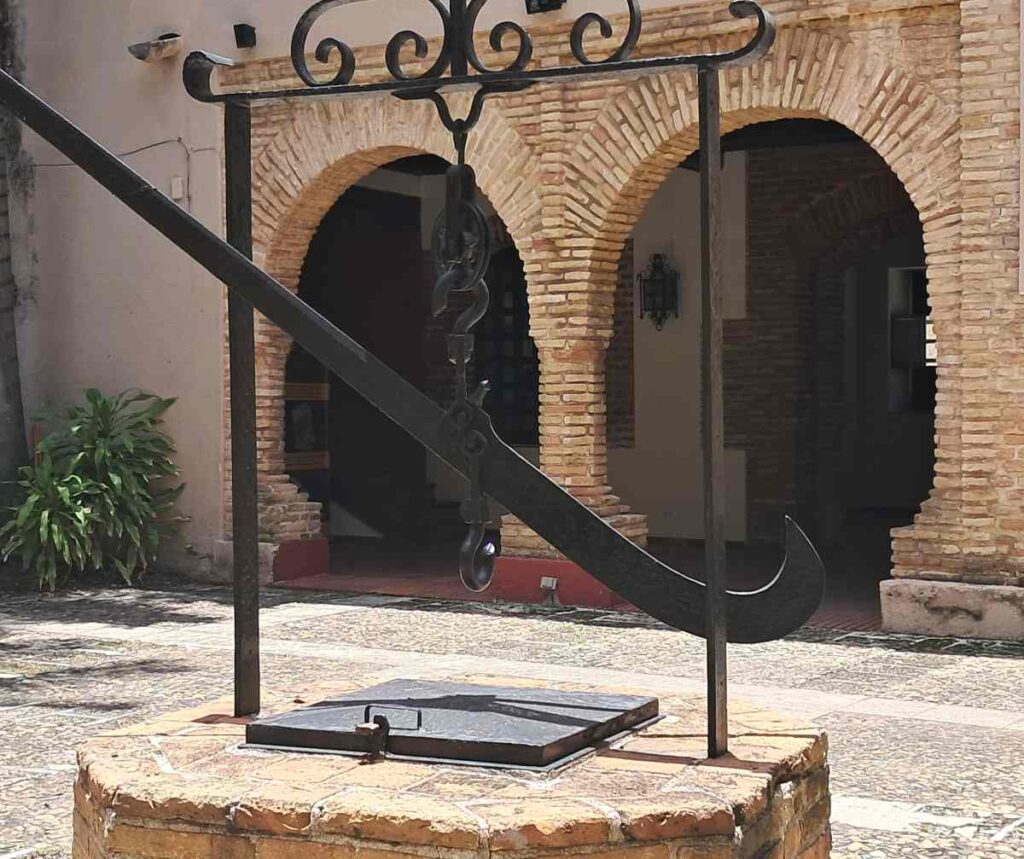
The well of the old Jesuit residence… A charming but rather abstract reconstruction—unlikely to help anyone actually draw water…
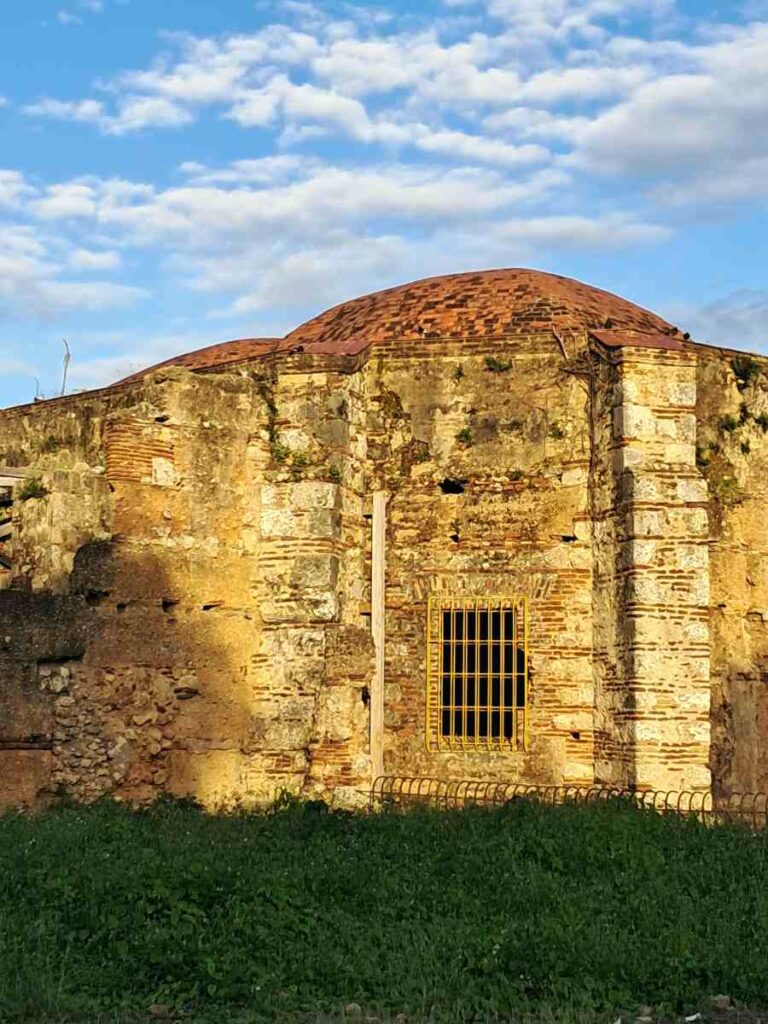
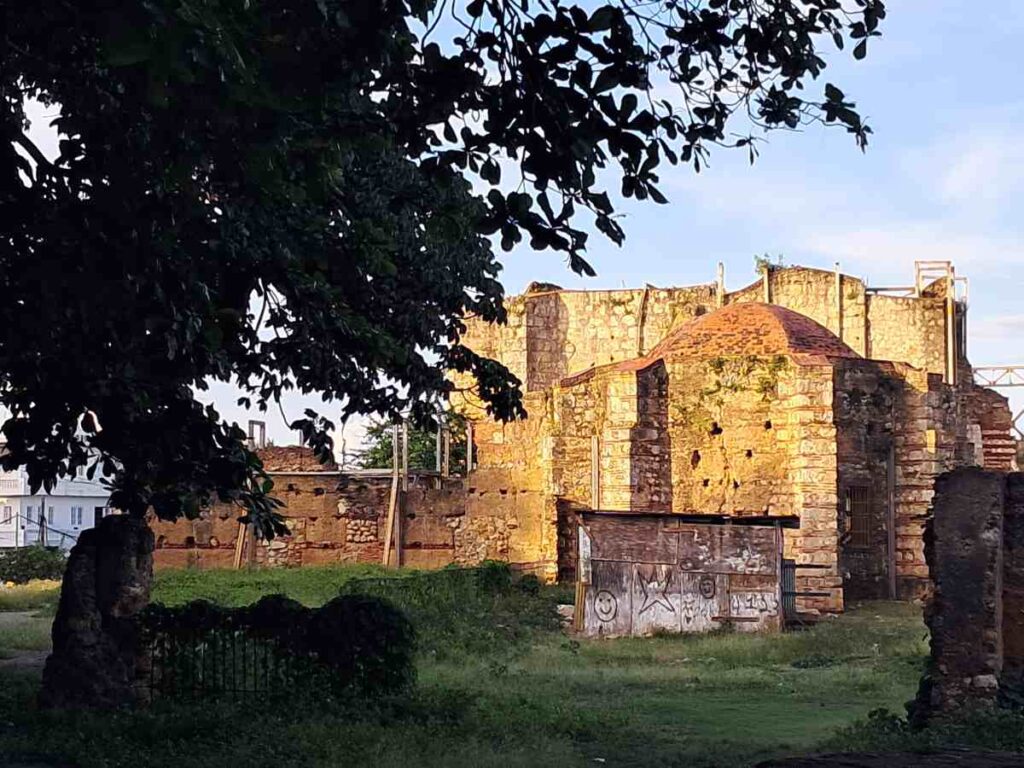
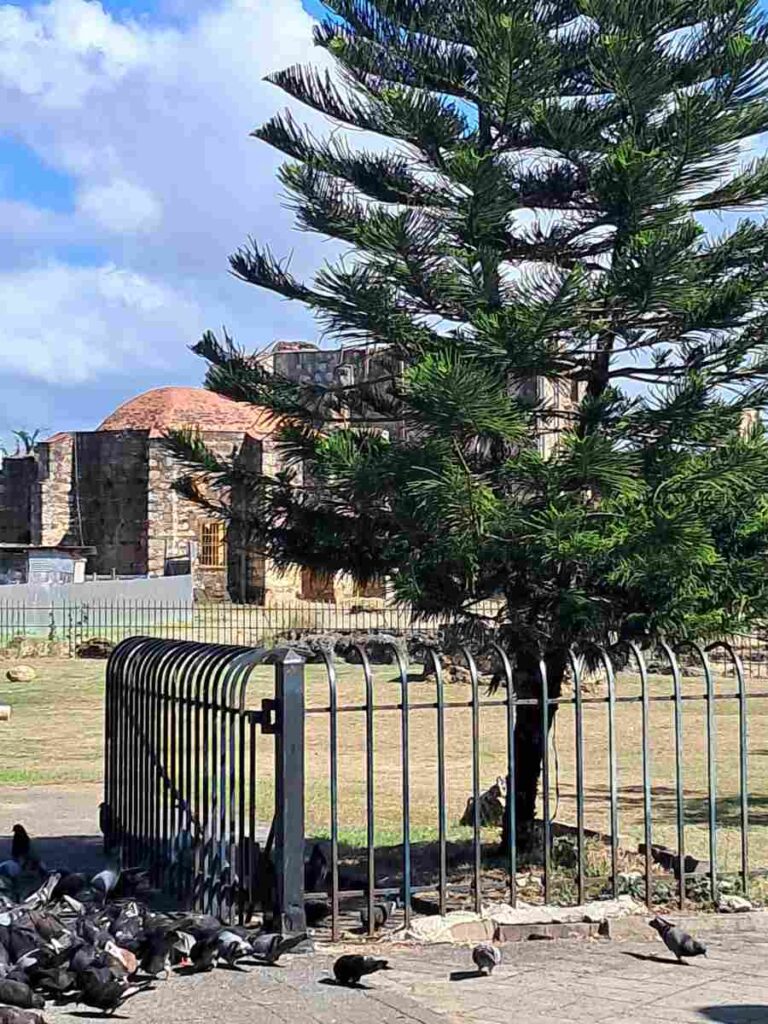
Throughout its long history, the monastery was repeatedly damaged, looted, and rebuilt. But time eventually had the final word. Today, these majestic ruins are protected by UNESCO. Even now, it is still easy to recognize the layout of the three main structures: the great church, the chapel, and the monastery building with its cloister.
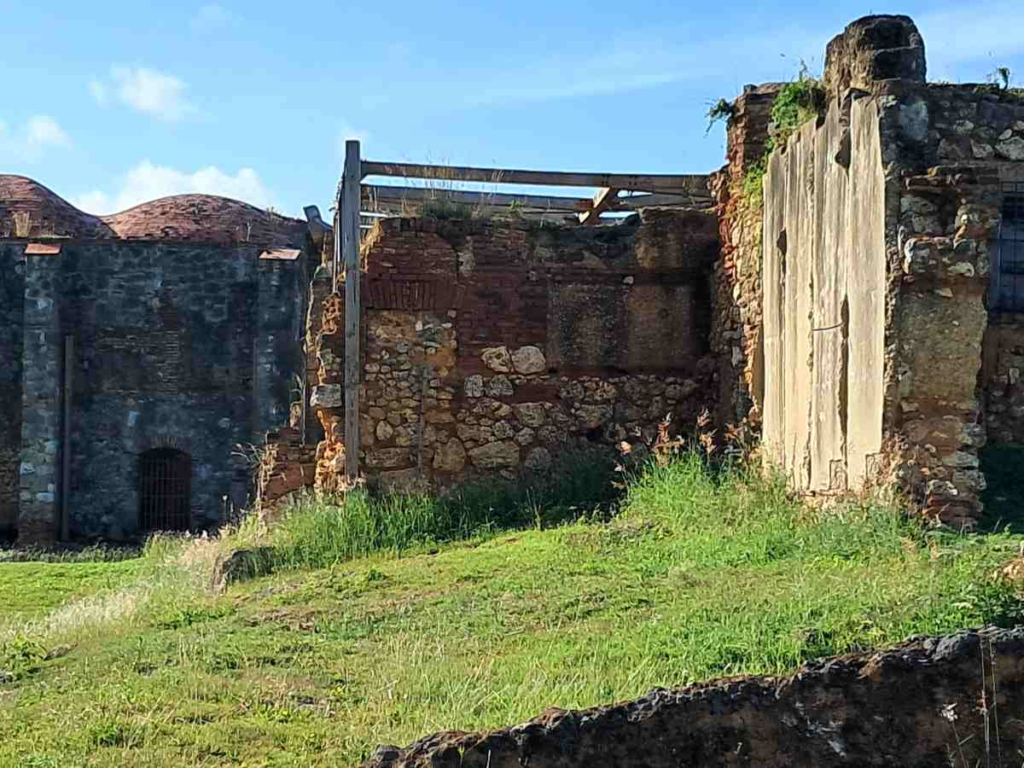
REFERENCE: A chapel (from the Italian cappella) is a small place of worship in Catholic and Anglican architecture. Chapels were used for prayer, housing relics, or accommodating church choirs. They could either be built inside larger churches or stand as separate small buildings.
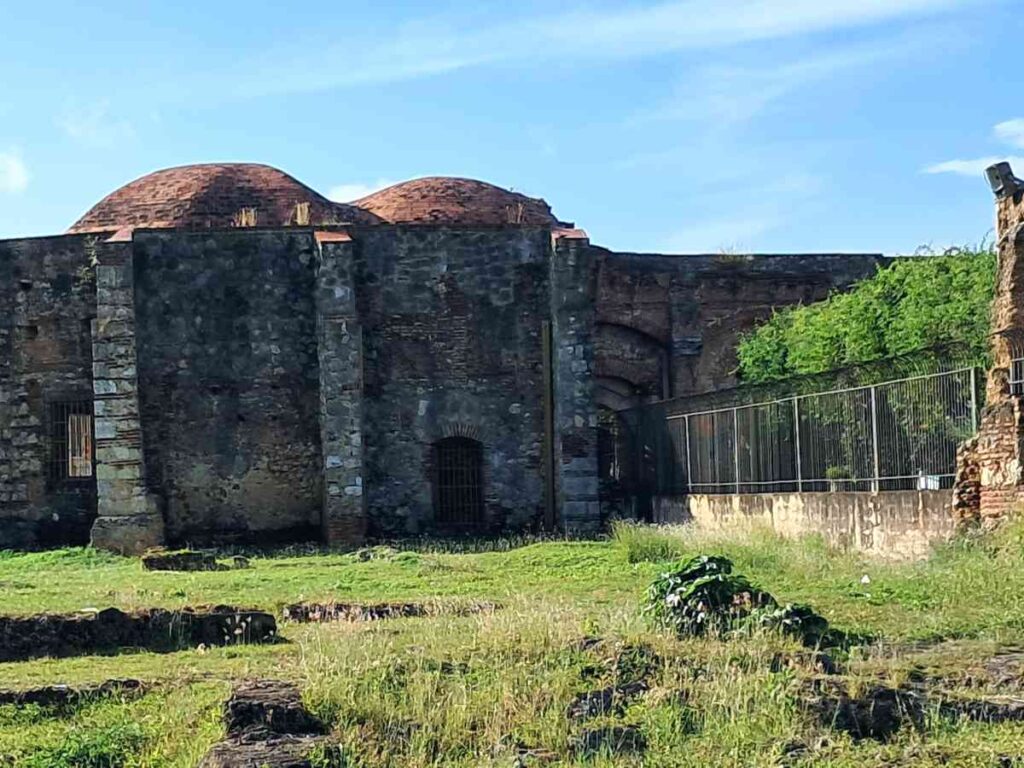
REFERENCE: A cloister (from the French cloître, derived from the Latin claustrum, meaning “enclosed”) is an inner courtyard in a Catholic monastery, surrounded by covered walkways. It is a characteristic feature of Romanesque and Gothic architecture.
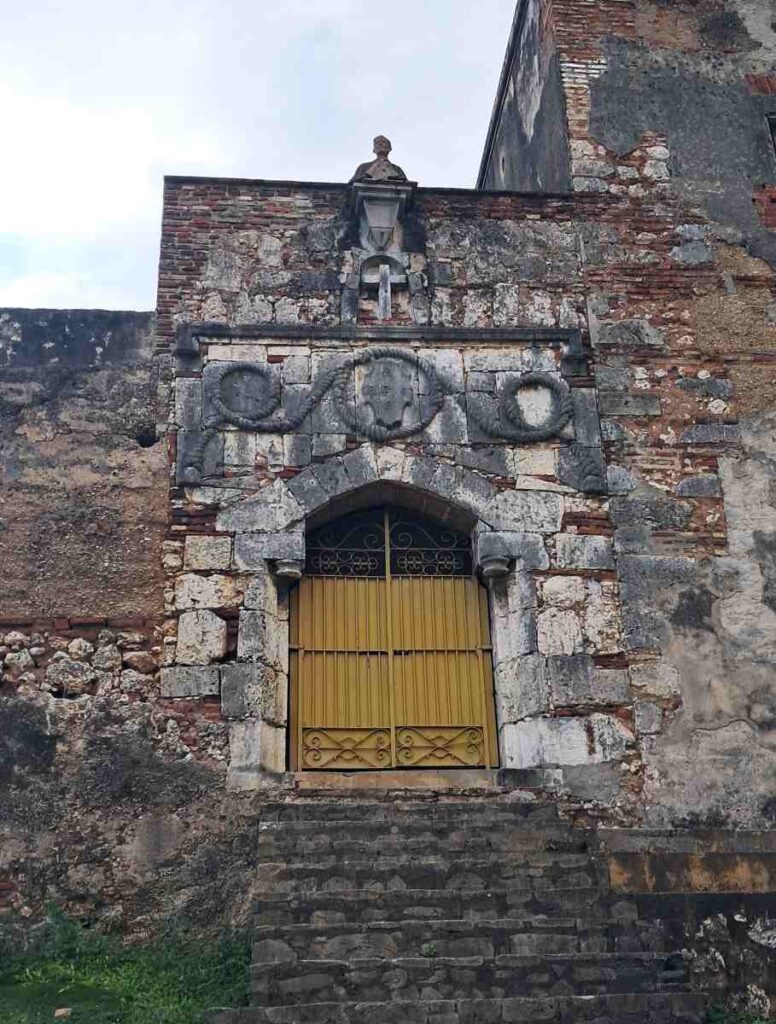
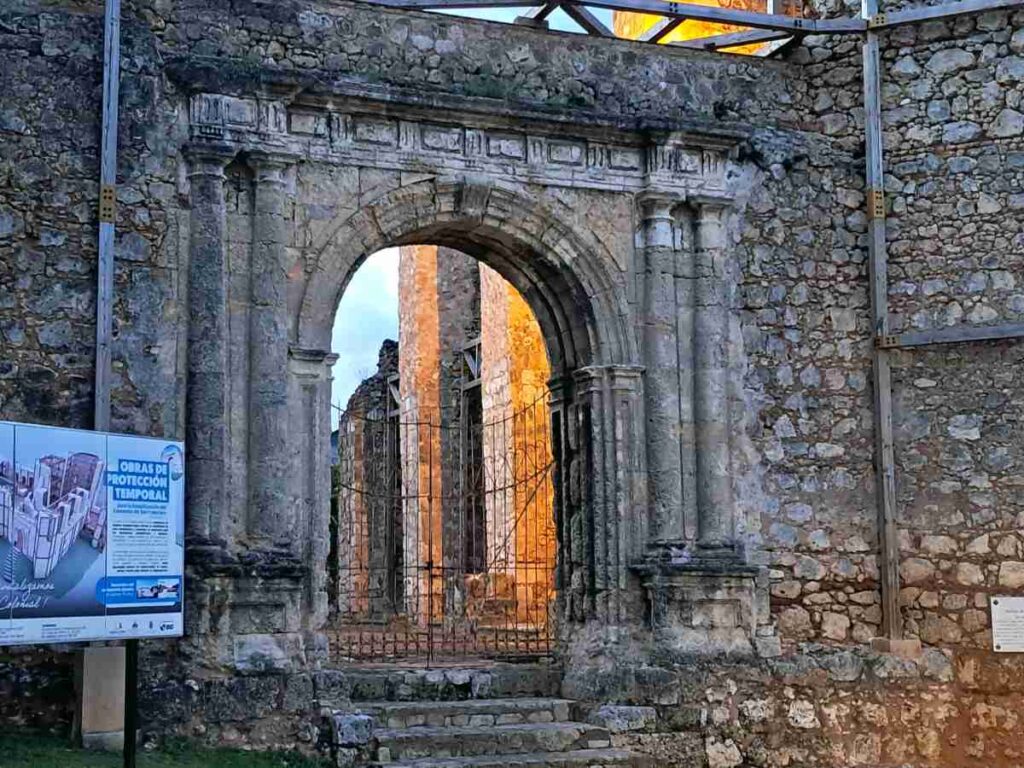
The monastery entrance has survived in excellent condition. Its portal is decorated with a beautifully carved Franciscan “cord.” (Remember Casa del Cordón that you visited a little earlier?) The enormous arch (see the first photograph above) is the entrance to the church. In the past, weddings, concerts, and classical music evenings were sometimes held inside. Today, the entire complex is once again undergoing a lengthy restoration…
REFERENCE (from Dominican history): One of the country’s Franciscan monasteries educated the legendary Taíno leader who was baptized into the Christian faith under the name Enriquillo. The son of a Taíno chief, he lost his parents at an early age. As he grew older, he was assigned to a Spanish colonist under the encomienda system, which forced Indigenous people into compulsory labor. After suffering severe abuse at the hands of the Spanish, he escaped in 1519 to the remote Bahoruco Mountains, where he gathered large groups of Taíno followers. For fourteen years, Enriquillo waged a guerrilla war for the freedom of his people. The Spanish never managed to defeat him. In 1533, an official peace treaty was signed between Enriquillo and the representative of the Spanish Crown. His people were granted their freedom, lands, and the right to govern themselves. Enriquillo died in 1535. Today, monuments to this National Hero and champion of freedom stand throughout the Dominican Republic. The country’s remarkable salt lake, Lake Enriquillo, as well as a square and a street in Santo Domingo, bear his name.
From the monastery’s portal with the Franciscan cord, walk down the steep Calle Emiliano. At the intersection, turn right onto Calle Arzobispo Meriño. Follow it straight to Colón Park (Parque Colón). Your landmark will be the tall white Old City Hall with its clock tower. It’s easy to recognize—by Colonial Zone standards, it is quite a tall building thanks to its bell tower.