In the eastern part of Columbus Park, be sure to notice the Palacio de Borgella. A UNESCO World Heritage Site. This palazzo was built during the first half of the 16th century. During the Haitian occupation (1822–1844), it was converted by the Haitian governor Jérôme Borgella into the Government Palace of Haiti. That is how the mansion acquired its present name…
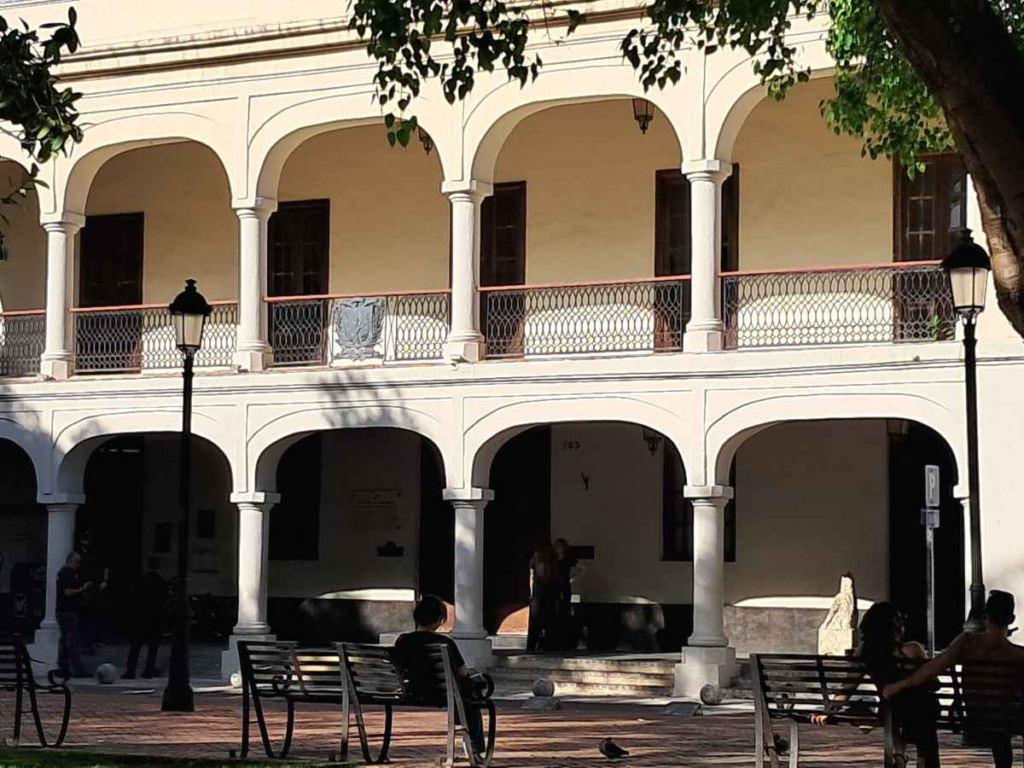
REFERENCE: A palazzo (Italian: Palazzo, from the Latin Palatium, meaning “palace”). The term comes from the Palatine Hill in Rome, where the Roman emperors built their palaces. It refers to the type of grand urban mansion that became characteristic of the Italian Renaissance during the 15th century.
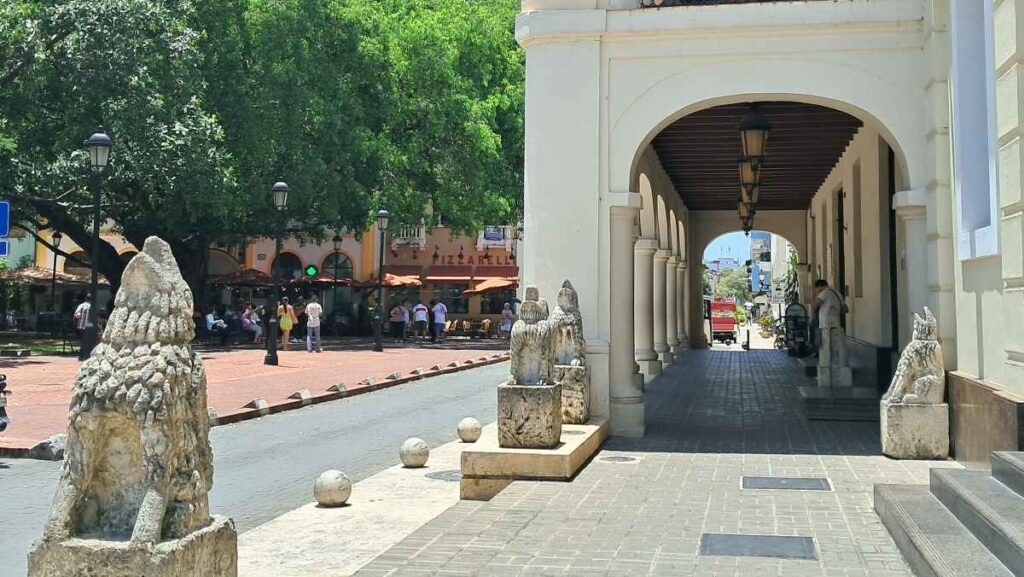
Right in front of you are the gargoyles, removed from the façade of the historic building and placed here where they can be admired up close. Gargoyles are actually stone rainwater spouts with channels carved inside them. They were installed high along the roof cornices of buildings. Unlike chimeras — the decorative stone monsters often seen on cathedral roofs — gargoyles are practical, everyday and genuinely useful. They carry rainwater away from the walls and foundations, helping to prevent them from deteriorating… A wonderfully Gothic architectural idea.
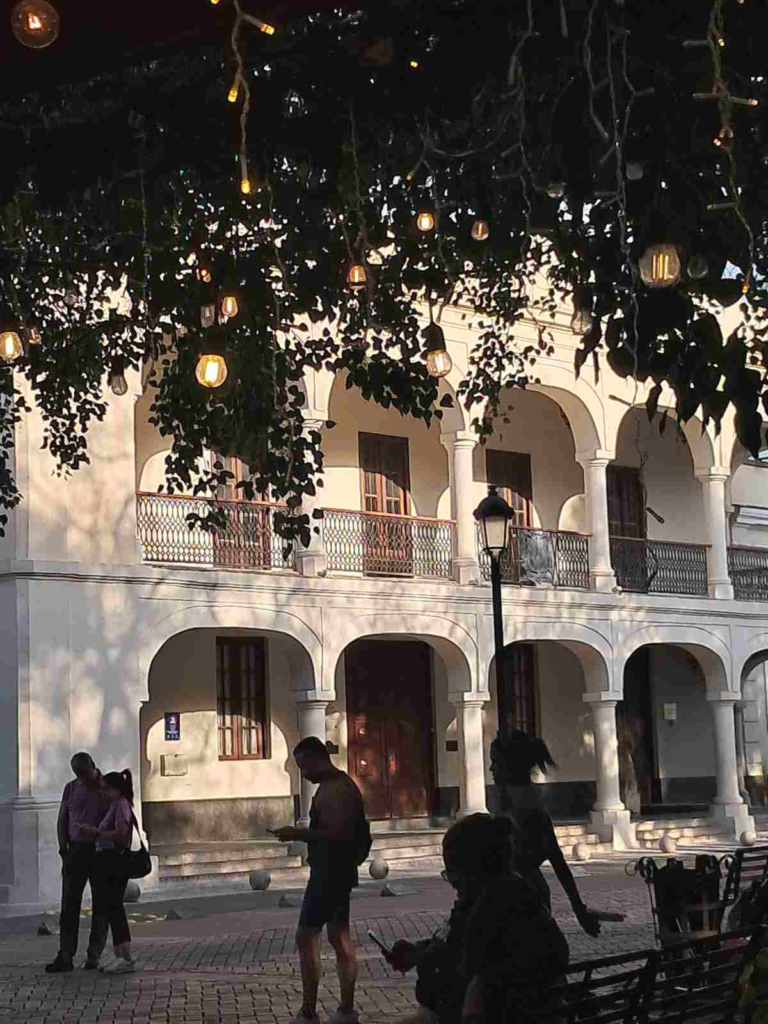
The arcades on the ground floor of the Borgella Palace were originally built in brick, although today they are plastered over. They still have a certain charm. And they make a wonderfully cosy place to wait out a tropical rainstorm…
Continue along Calle Isabel la Católica toward Calle Padre Billini.