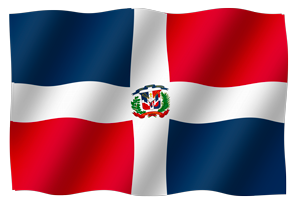
Catedral Basílica Menor de Santa María / Catedral Primada de América.
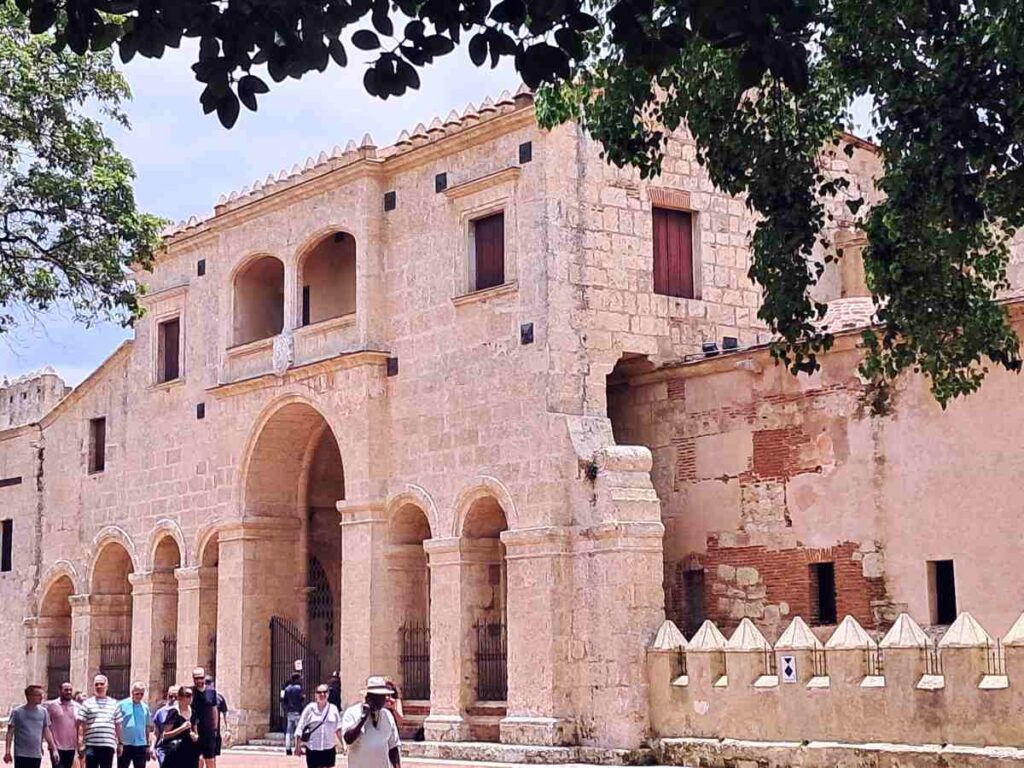
By Royal Order, in May 1510 the contract to build the Cathedral was awarded to the Spanish architect Alonso de Rodríguez. Almost immediately, he set sail for Hispaniola with eleven builders and two stonemasons. The first stone was ceremonially laid by Diego Columbus, the son of Christopher Columbus. However, construction unexpectedly came to a halt. The architect decided that Mexico looked more interesting. And departed, taking the plans and the workers he had brought with him…
The “first stone” was laid for a second time 11 years later by a newly arrived bishop. Construction proceeded very slowly… For many years, the bishop complained that he, despite holding such an important position, quite literally had no roof over his head.
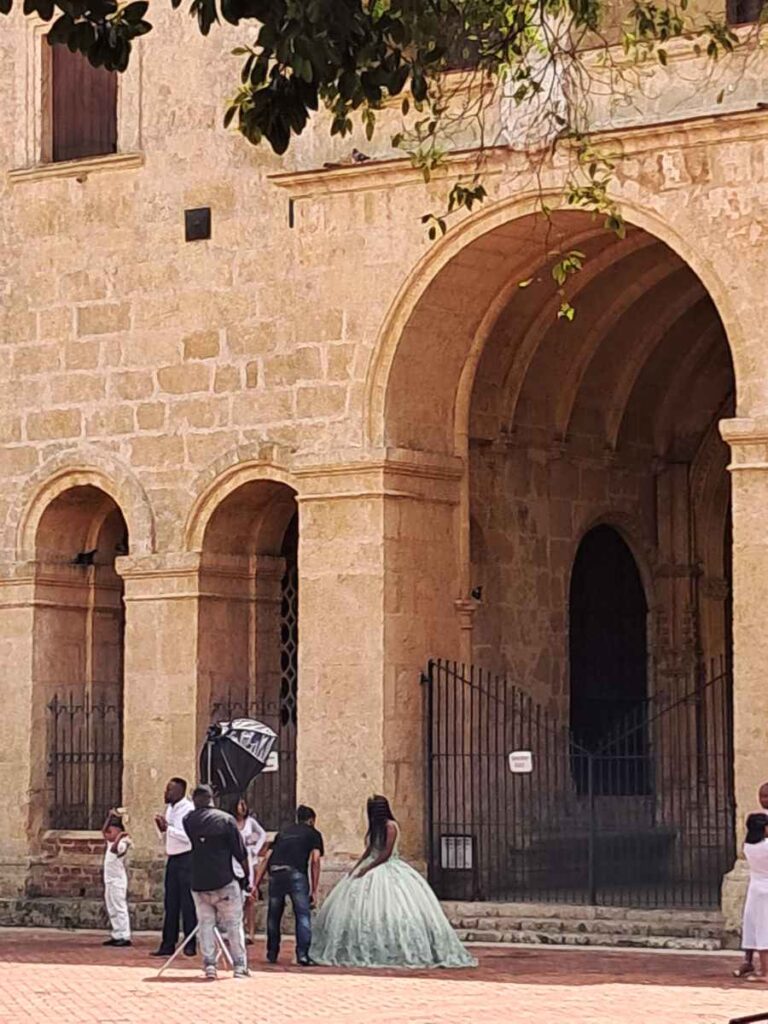
Thirty years later, despite the fact that the project remained unfinished — the planned spire was never built — construction of the Cathedral was stopped. In the middle of the 16th century, a papal decree granted the Cathedral primacy over the other churches of the New World. It became the centre of the Christian world in the hemisphere.
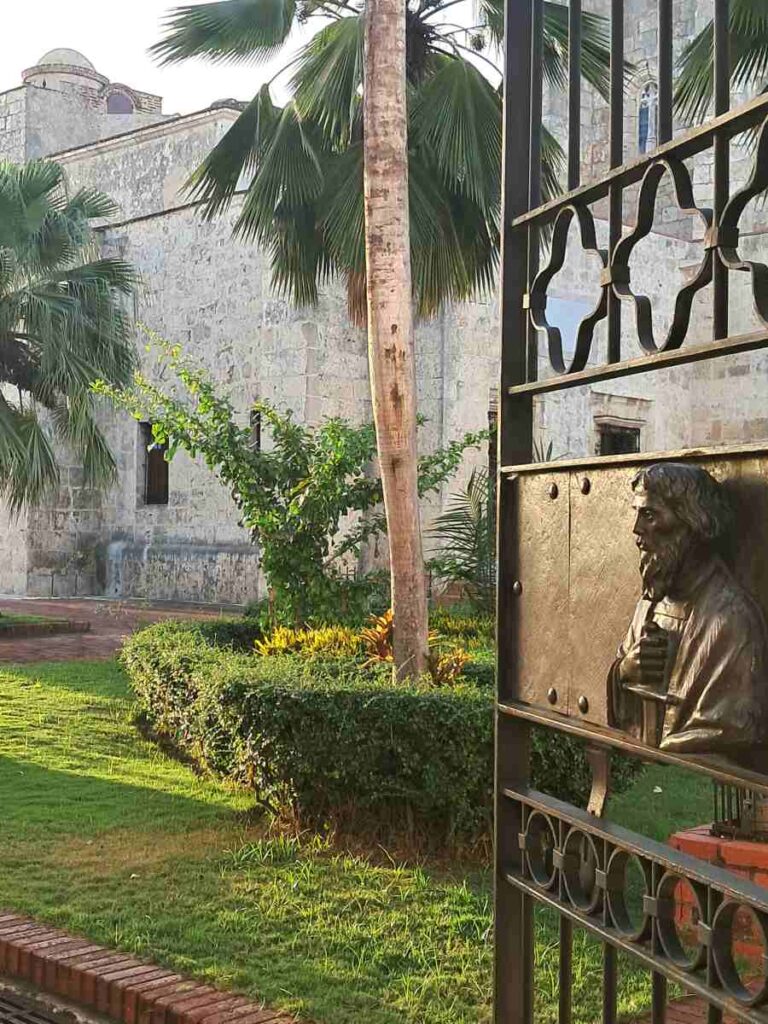
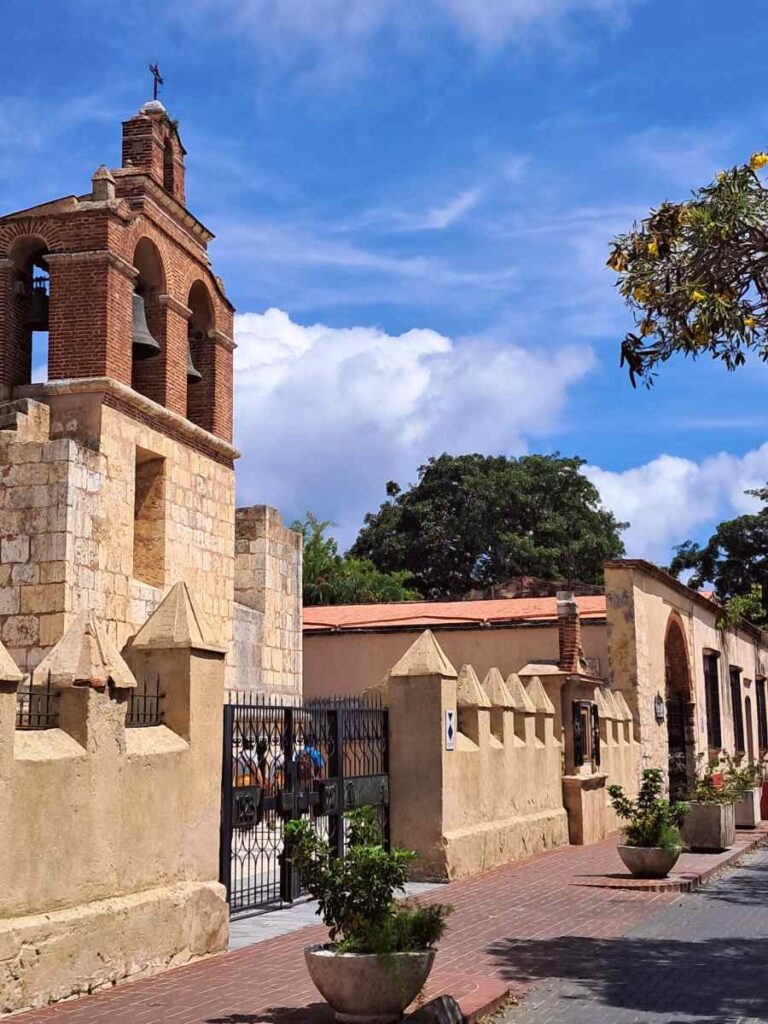
The Cathedral is a UNESCO World Heritage Site. Its architecture is a mixture of late Gothic and Renaissance styles.
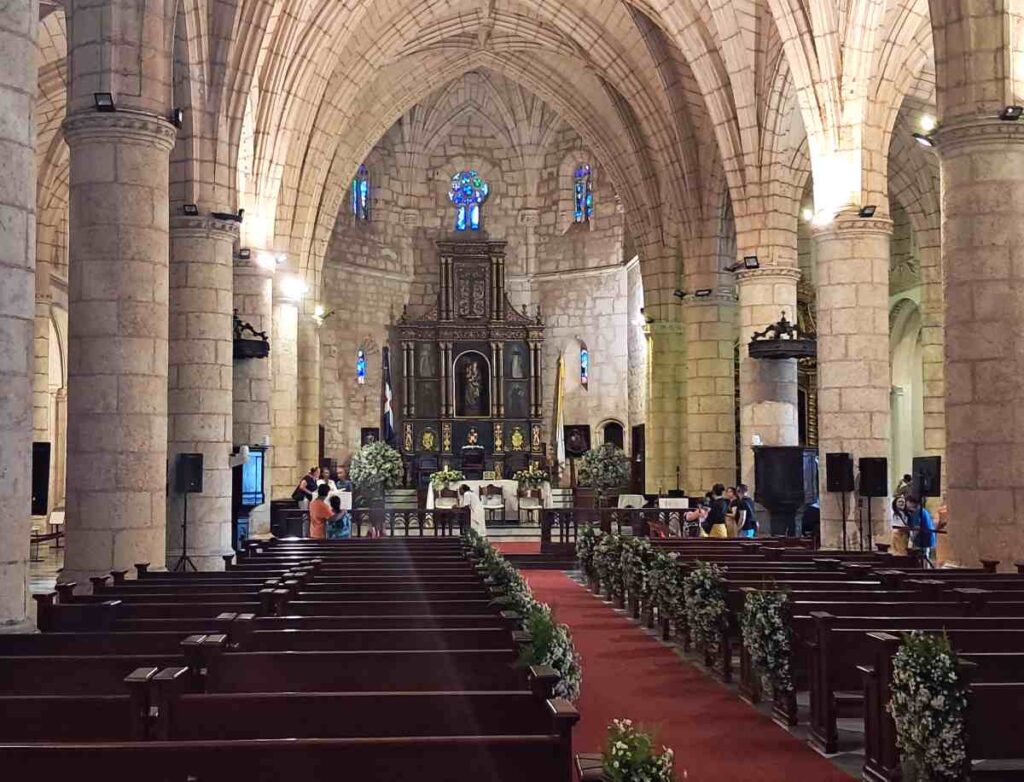
REFERENCE: A nave — from the French nef and the Latin navis, meaning “ship” — is the long central section of a church interior, usually separated from the neighbouring aisles by rows of columns.
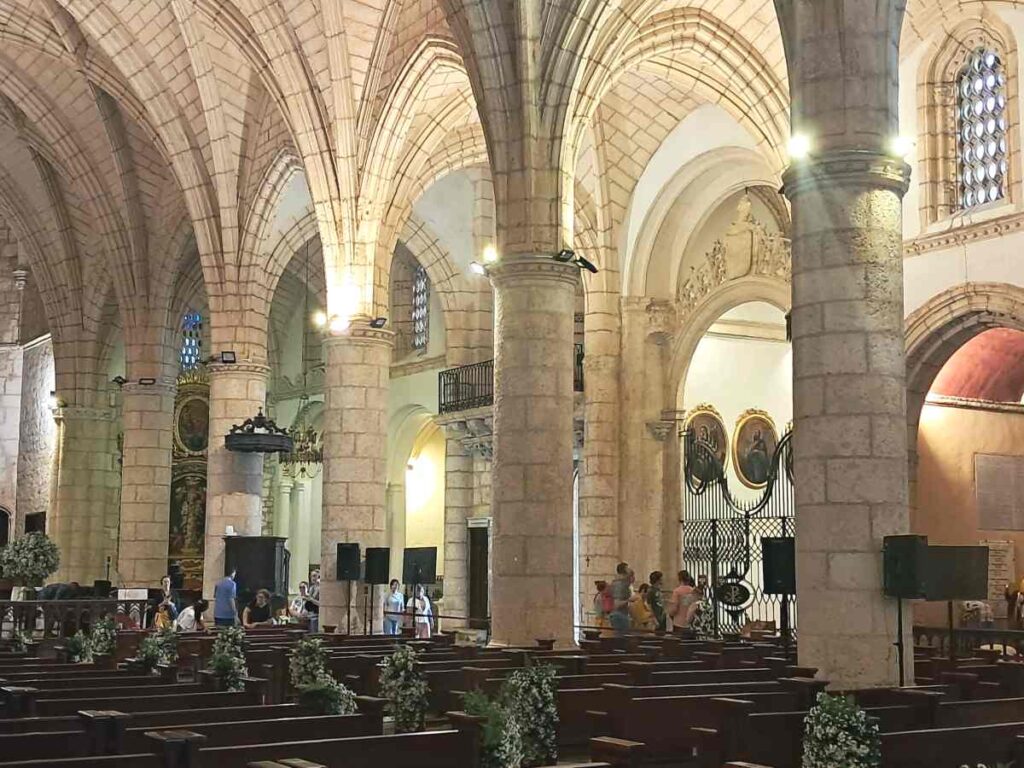
The central nave is higher than the side aisles. Beautiful pointed vaults are supported by massive pillars. In addition to the Main Altar, the Cathedral contains 14 very beautiful side chapels, created at a later date. Beneath the floor and inside the side chapels lie the archbishops of Santo Domingo and prominent figures of the colonial era.
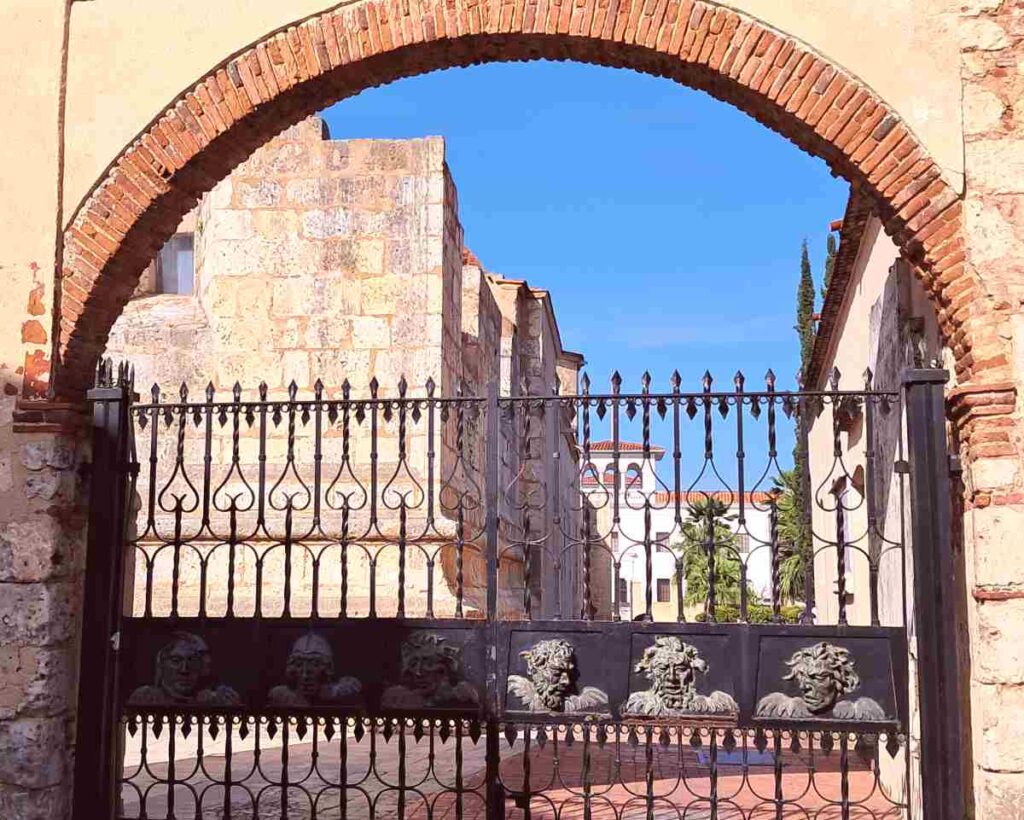
The exterior western façade of the church is especially magnificent and imposing. It is richly decorated in the Plateresque style.
REFERENCE: Plateresque — Spanish Plateresco, from platero, meaning “silversmith” or “jeweller.” An architectural style of the Spanish Renaissance that emerged in the late 15th century. Elaborate architectural ornament, detailed almost like jewellery… To get a better view of this façade, step into the Cathedral courtyard.
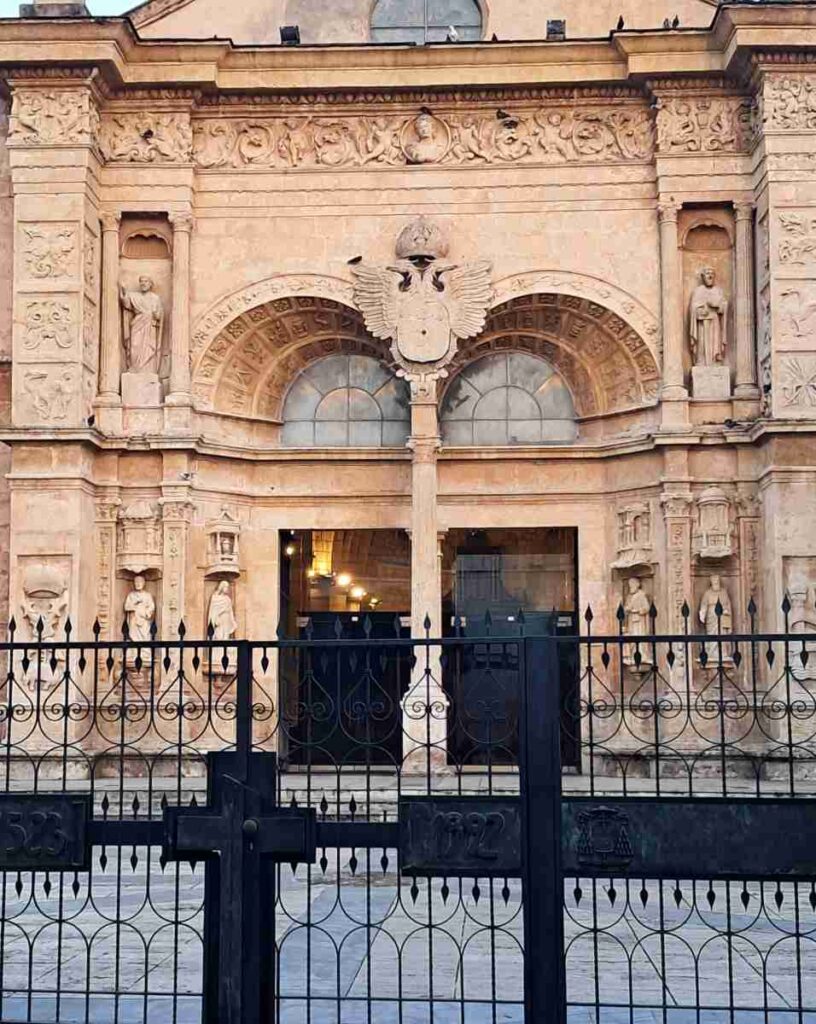
AN INTERESTING DETAIL. The western entrance to the Cathedral was known as the Portal of FORGIVENESS. In colonial times, anyone who managed to reach it came under the protection of the church. They could claim ecclesiastical sanctuary and escape the secular authorities…
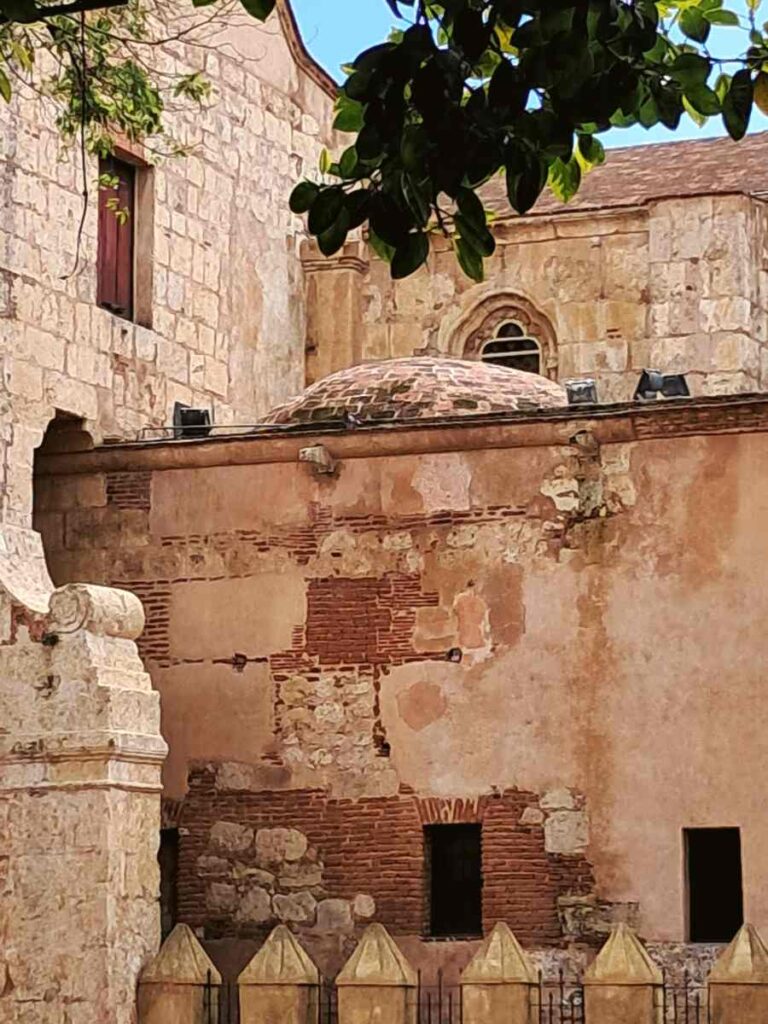
The Cathedral’s decoration includes battlements resembling those of fortress walls. This was not merely an architectural ornament. It helped establish the tradition of fortress churches in Latin America.
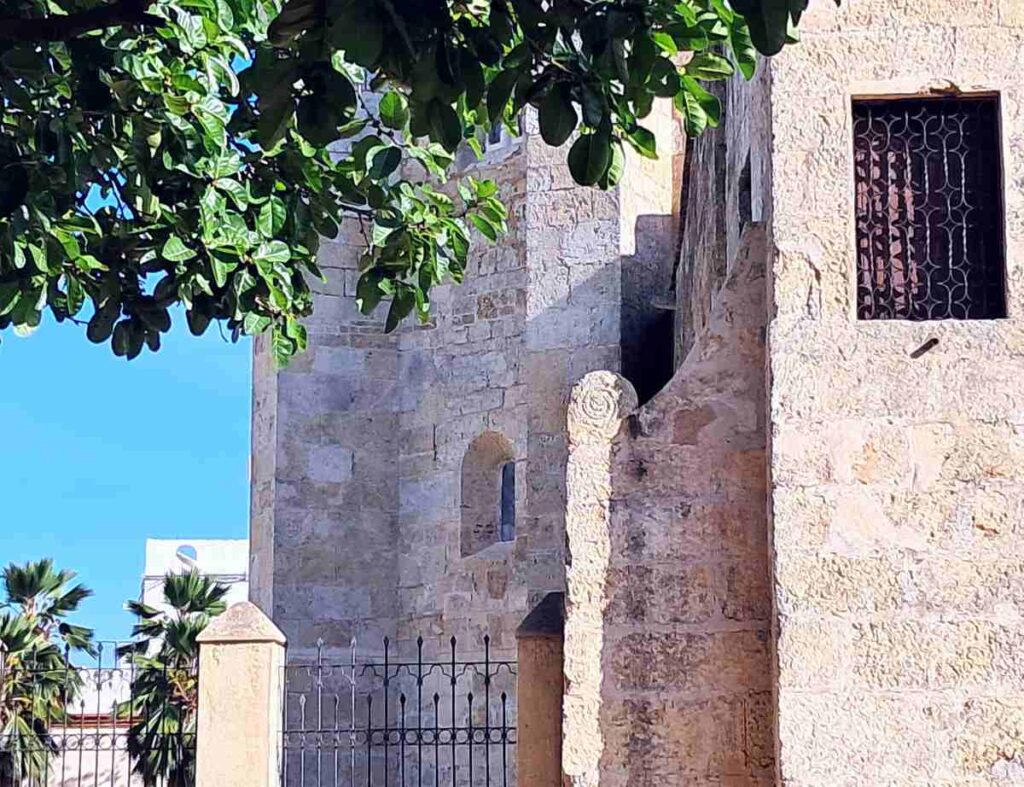
ANOTHER INTERESTING — and almost invisible — DETAIL. Catacombs run beneath Santo Domingo. In some places they are natural cavities in the coral reef that rose from the depths of the sea and formed the foundation of the island. Elsewhere, they are artificial corridors cut by people as underground passageways. There is an entrance to the underground system inside the Cathedral. They say the corridor below has now been renovated and even fitted with air conditioning. The underground passage connects the Cathedral with the nearby Bishop’s Residence…
The Cathedral is still active. Opening hours: Monday to Saturday, 9:00 a.m.–4:00 p.m. On Sundays, services are held and tourist access may be restricted. Admission is paid, but inexpensive.
TIP: Dominicans are naturally good-natured and tolerant. But entering the Cathedral in a swimsuit and accompanied by a live crocodile is probably not advisable. Ladies wearing very short shorts can discreetly decorate their knees with a scarf or pareo.