The Museum of History and Geography is also located on Plaza de la Cultura. Like the other museums in the complex, this building was designed in the 1970s and 1980s. The same clean geometric volumes, minimal decoration, large windows, and open galleries reflect the familiar late Modernist architectural style. The museum opened its doors to visitors in 1982.
The museum’s collection is organized into thematic halls and exhibitions arranged by historical periods.
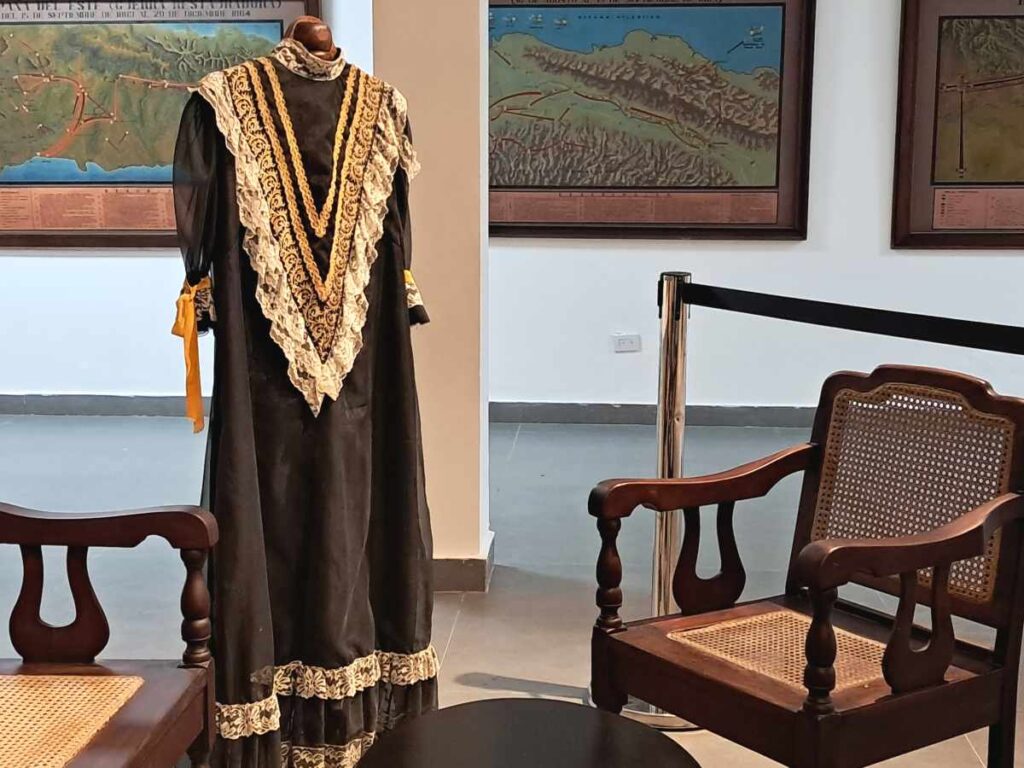
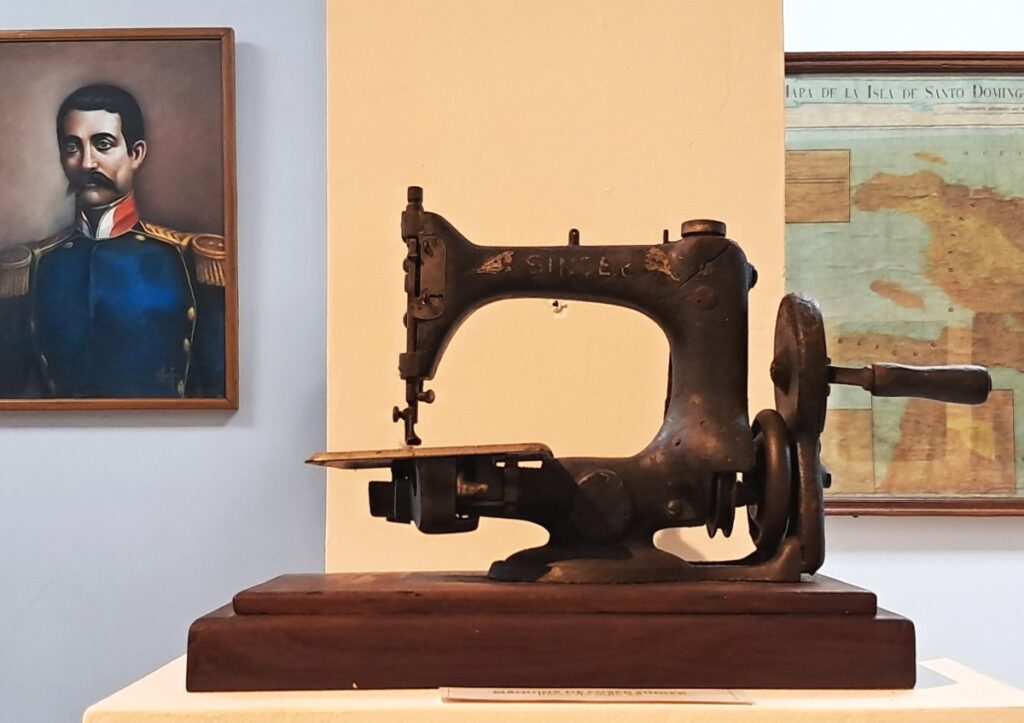
Part of the exhibition is strikingly presented through life-size dioramas with human figures… They recreate dramatic episodes from the nation’s history, telling the story of the struggle for independence during the years of foreign intervention and dictatorship…
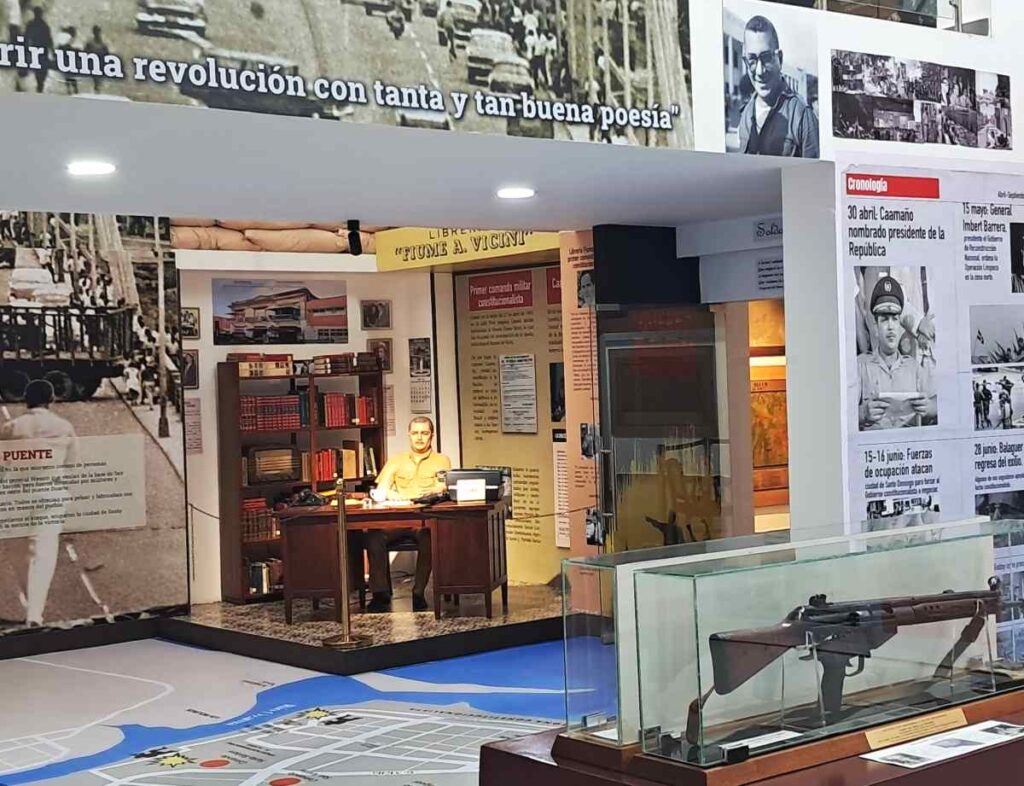
As you enter this hall, you catch sight of a man in your peripheral vision and instinctively greet him. A moment later you realize that he is a museum exhibit…
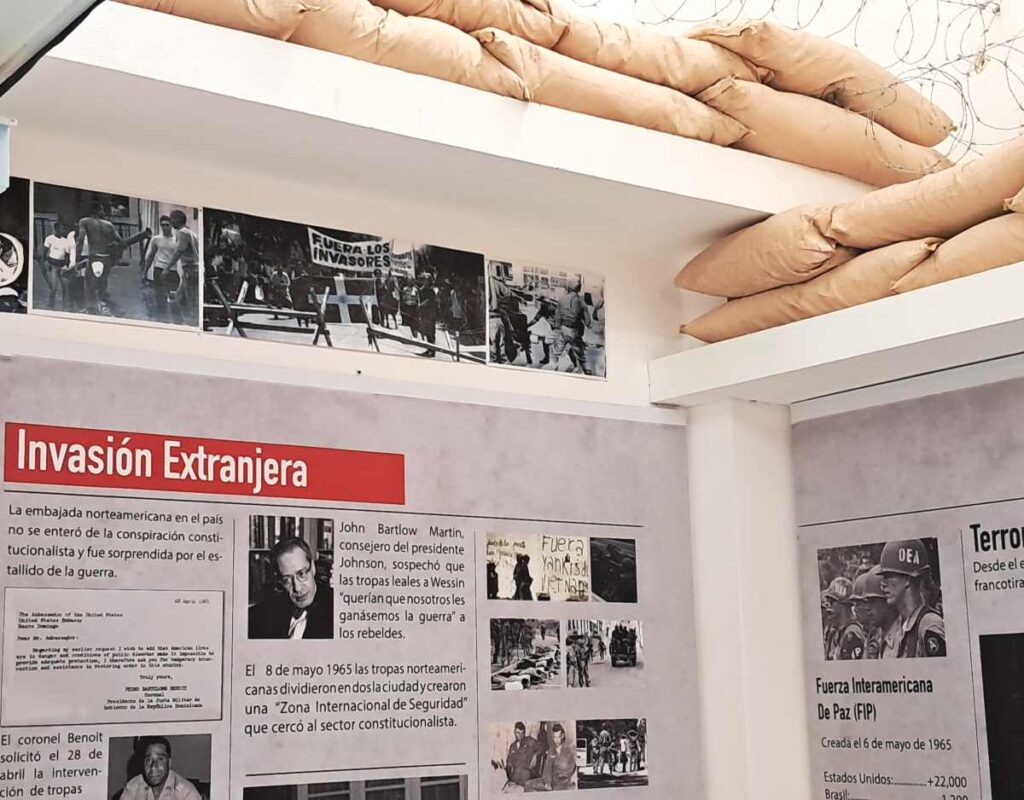
This hall recreates the atmosphere of the 1965 foreign intervention. Beneath sandbags and barbed wire are reproduced photo reports of Dominican protest demonstrations. People carry banners reading “Fuera los invasores” (Invaders Out!). The exhibition presents a chronicle of the street fighting, along with excerpts from American documents and newspaper reports. The photographs tell the story of the U.S. military landing and how the intervention split Santo Domingo into two parts. One zone contained the embassies and the main government institutions — the districts considered secure by the intervention forces. The remaining neighborhoods, including the Colonial Zone, were controlled by the armed supporters of Bosch and Caamaño. Checkpoints blocked bridges and major streets leading between the two sectors. Traveling from one side of Santo Domingo to the other became difficult and dangerous. Each area had its own patrols, radio stations, and governing authorities…
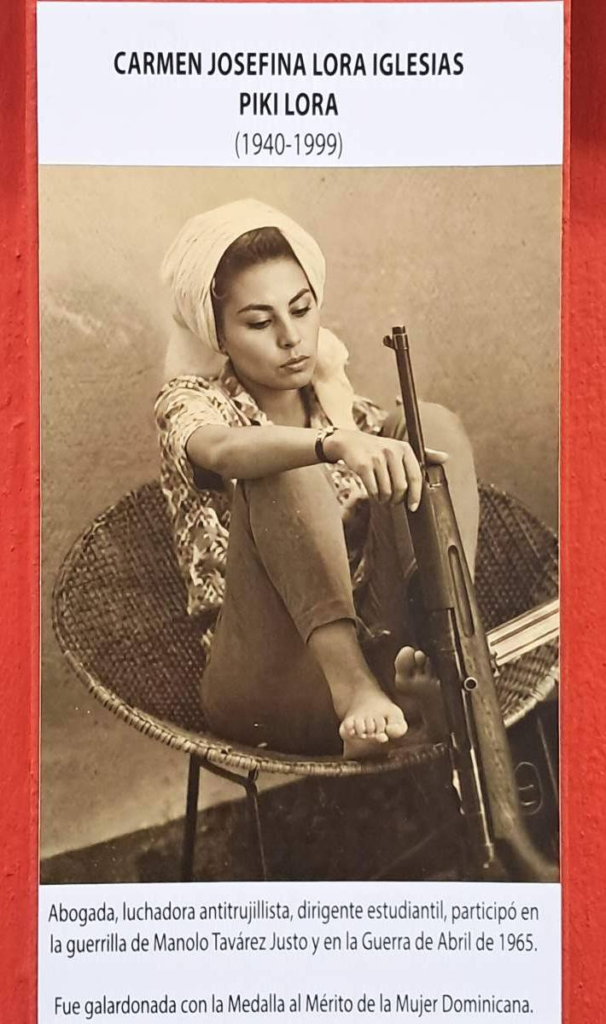
The photographs also show that women took part in the resistance…
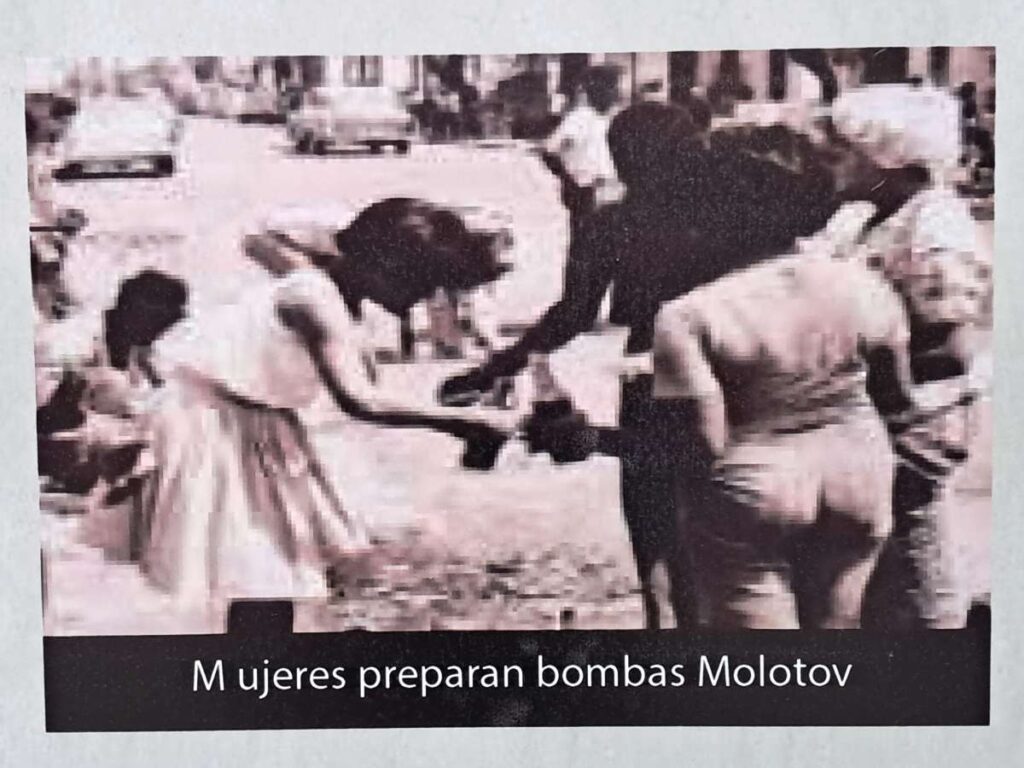
NOTE: The term “Molotov cocktail” originated during the Winter War between the Soviet Union and Finland (1939–1940). The Finns widely used improvised incendiary bottles against Soviet tanks and ironically called them “a cocktail for Molotov,” referring to Soviet Foreign Minister Vyacheslav Molotov. However, the idea of throwing bottles filled with flammable liquid at the enemy was much older. Similar weapons had already been used in Cuba during the 19th century, in World War I, and in the Spanish Civil War. Later, during World War II, the Soviet Union began mass-producing these weapons, and in official documents they became known as “Molotov cocktails.”
The next hall features another diorama depicting the landing of Francisco Alberto Caamaño Deñó’s guerrilla group.
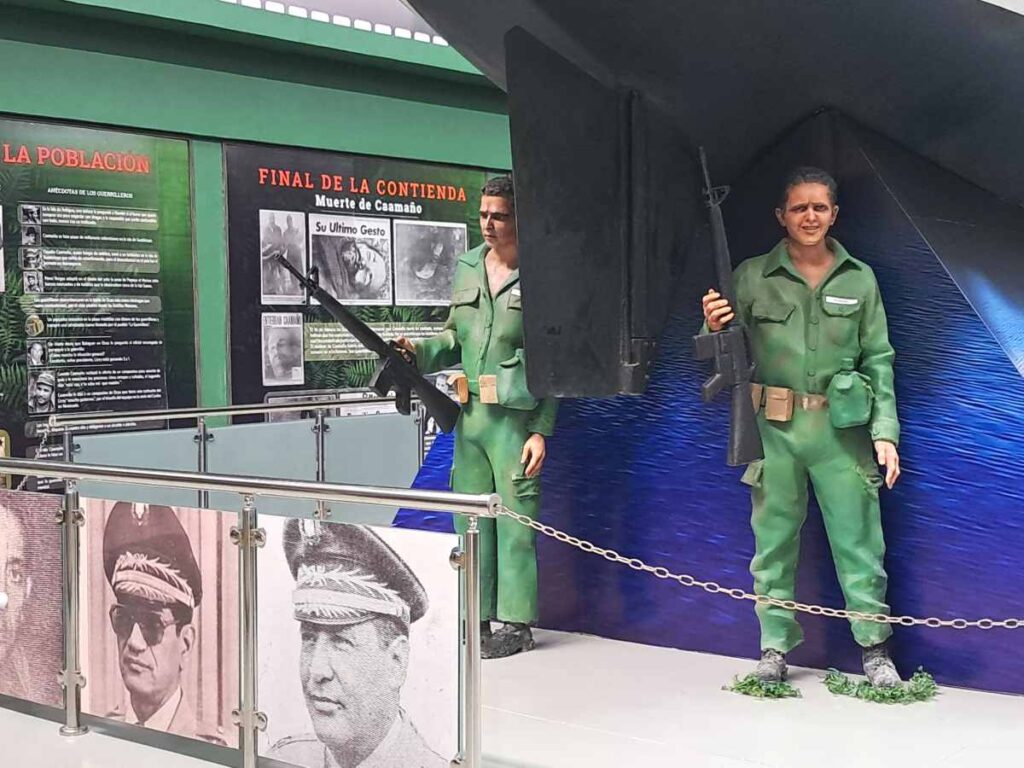
The landing from the yacht Black Jack on the southern coast of the Dominican Republic in February 1973. In Dominican history, this event is known as the “Desembarco de Playa Caracoles.”
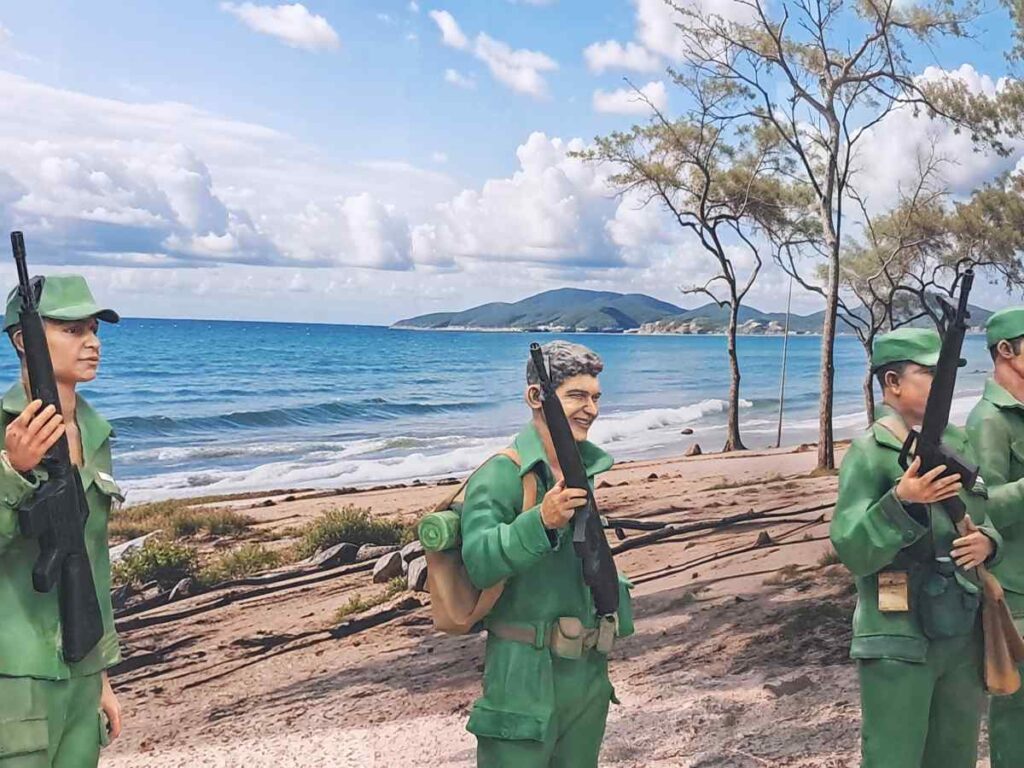
NOTE: Colonel Francisco Alberto Caamaño Deñó (1932–1973) came from a military family. A Dominican revolutionary and National Hero, he served as President of the Dominican Republic from May to August 1965. Under pressure from the U.S. intervention, he handed power over to the Provisional Government. He was then appointed military attaché in London before going into exile in Cuba, where he prepared an armed campaign against the U.S.-backed regime of Joaquín Balaguer. The clandestine landing led by Caamaño was an attempt to open a guerrilla front in the Cordillera Central mountains against Balaguer’s authoritarian government, which remained in power for twelve years. Balaguer is said to have remarked that there were no prisons suitable for a man of Caamaño’s stature. The order was given to execute him on the spot. A large-scale operation involving the army, navy, and air force was launched to hunt down the group. The site where Colonel Caamaño was executed lies high in the mountains near Valle Nuevo, where a small memorial now stands. In 2013, the remains of the National Hero were symbolically reinterred in the National Pantheon.
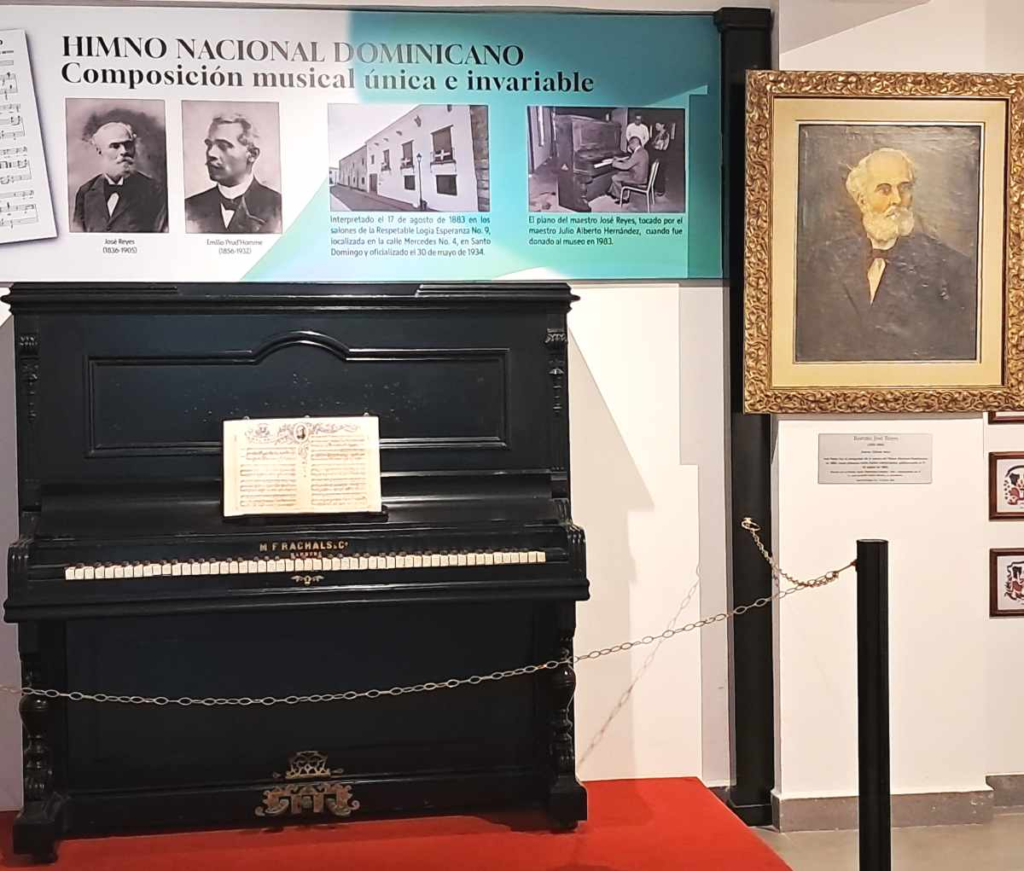
The museum’s collection includes documents, geographical maps, weapons, uniforms, the piano on which the Dominican National Anthem was first performed, the desk where the country’s first Constitution was signed, the personal perfumes of dictator Trujillo, and the bullet-riddled car in which Trujillo was assassinated. There is also a gallery of painted portraits of the nation’s presidents. Dominican history has seen military juntas, provisional governments, and many presidents… The Museo Nacional de Historia y Geografía is truly a repository of the country’s historical memory.
Plaza de la Cultura, Av. Pedro Henríquez Ureña, Santo Domingo. Opening hours: usually Tue–Sun, 10:00 AM–6:00 PM; closed on Mondays.