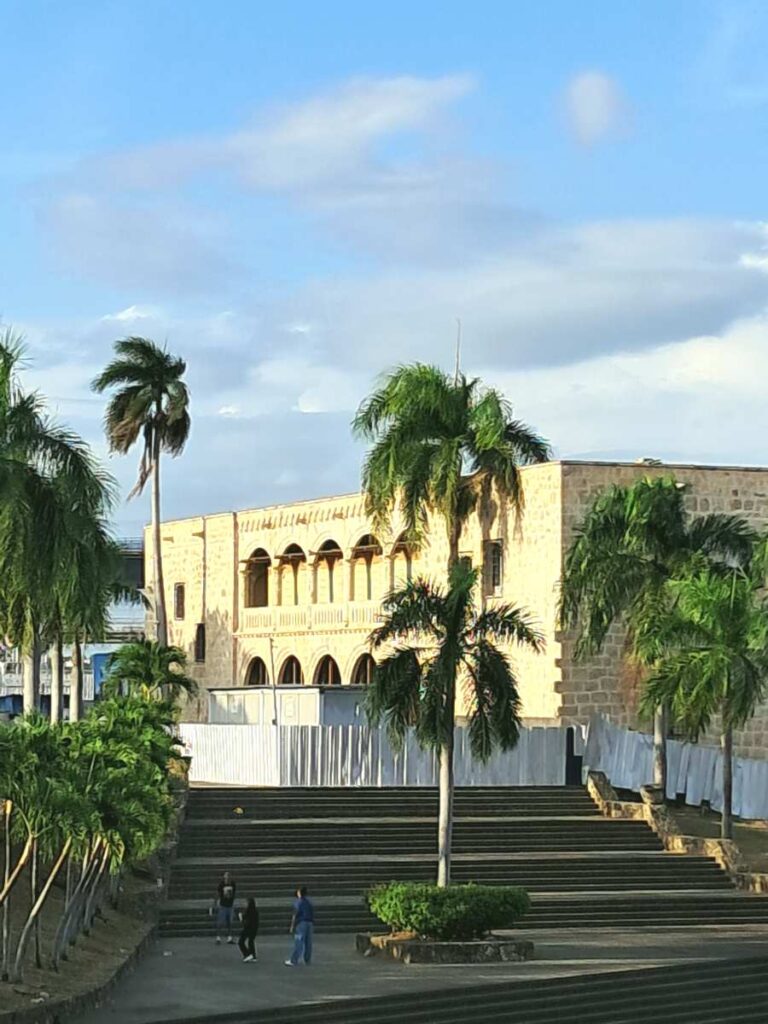
If you continue a little farther in the same direction, the descent to Plaza de España opens up before you.
Unlike the city’s other squares, this one is not shaded by trees but simply surrounded by them. For that reason, the people of Santo Domingo jokingly call it Plaza del Solazo. In everyday Spanish, solazo means blazing, scorching sunshine. In other words, this is a very, very sunny square…
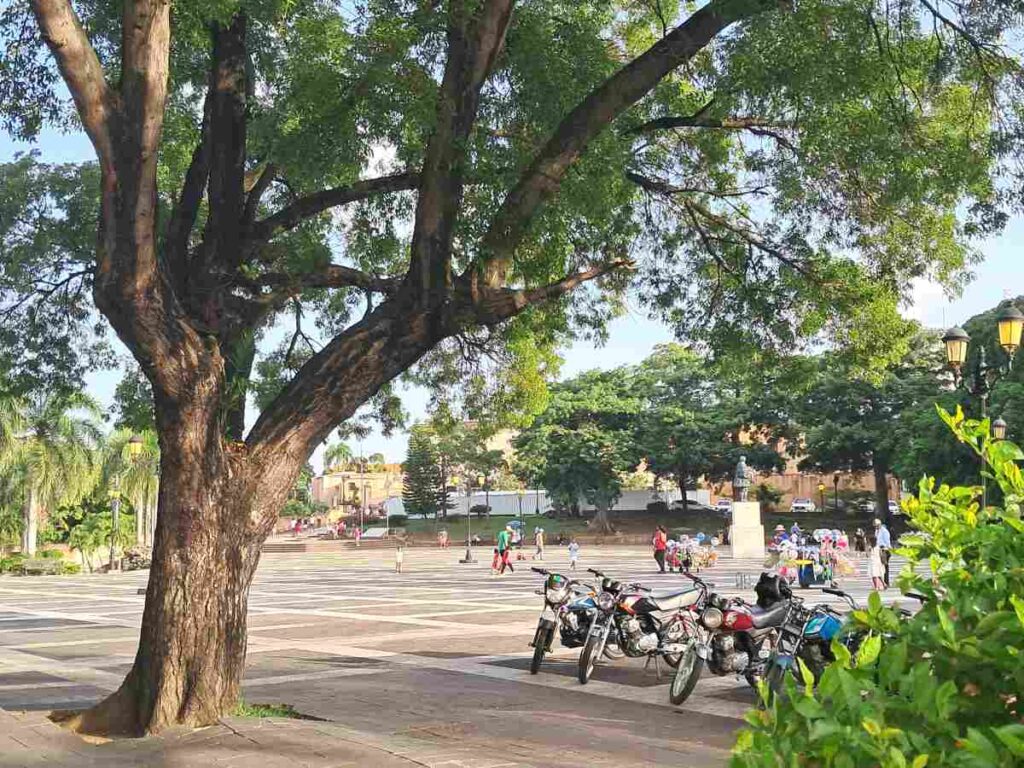
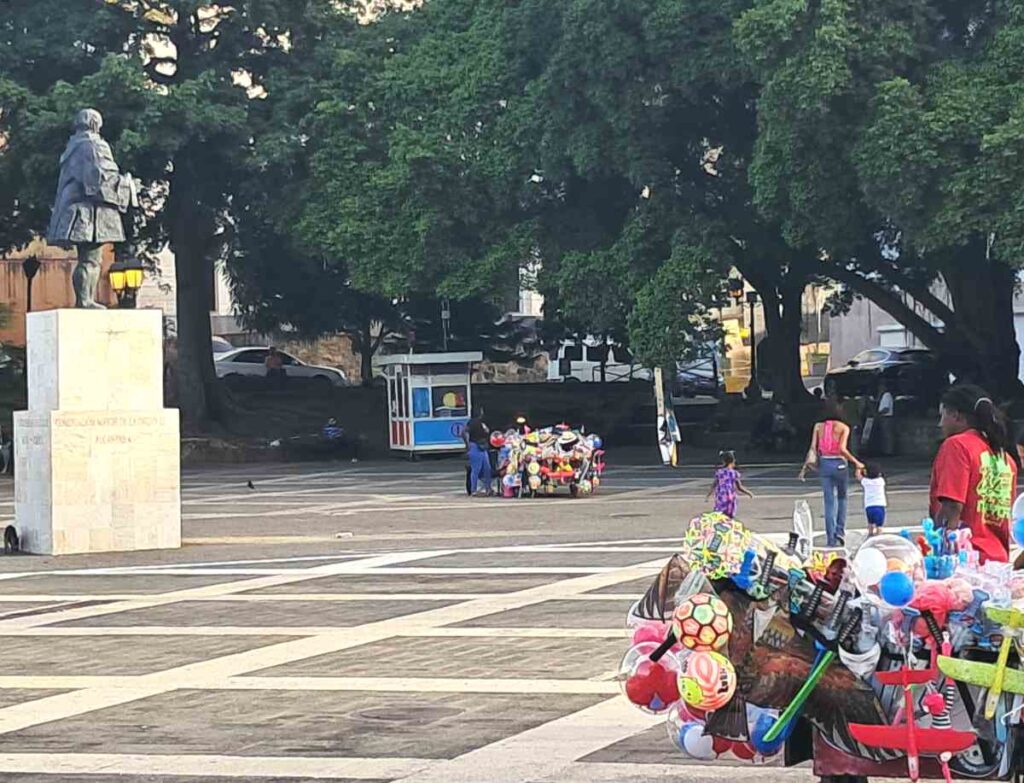
At the center of the square stands the monument to Nicolás de Ovando, the Spanish conquistador and the third governor of Hispaniola, under whose administration the Colonial Zone was actively developed. Thanks to his aesthetic vision and the close attention he paid to every construction project—he even banned wooden buildings, thereby protecting the city from devastating fires—the remarkable architecture we admire today was created and has survived through the centuries.
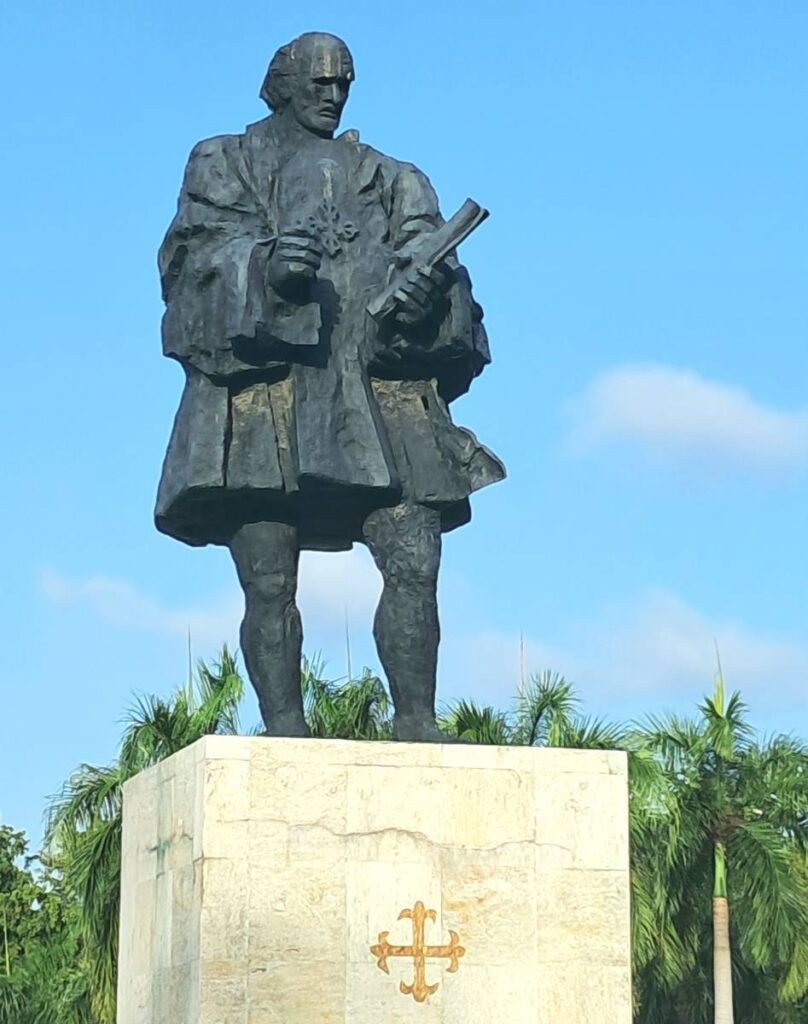
The bronze statue was erected at the end of the 19th century. It is generally attributed to the French sculptor Gilbert.
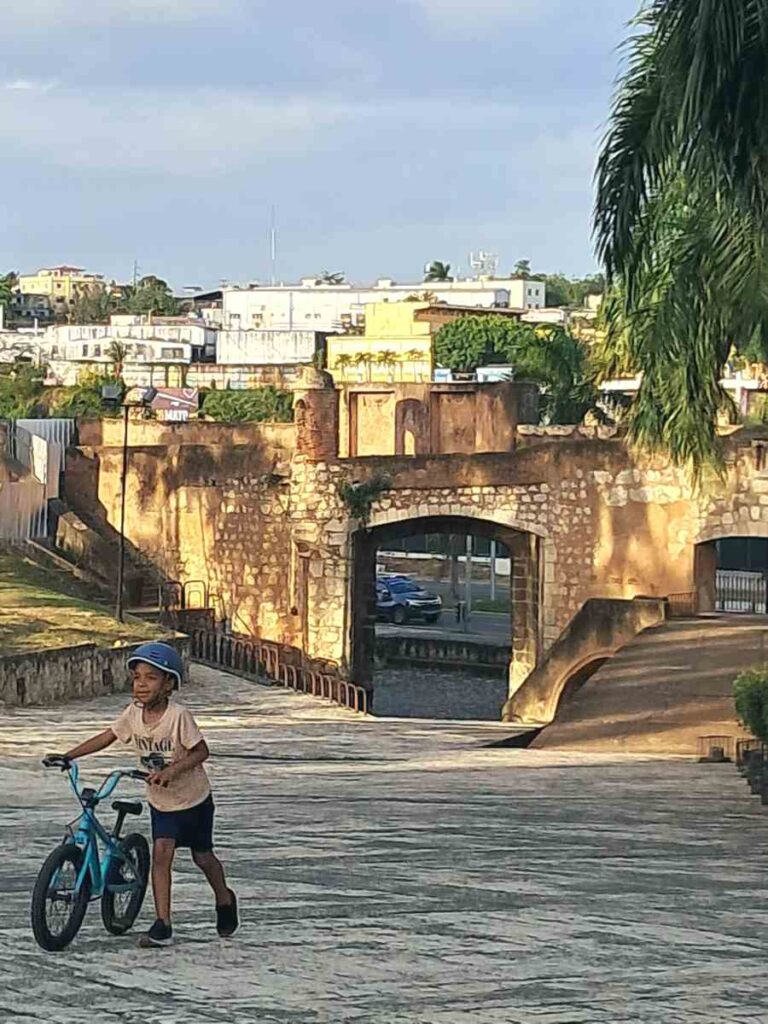
The gate in the city wall adjoining Plaza de España is known as the San Diego Gate. It was built in 1576. Three coats of arms can still be distinguished on it: those of the city of Santo Domingo, the King of Spain, and the island of Hispaniola.
Plaza de España is lined with elegant, welcoming restaurants with outdoor terraces, perfect for sitting back and enjoying a cold drink. One of these establishments used to be the Museo del Jamón (Ham Museum). The interior of the Italian restaurant was delightfully decorated with dozens of smoked hams hanging from the ceiling…
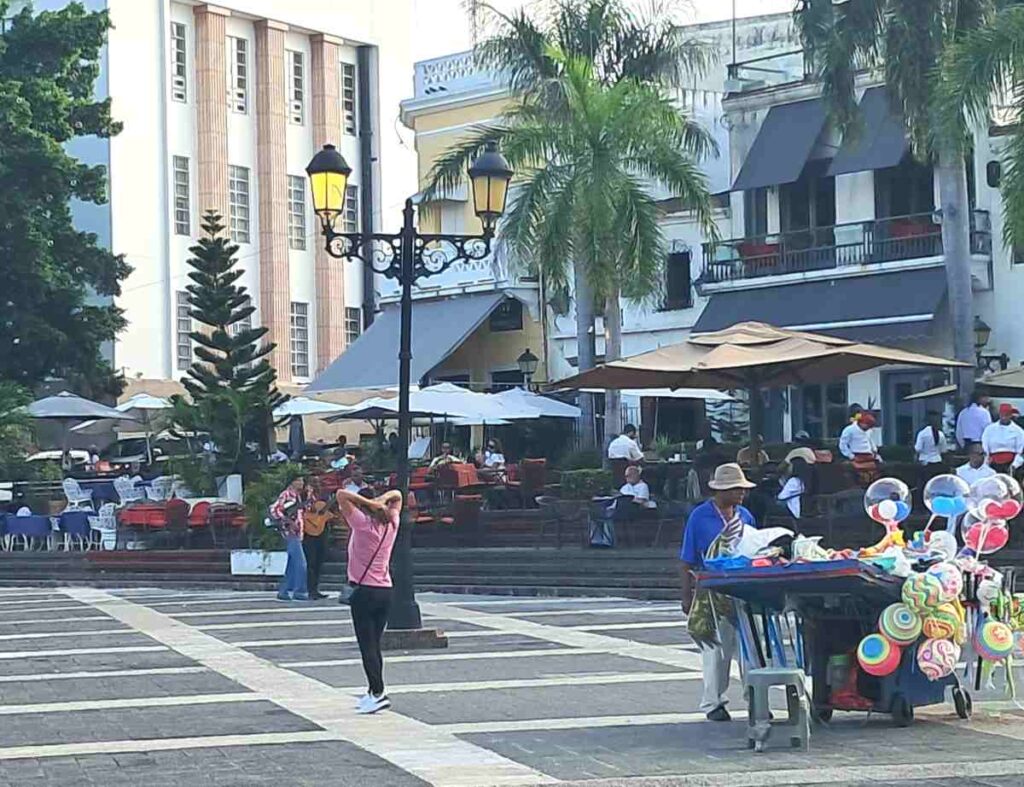
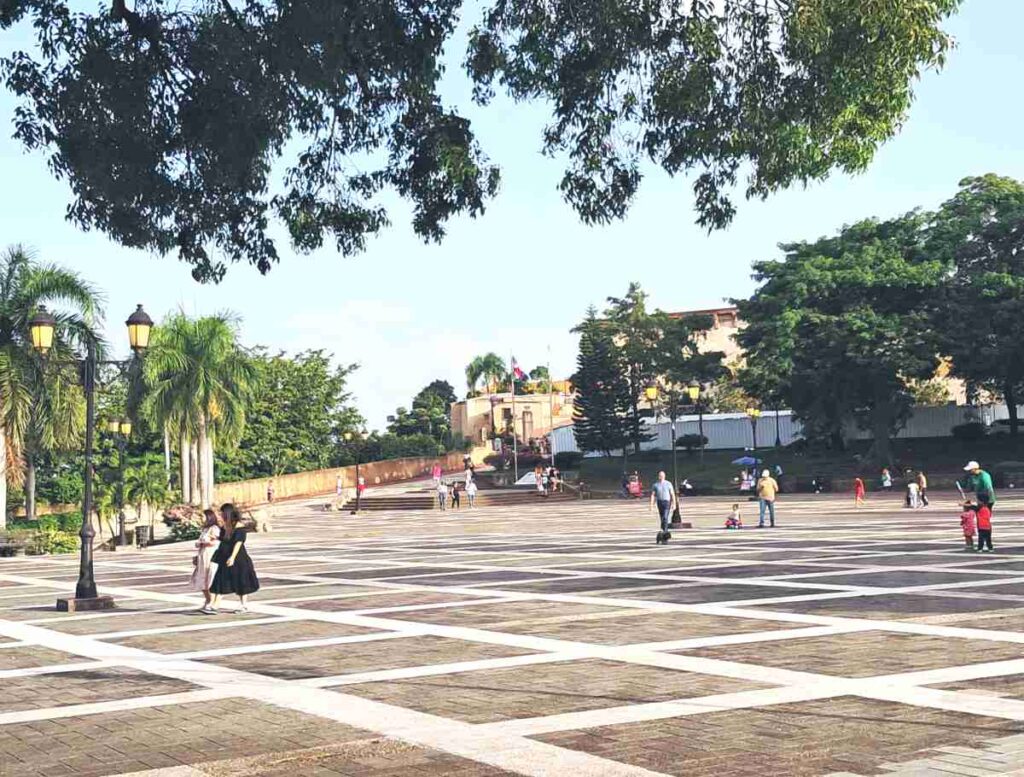
This square traditionally hosts concerts, festivals, official ceremonies, Christmas celebrations, and art exhibitions… For such occasions, temporary canopies and pavilions are erected. Yet the square still feels spacious and wonderfully open to the sky… In the evening, the façade of the Alcázar de Colón is beautifully illuminated, and the square transforms into a charming open-air terrace filled with music drifting from the surrounding restaurants.