LAS TERRENAS.
Las Terrenas is a wonderful little town. It is located in the northeast of the Dominican Republic, in the Samaná region. It is relatively small, with a population of about 25,000. At first, it was a tiny, sleepy fishing village. In 1946, the dictator Trujillo ordered the poor population to be removed from the capital, Santo Domingo. These people were expected to become fishermen and farmers elsewhere… Some of them were sent to the coast of Las Terrenas…
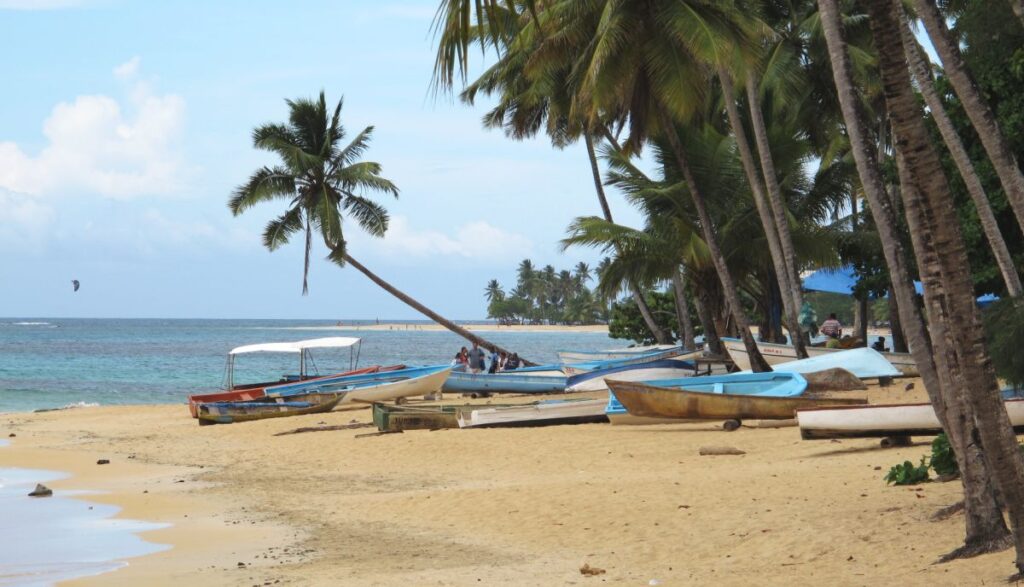
In those days, this was an almost completely isolated part of the country. A narrow, winding, undeveloped mountain road crossed the high hills to reach it. The road connected Las Terrenas with the neighbouring municipality of Sánchez. During rain and nighttime fog, it became almost impassable. Reaching the settlement was a genuine adventure… And in the 1970s, the first French settlers arrived here…
REFERENCE: The very first Frenchman was Jean Desdames (1944–2025). He was affectionately known as Juan the Frenchman. Together with his wife, who came from Washington in the United States, and their two small children, aged five and seven, he travelled around the country in search of coral reefs for freediving. They were already preparing to return home when they noticed a dirt road with a small arrow and the words “Las Terrenas”…
After much hesitation, they decided to take a look — and ended up spending their lives here… At first, everything was far from easy. There was no electricity, running water, proper road, telephone, doctor, school or supermarket… But the friendly local people helped them settle in. Just one year later, the family opened the Las Terrenas Club hotel, with a bar called La Taberna del Pirata — The Pirate’s Tavern. This family introduced Las Terrenas to a French-Creole style of architecture and cuisine…
Life gradually improved. The road through the hills was paved by 1989. Electricity arrived in 1994. In 2008, the modern Juan Pablo II Motorway, also known as the Autovía del Nordeste, was completed and opened, significantly shortening the journey to Las Terrenas. The road is comfortable, fast and tolled. Driving along it is a pleasure. Picturesque panoramas open up on every side: mountain landscapes and distant views of the ocean…
Before the toll road opened, Las Terrenas attracted very few tourists. And it had always been half-European. French, Italians, Germans, Americans, Canadians, British, Spaniards and Dutch people lived here cheerfully, along with three citizens of Monaco — two of them, father and son, specifically from Monte Carlo, the Mediterranean city in Monaco — a Roma man from Luxembourg, and one handsome Moroccan. He was married to a young Frenchwoman, so there may well be some beautiful little French-Moroccans by now.
Among our Slavic brothers and sisters, Las Terrenas was home to Russians, Ukrainians and one Serb. Tourism has increased considerably since then. The infrastructure has improved, and the network of hotels and guesthouses has grown significantly…
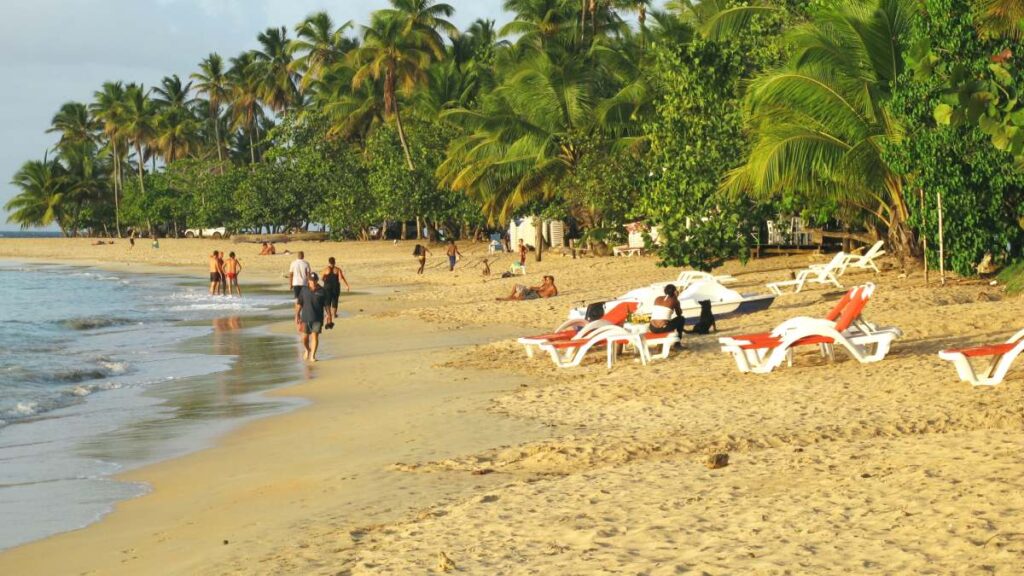
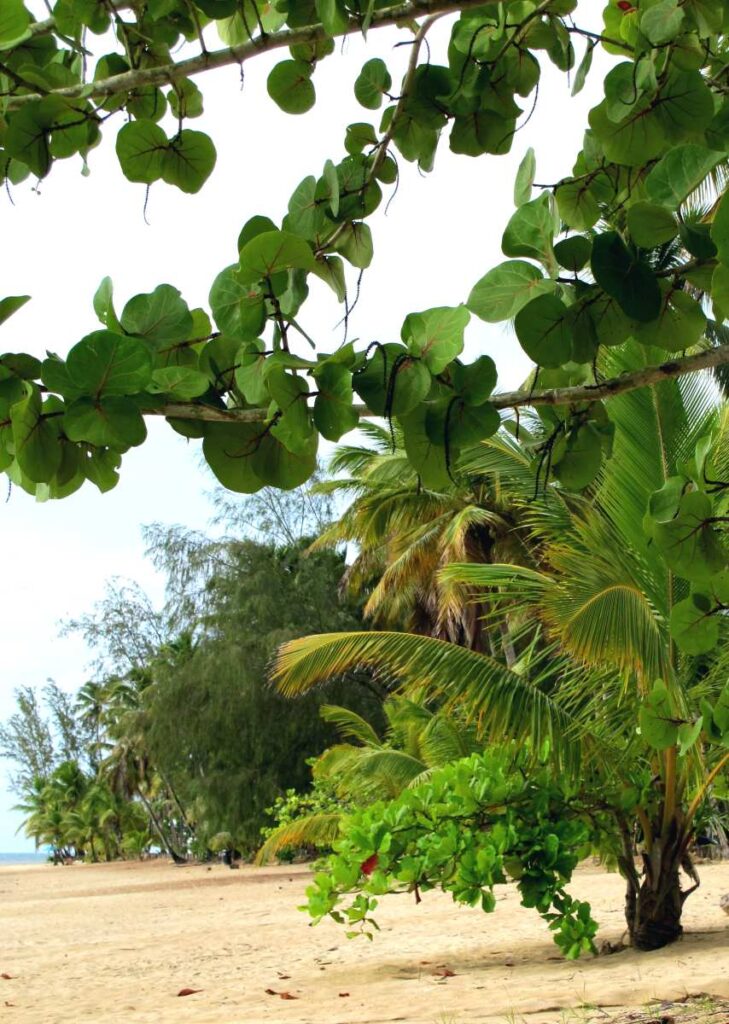
Las Terrenas is surrounded by picturesque hills. They dominate the beautiful landscape and also reliably shelter the town from the strong winds that occasionally occur here. There is an enormously long strip of beautiful, almost deserted beaches — in some places, it was even possible to swim in the nude — and a warm Atlantic Ocean with barriers of coral reefs stretching along the coast. The reefs soften the incoming waves, and it is fascinating to swim alongside them.
The coral reefs are a genuine underwater kingdom. Picturesque grottos, small caves and fan-shaped corals are inhabited by cheerful, brightly coloured creatures. Swaying sea anemones, starfish, colonies of sea cucumbers — diligently pretending to be boring dead horses — seashells such as cones, acorns, conchs and triton shells, and sea urchins belong to the family of slow-moving residents.
But ATTENTION: do not touch the orange-coloured corals! Although they look very elegant, these corals sting. It is not particularly dangerous, but the marks left by such an encounter do not disappear immediately.
The little urchins with long spines — black, with red centres — like to hide in narrow crevices and are difficult to reach. White specimens with short spines quietly stroll across the seabed. If you pick them up carefully, you can gently play with them.
Octopuses also live among the reefs, and you may encounter a squid swimming through the water. Small moray eels, surgeonfish, crabs and spiny lobsters are more energetic residents. They usually prefer to avoid introductions and joyfully make their escape.
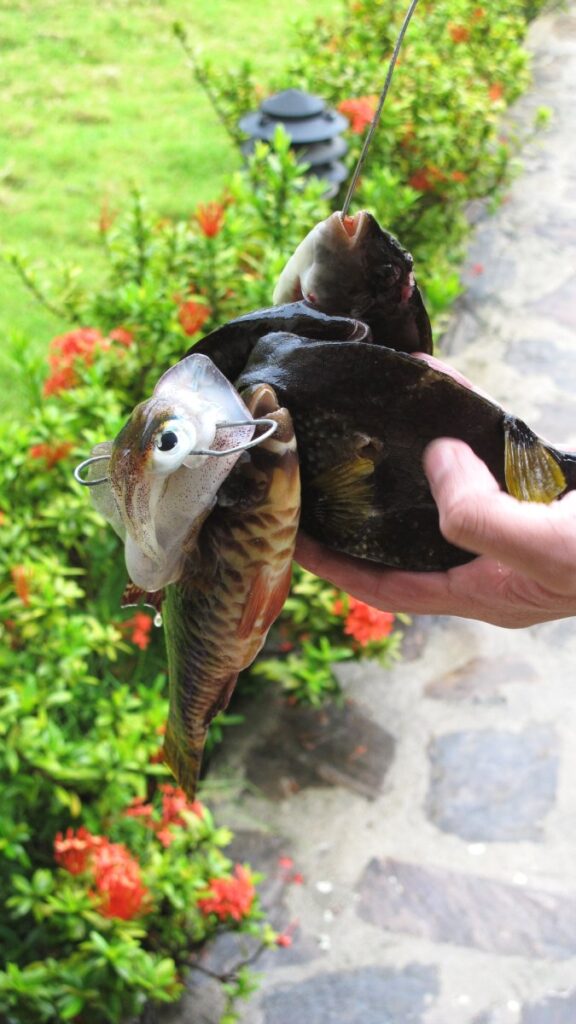
There are also pufferfish here. If you prod them with something, they inflate, and sometimes they become stuck among the corals while still puffed up. The “deflation” process takes a little time, making them prisoners of their own thoughtless behaviour.
The babies of these fish usually swim in tight schools, pretending to be one large fish. If you frighten them slightly, they all inflate together. And that is how they continue swimming until the swelling goes down.
But be CAREFUL: pufferfish eat shellfish. Their mouths therefore consist of two extremely strong plates, capable of biting through even a sturdy stick. So putting your finger into a pufferfish’s mouth is NOT recommended! They are also considered unsuitable for eating.
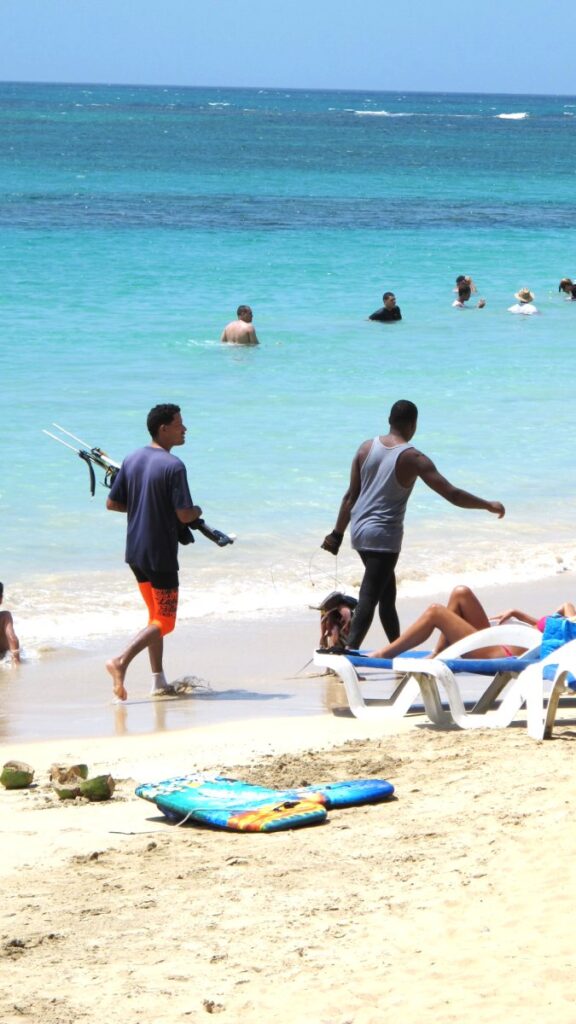
The water is also home to delicious oysters and shells containing edible molluscs. You collect them as though they were thickly growing porcini mushrooms. At first, it is great fun, but eventually it becomes tiring. Such a gourmet harvest is invariably appreciated by everyone. An invigorating aphrodisiac and a whole collection of health benefits are additional bonuses provided by these marine delicacies.
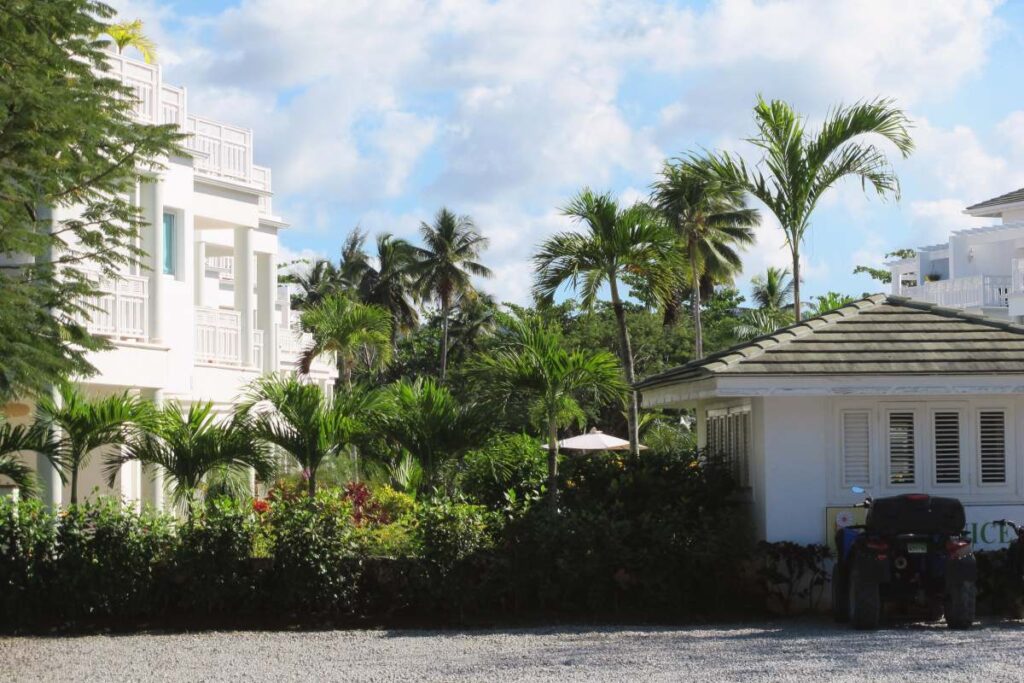
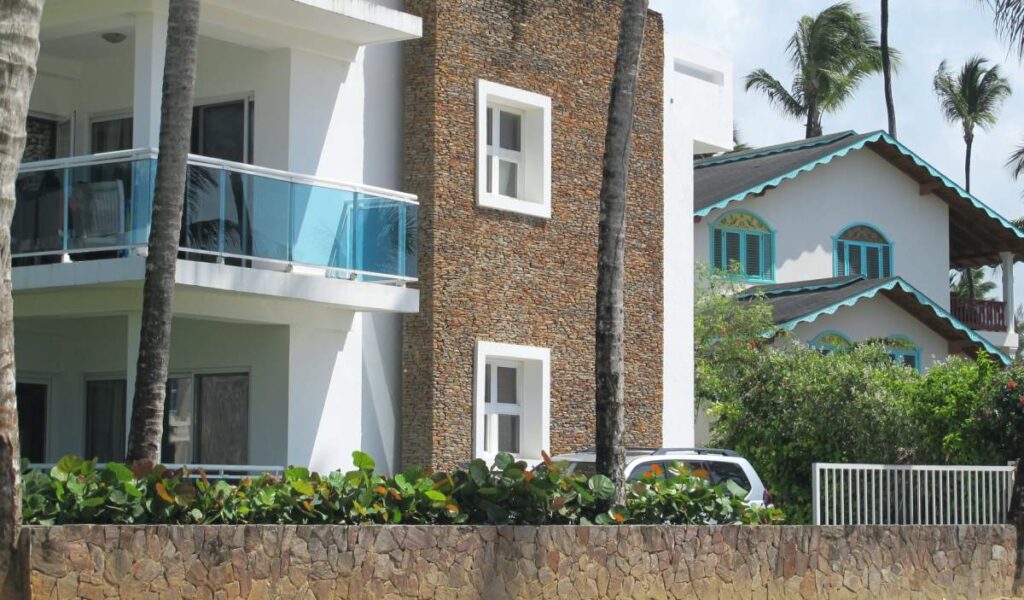
The world of the ocean remains fairly unchanged, although it is always full of pleasant surprises. The appearance of the town, however, continues to change and improve. At first, only small, cosy hotels were built here. Later, new complexes appeared. They are also not particularly large, and they are attractive. They include both hotels and perfectly European-style shopping centres. Every hotel has its own little restaurant. Most of the owners are Europeans. As a result, Las Terrenas has developed a wide choice of good European cuisine.
Among the people living here, German meat delicacies have always been highly valued. A German named Florian kept a small farm outside the town — a finca, in Spanish. He personally prepared all kinds of delicious things: sausages, frankfurters and smoked meat. His little restaurant stood on the road to Cosón Beach…
Interestingly, Florian looked exactly like Hemingway. He said that people in Cuba often mistook him for the writer. Once, a group of Japanese tourists even asked to have their photograph taken with him — with the Great Author himself…
Florian is married to a very pretty, petite Dominican woman. Together they look like this: a little cloud, the colour of coffee with milk, resting upon the chest of a European cliff… They have two teenage children. Their son became famous among the neighbours for playing the drums.
One day, Florian shared his SECRET OF FAMILY HAPPINESS. His recipe was simple. You must marry a very young girl. And bring her up to suit yourself…
Dominican cigars make convenient gifts to take home to friends. They are of good quality and occupy very little space in a suitcase. Las Terrenas has many tobacco shops. There are especially many of them in the town centre, near the attractive El Paseo shopping complex.
There, right in front of you, a Dominican man — or woman — will roll a cigar on a small machine in a matter of seconds. Watching the process is fascinating. Their hands flash like those of illusionists. A moment passes, and the cigar is ready. It is best to use a fast shutter speed when taking photographs. Otherwise, the picture simply does not come out.
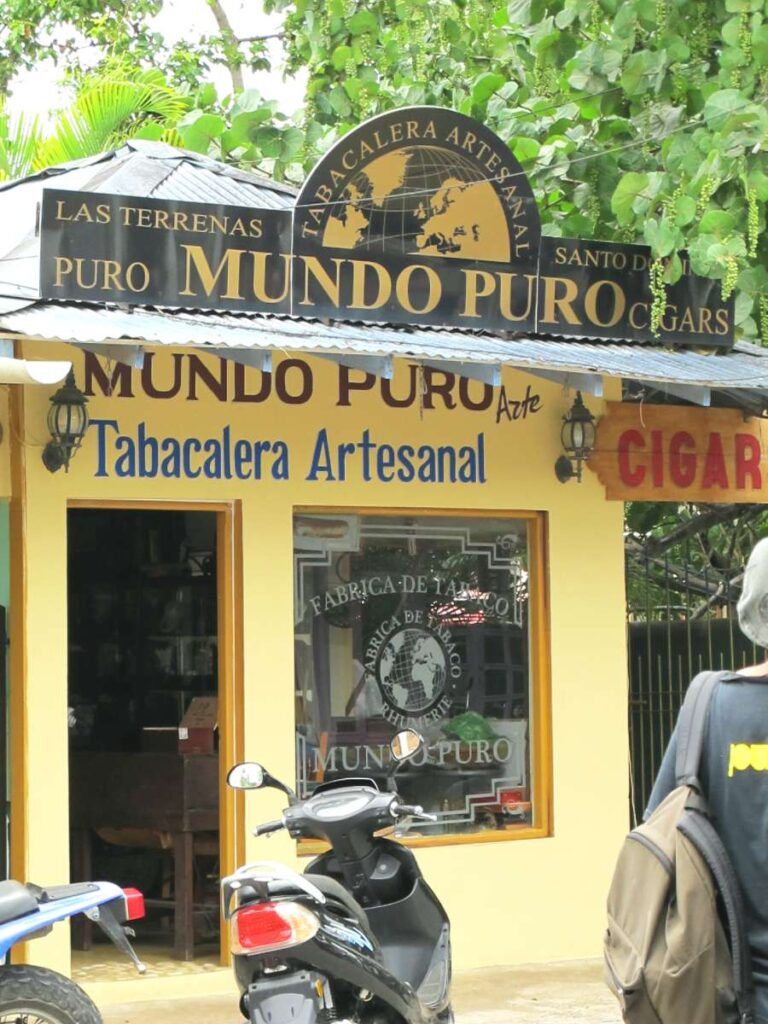
REFERENCE: The Dominican Republic is the world’s largest producer of cigars. Cigar factories employ specialists who roll cigars by hand. They are called torcedores, from the Spanish word torcedor. The dried tobacco leaves used for making cigars vary in size, thickness and colour… Torcedores know how to shape the tobacco into premium cigars. The quality of the rolling determines whether the cigar burns evenly and draws properly…
A little history… In the past, Las Terrenas had a charming tradition. For several hours during the day, trade throughout the town came to a halt. The hours of siesta had arrived. The midday rest.
By the middle of the day, everyone had exhausted their daily allowance of fuss and activity. Whenever you needed to go shopping, you had to take this schedule into account. But it had its advantages… The energy saved during the day could be usefully spent at the evening disco.
Las Terrenas has always been famous for its discos. There is something here for every taste. For example, the legendary La Bodega delights its visitors with Caribbean-style music — bachata, merengue and salsa — and a rich collection of “night butterflies” of both sexes.
For those who do not know, bachata, merengue and salsa are national rhythms. The dances involve relatively simple movements — something like two stamps of the feet and three small steps. Anyone can learn them. But the fluid movements of the local dancers are difficult to imitate, because they are so exceptionally good…
Do not worry if you have no partner! The dancers working there will invite you to join them. At the end of a pleasant evening of dancing, it is proper to thank them with a little money. Dancing lessons are also available…
The disco is located in the town centre, opposite the beautiful El Paseo shopping complex.
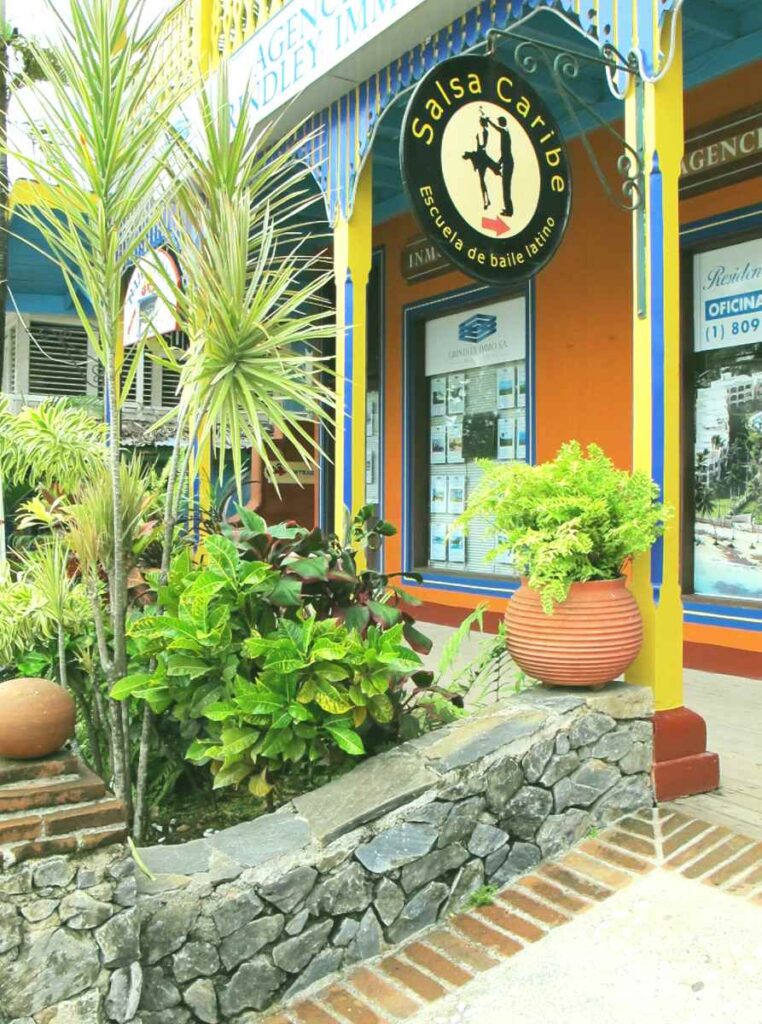
Along the Atlantic coast, there is a whole scattering of good discos. Many of them are situated near the area known as the Fishermen’s Village — Pueblo de los Pescadores. Here is a brief description of a few.
El Mosquito Art Bar. A pleasant and attractive interior. A mixture of Latin American and house music. You can walk down from the wooden terrace with a cocktail in your hand and dance barefoot on the sand…
ETNO Beach Club. During the day, it is a fine place for lunch. Cosy surroundings and a bohemian charm. Live music in the evenings and the relaxed atmosphere of a lounge bar. At the end of the week: a DJ, electronic music and open-air parties…
Gaia Nightclub is fashionable and elegant. It has three floors, a varied musical repertoire and its own sushi bar. You can relax, wander around and enjoy some serious dancing…
Babylon Nightclub. A mixture of reggaeton, salsa, bachata and contemporary Latin American music. The place remains lively throughout the night. People are equally happy to dance to dembow, merengue or bachata…
REFERENCE: Dembow music was born in the Dominican Republic in the early 2000s. Its origins are usually associated with Panamanian reggaeton and Jamaican dancehall.
Dominican dembow is distinguished by its aggressive sound, dominant bass and rap-like vocals. It has a fast tempo and an energetic rhythm. Dembow is described as street music with a distinctly “spicy” character. It is a musical style for particular tastes and is mainly intended for clubs and dance parties…
Some of the discos in Las Terrenas are entirely Dominican. However, bars and discos playing European and American music are also common — with an occasional fifteen-minute burst of Caribbean rhythms…
I remember that there was once an establishment called Barrio Gringo, which was popular among Europeans.
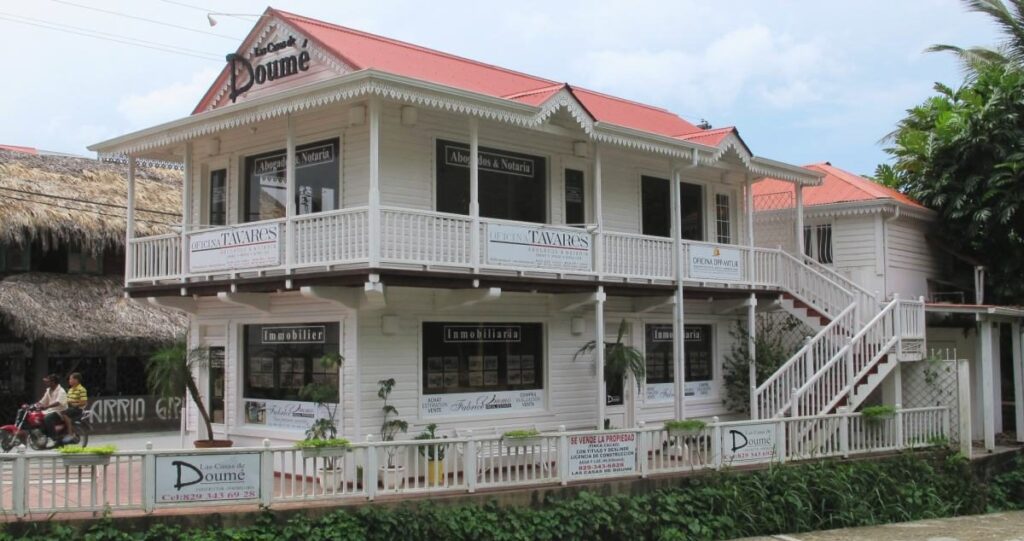
Gringo is a name sometimes used in the Dominican Republic for both Americans and fair-skinned Europeans. The owner of Barrio Gringo was a Roma man from Luxembourg named Joy. He was cheerful and good-natured. He arranged and decorated the bar together with his wife, Daisy, a beautiful Dominican woman.
They served good German beer, something rare in those days, and at a pleasant price… And they always played good music.
Las Terrenas is loved and frequently visited by residents of the capital. Today, three quarters of the journey from Santo Domingo follows an excellent high-speed motorway. It passes through picturesque countryside where you can take beautiful photographs.
Twice a year — at Christmas and during Holy Week, the Catholic Easter period — Las Terrenas turns into an extension of the national celebrations. At these times, it is almost impossible to squeeze through the town because of the cheerful crowds arriving from the capital…
And one small final touch to the portrait of this attractive town and the charm of its natural beauty… It is said that the countryside around Las Terrenas contains the holiday residences of Dominican presidents and the country’s leading political bosses.
And please note that the large El Catey International Airport is conveniently located only half an hour’s drive from Las Terrenas.
For sports lovers, Las Terrenas offers a mass of possibilities. Tennis courts. An archery range. Numerous diving schools for both beginners and experts. The town’s own golf club is supposedly on the way…
The golf club has already been under construction for more than ten years. But the developers promise that it will be completed very soon…
As an alternative, small miniature-golf courses can be found on the lawns beside some hotels. They are unlikely to interest genuine professionals, but amateurs and children will be perfectly satisfied…
There have also long been plans to create a yacht club in Las Terrenas, complete with hotels and moorings…
Windsurfers travel to the picturesque coast of Whale Bay — Bahía Las Ballenas — for a swim and a ride on the waves.
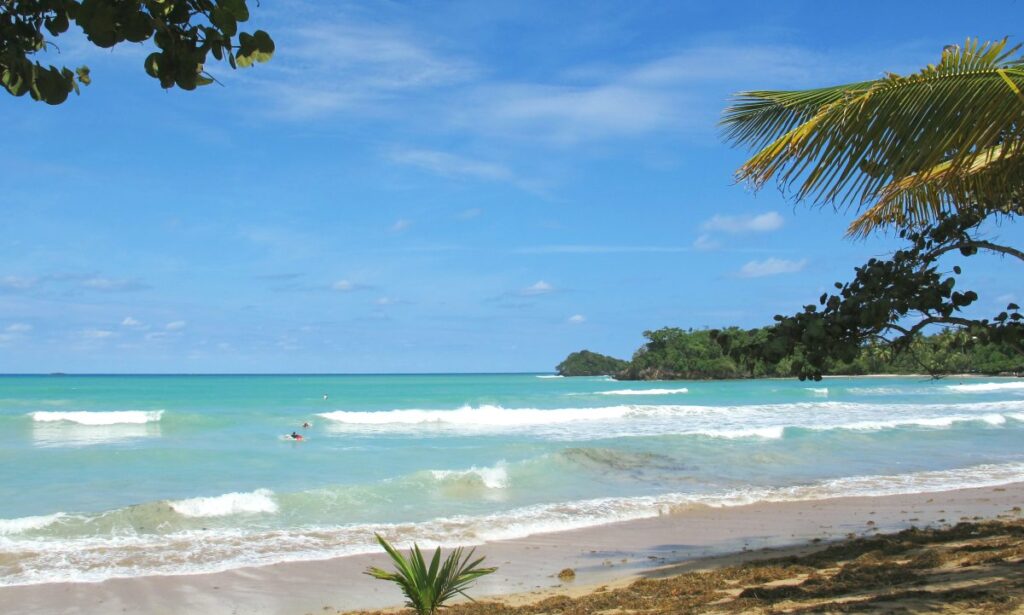
The waves are always larger here. And when the wind strengthens, the place becomes a genuine playground… The bay is called Whale Bay because whales can be seen from here during the winter…
Las Terrenas has many hotels along the ocean coast. They possess a remarkably relaxing atmosphere. Everyone who has stayed in them — even the most dedicated workaholics — has disappeared from society for at least several days.
They gladly surrender themselves to the euphoria of the enchanting sound of the ocean surf, the freshness of the warm sea breeze and the natural beauty of the tropical coast.
And, just between us, as a secret: hopelessly business-minded people do no business here. They simply wander along the shore… At night, alone or in pleasant company, they spend hours admiring the stars.
And by the way, there is internet access here. So the initial “disconnection from life” eventually and, when necessary, smoothly transforms into useful activity.
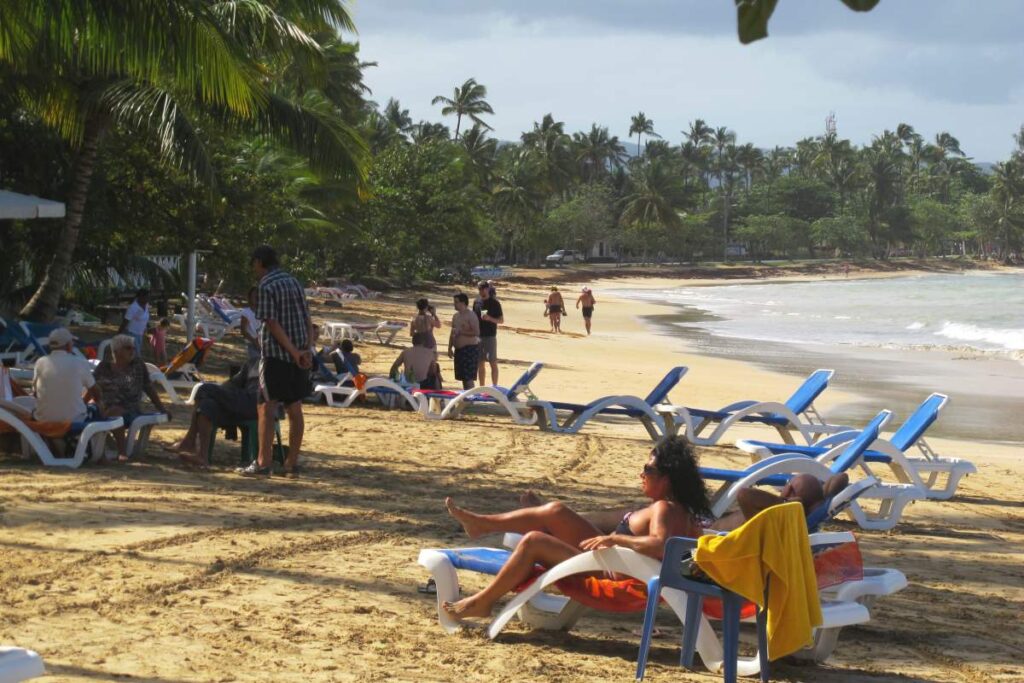
But let us return to sport. Kite surfers prefer other beaches around the town. They are better suited by the broad, more wind-exposed coastline leading towards the small El Portillo Airport, which serves local flights.
Brightly coloured kites can almost always be seen floating above the ocean there. That part of the coast has several kite-surfing gathering places. Some are used only by experienced riders, while others welcome both professionals and students together.
Las Terrenas also has horses for riding. Beautiful animals, each with a different temperament. From time to time, it is pleasant to watch a small cavalcade pass slowly through the town: a Dominican instructor accompanied by European children dressed in full riding equipment…
Billiards championships are occasionally organised among the local Europeans. Chess tournaments also take place — a Russian tendency.
Meanwhile, large, red-faced Germans slowly roll heavy-looking balls across several specially prepared sandy courts on the beach…
The old yacht club always has around a dozen small, brightly coloured sailing catamarans. In the past, there was an excellent instructor there: Pedro, a Swedish-Spanish former world champion in the sport…
The club also has kayaks and a motorboat with an inflatable tube for joyful rides across the ocean. A tourist catamaran called the “Turtle” — Tortuga — could also invariably be seen near the shore. It carried visitors to Los Haitises National Park.
LYRICAL DIGRESSION — WITH A SPORTING INCLINATION.
Las Terrenas is a town that continues to renew itself and grow prettier. Who said that the world had experienced economic crises and coronavirus? It appears that nobody here even noticed.
Attractive little hotels spring up like mushrooms after rain. The coastline fills with parking areas for elegant watercraft. And the car-rental offices glitter with tightly packed rows of colourful cars, motorcycles and the quad bikes that are so popular in this town.
The number of diving centres is also increasing. Ocean fishing and diving businesses in Las Terrenas can easily be identified by their boats.
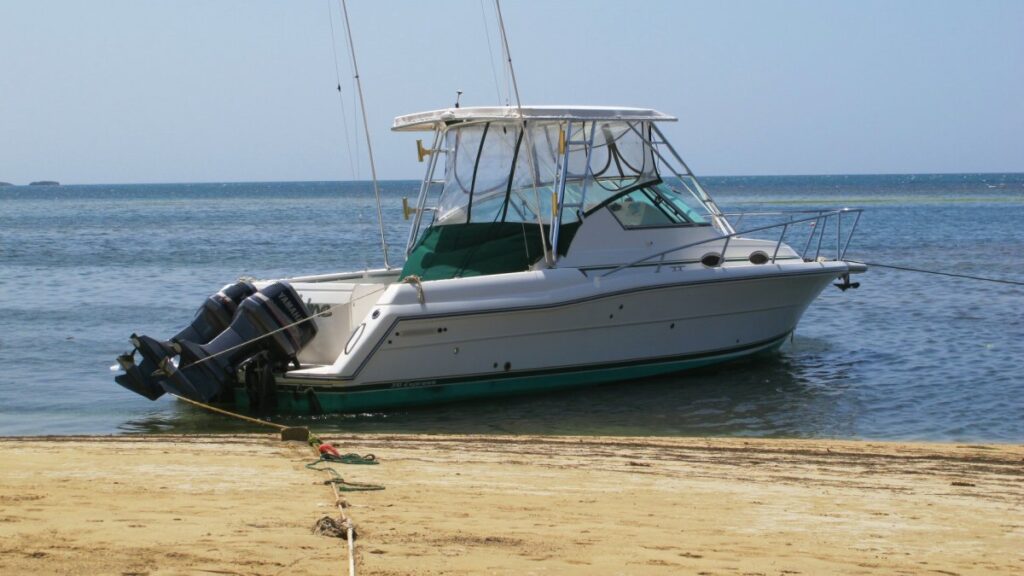
New boats, often with unusual silhouettes and equipped for fishing, rock gently on the water… Meanwhile, brightly coloured kayaks arranged along the surf invite visitors to paddle through the calm waters of the ocean bays.
Small huts containing snorkelling and diving equipment can be found along the coast. Diving suits — apparently worn only once, if at all, and still looking almost fresh from the shop — masks, snorkels and rows of air tanks…
This abundance of equipment is supervised by instructors who look like old sea dogs in their forties and beyond. They all speak Spanish and English, and sometimes German. In addition to conventional underwater swimming — diving and snorkelling — the entertainment programme includes dives into underwater caves…
And if you look behind one of the coastal hotels, you can solve the mystery of where the little bright-red helicopter lives — the one that cheerfully buzzes over everyone’s heads.
Its official landing pad is located on a green lawn hidden from the coastal road…
A VERY BRIEF AFTERWORD:
Wow! All of that — right here.