
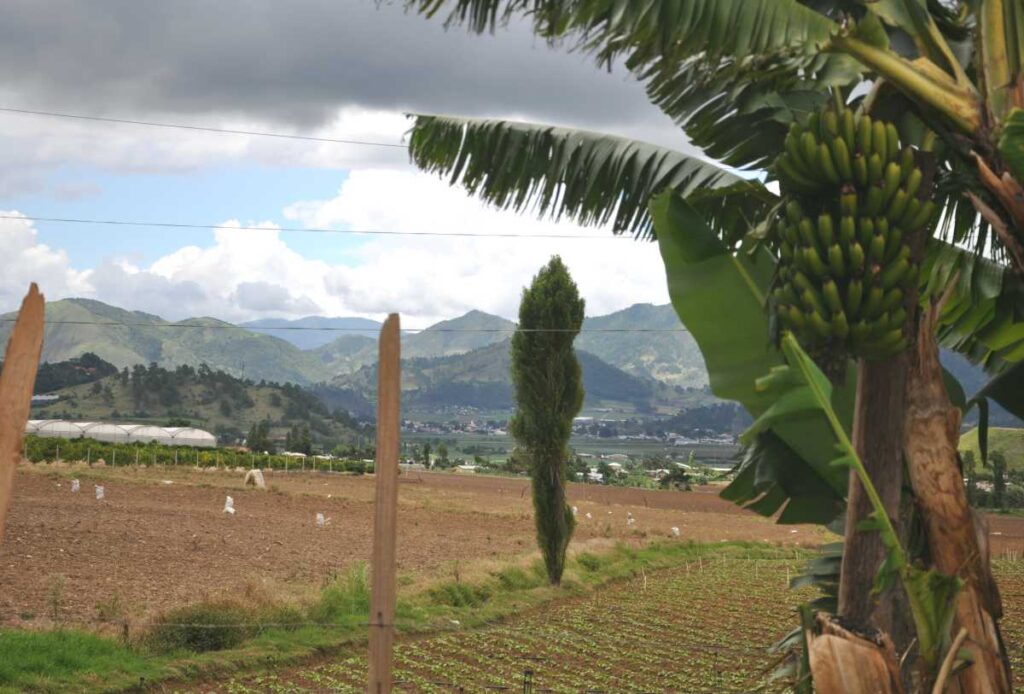
The town of Constanza lies at an altitude of 1,200 metres above sea level. In the Caribbean region, it is considered the town with the coolest climate… It is located in a picturesque valley surrounded by mountains.
Geologists say that this valley was formed around 1,000 years ago after a meteorite fell here. As a result of this cosmic smack, the Cordillera Central mountains shifted slightly. And so a small, wonderful Dominican Switzerland appeared.
They say that Constanza looked exactly like that until the 1950s. Log houses built from pine trees growing nearby… They suited the landscape perfectly. Unfortunately, none of those houses has survived to the present day.
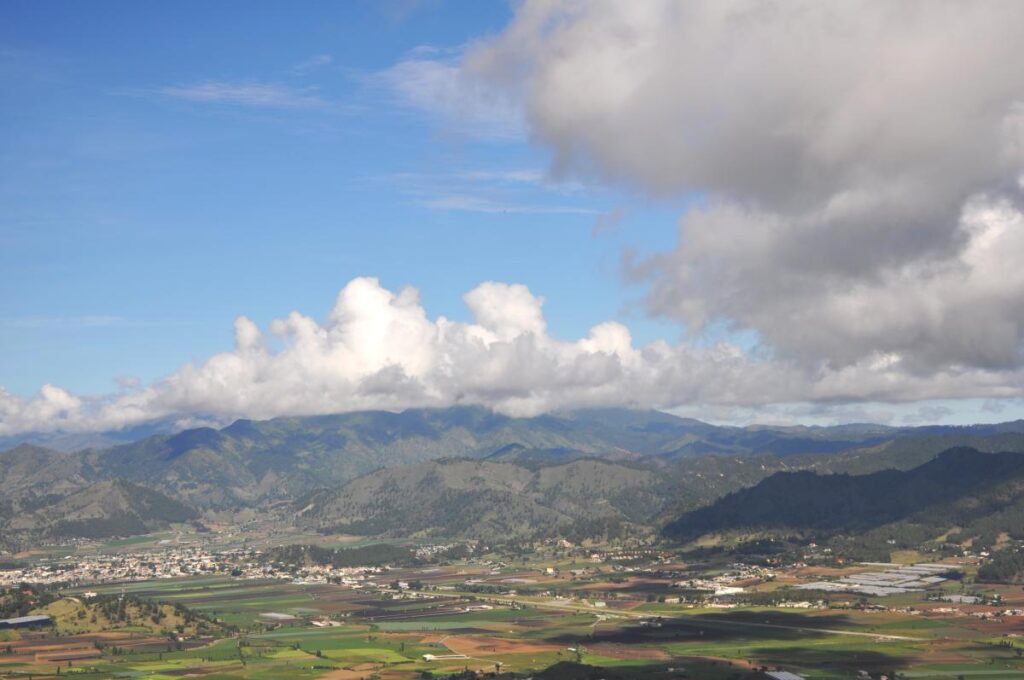
In the middle of the 19th century, there was only a single farmstead on the site of Constanza. And only by the 20th century did around 40 houses and several farms appear here. People grew beans, sweet potatoes, cassava and corn for themselves… This also fed the small amount of livestock.
The population grew slowly because there were practically no roads at that time. The settlement existed as though cut off from the whole world…
Over time, the settlement nevertheless grew. Mills appeared in the valley. Their millstones were turned by horses and mules. And sawmills appeared too.
With the introduction of advanced land-reclamation methods, agriculture began to develop more rapidly. And in the middle of the 20th century, Spanish and Japanese immigrants arrived. They began growing new agricultural crops here. At the same time, livestock production also increased.
They say that trade in Constanza became livelier with the arrival of Lebanese people in the area…
Today’s town bears little resemblance to the old wooden Constanza. Now it is mostly concrete. But the town’s silhouette still delights with roof shapes that are unusual for the rest of the Dominican Republic. Something of the Swiss “chalet” style can still be recognised from a distance…
NOTE: The term “Chalet” was first used as early as the 14th century to describe a farmer’s log house in Switzerland. A chalet has a fairly simple structure and is built from natural materials…
Such houses can be found in the picturesque villages of the Swiss Alps… Traditionally, chalets have a compact floor area, but their high vaulted ceilings create a pleasant feeling of spaciousness. In the main room, there is almost always a fireplace.
The upper floors of a chalet are built from wooden beams. The foundations are usually made of stone — or concrete. In the past, livestock was kept on the lower floor. The warmth rising from below helped to heat the country house…
A characteristic feature of the chalet is its striking, high-pitched roof… Today, the term chalet can mean almost any mountain cottage or house.
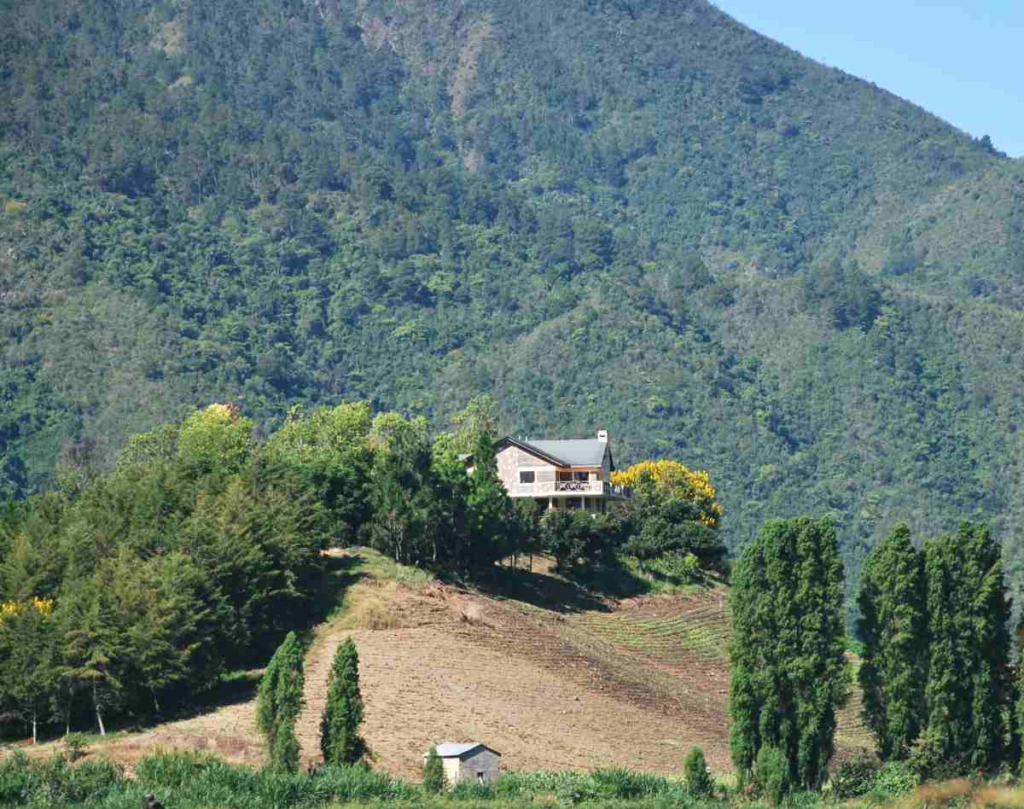
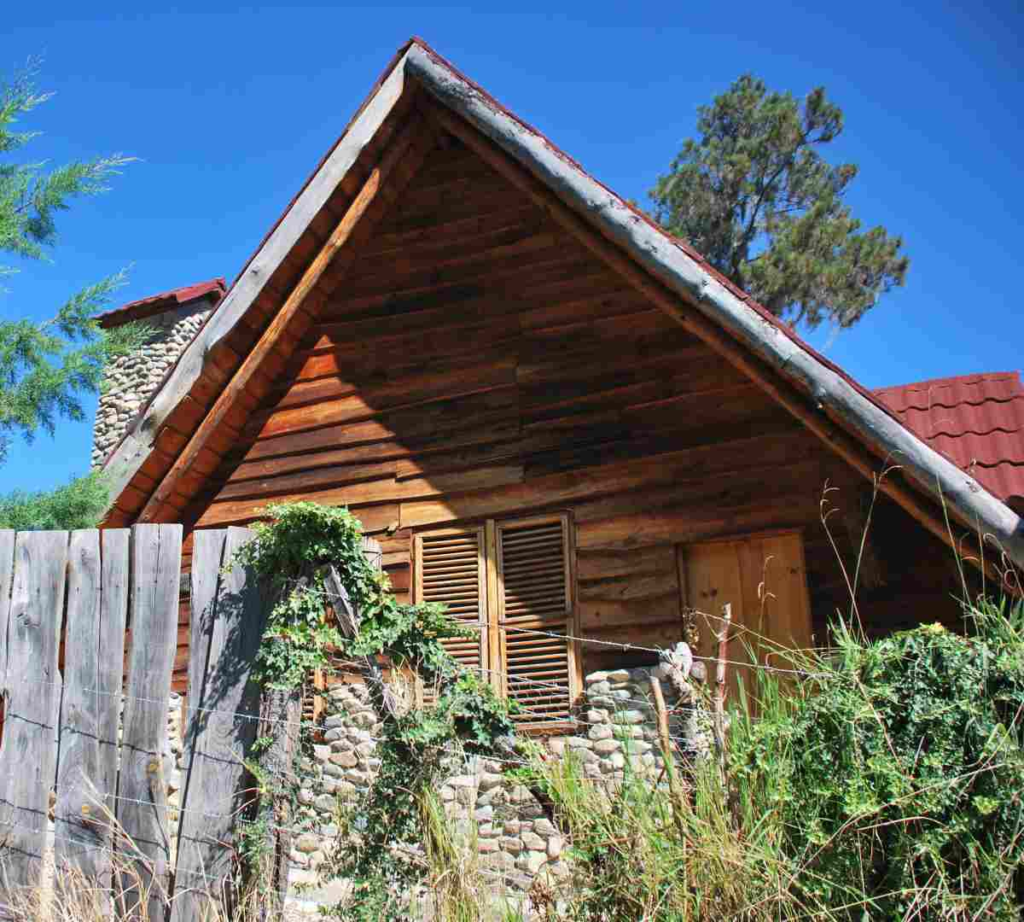
The modern architecture of Constanza is surprisingly elegant in places. There are decorative wrought-iron grilles and fences, red roof tiles, large rusticated stonework, wooden inserts… And, of course, high roofs with chimneys…
For the Dominican Republic as a whole, the “Arab” type of roof is more typical — flat, with raised edges. In essence, it is an artificial container for collecting precious moisture from the sky. This is how roofs are made in hot Eastern countries. In the Dominican Republic, roofs are also flat, but without the useful collection of rainwater…
Compared with the rest of the country, it is comfortably cool here. Many people like to come here in summer specifically to relax in the cool mountain air. And in winter it can become noticeably cold.
Warming oneself in Constanza beside a burning fireplace is a rare and exotic pleasure for the Dominican Republic…
In the 1950s, President Trujillo invited farmers from Japan. Accepting immigrants into the country was Trujillo’s attempt to improve his international image…
NOTE: At first, 17 Japanese families — 120 people — arrived in Constanza. The district two kilometres from the town centre where they settled is still called the Japanese Colony — Colonia Japonesa.
Almost all of them were farmers. The Japanese brought fumigation pumps, bicycles and cultivators with them… And set to work.
They were seen in the fields from sunrise to sunset. Both men and women worked — in large straw hats, with babies on their backs…
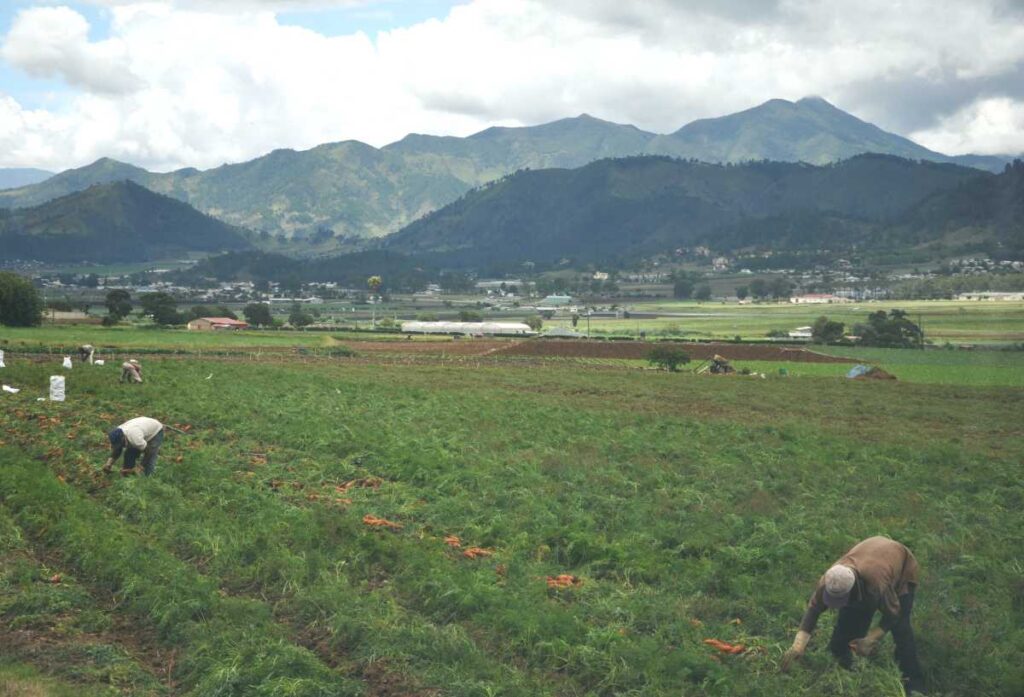
Over time, the Japanese colony grew. They cultivated potatoes, beans and garlic… They introduced and began growing cauliflower, celery, carrots, lettuce and broccoli…
Before the Japanese arrived, celery was very expensive and available only to a select few. Now it can be found in any shop. Everyone can enjoy fresh celery.
It was the Japanese colony that made Constanza famous for its wonderful strawberries and flowers. Today, more than 80% of the vegetables for the entire country are grown here…
Around 1,000 Japanese people live in the Dominican Republic. But only two Japanese families remain in Constanza itself. And there is the architectural complex of the Japanese Club — Club Japonés.
The name “Hungarian Colony” — Colonia Húngara — has also survived historically in the town, although no Hungarians have lived in Constanza for a long time…
Japan and the Dominican Republic seem like very different countries. But they share certain characteristics… These include the daily consumption of rice, a passionate love of baseball and care for the elderly. Especially for members of the family — parents, grandparents, uncles and aunts…
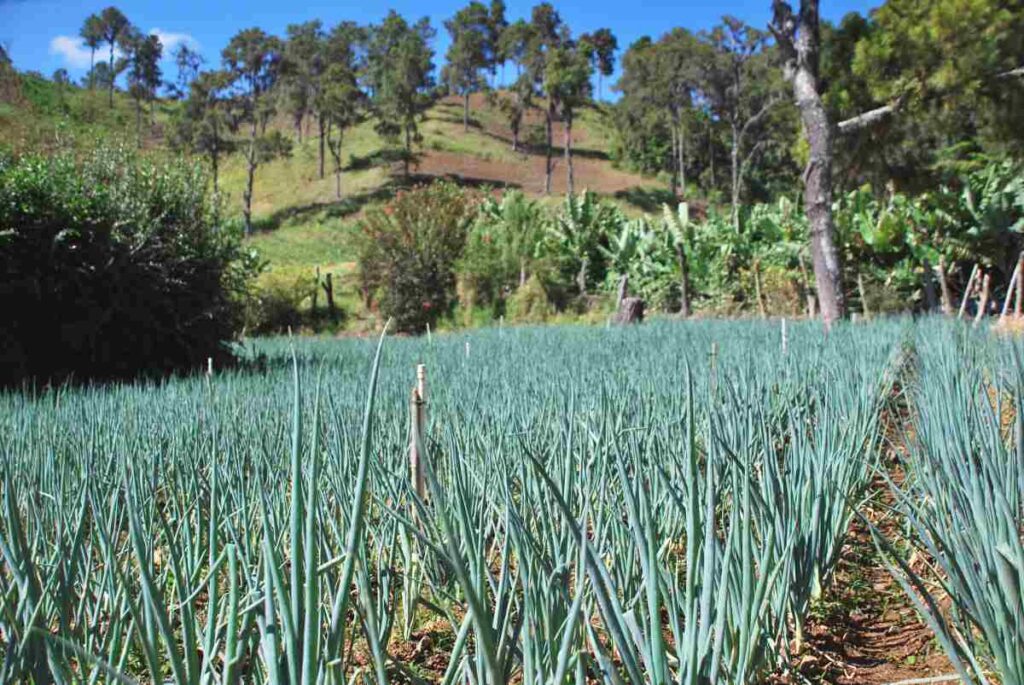
The mild climate and fertile soil make it possible to grow crops typical of temperate regions here. Potatoes, cabbage, onions, lettuce, carrots, garlic, magnificent strawberries and colourful flowers are sent from here directly to the shops and restaurants of the capital.
There is an amusing and colourful detail in the interiors of Constanza. Restaurants are often decorated with garlic woven into decorative braids. People also like to hang such bundles of garlic in their homes.
Vampires are not to blame — there are none here. It is simply because garlic is one of Constanza’s main agricultural treasures.
A LYRICAL DIGRESSION. The small, carefully cultivated agricultural fields of Constanza are charming. They are scattered throughout the valley, across the mountain slopes and terraces…
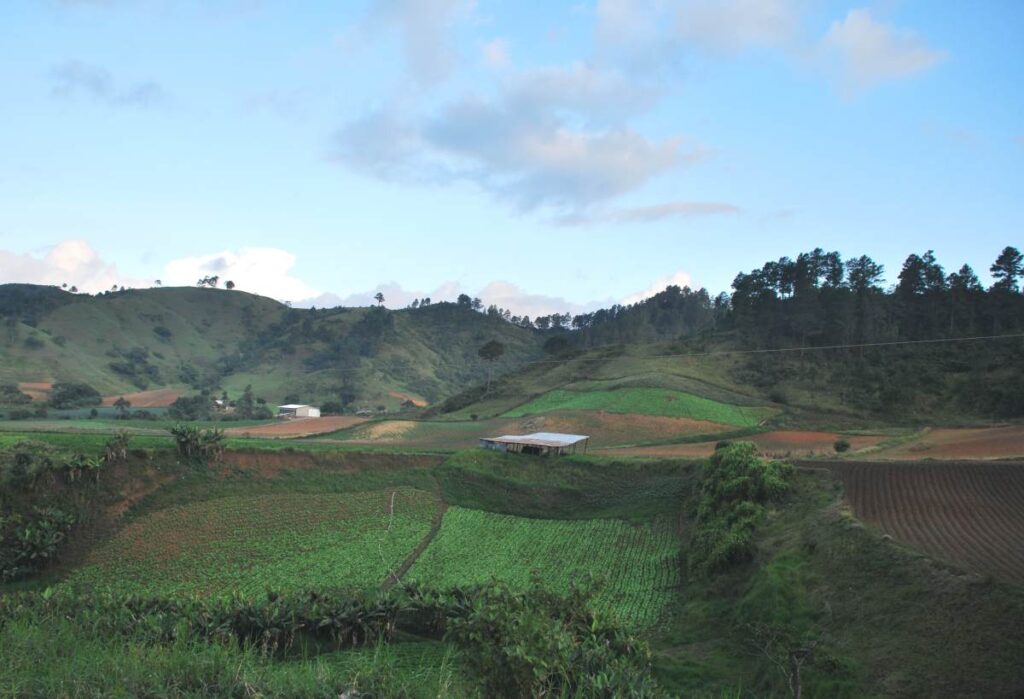
They look like patchwork quilts at an exhibition of decorative art. Different textures of ploughed fields — empty and planted. A wealth of natural colour.
Red-brown earth. And where crops are growing — a whole spectrum of green shades. From soft grassy green to cool pearly tones — the cabbage beds…
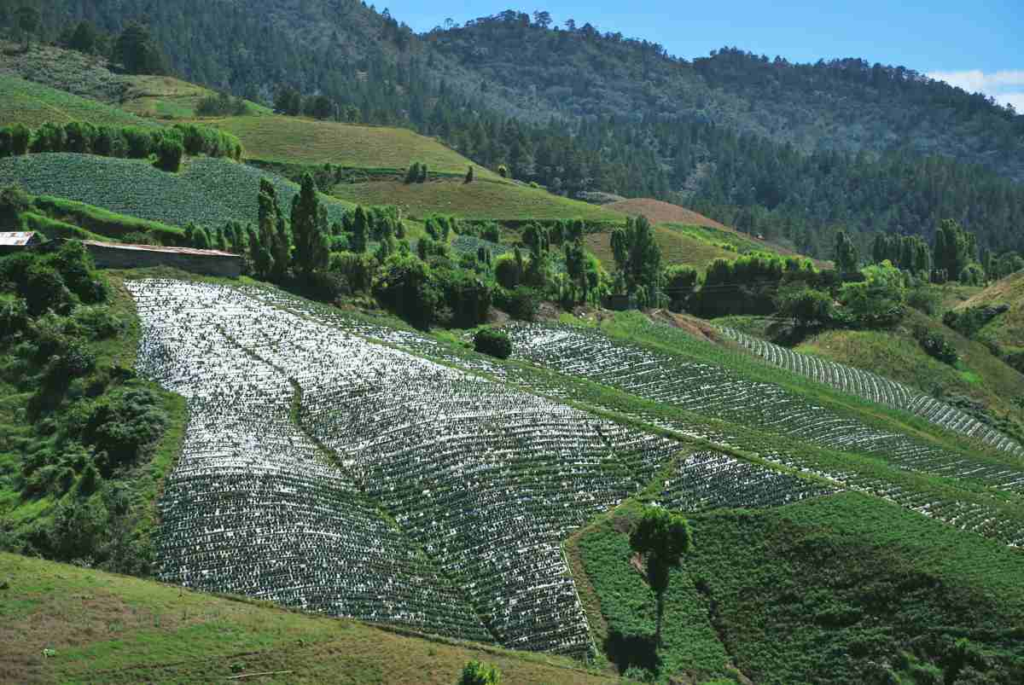
Fields covered with silvery film, with small bushes of young plants sticking out, resemble cheerful little spaceports.
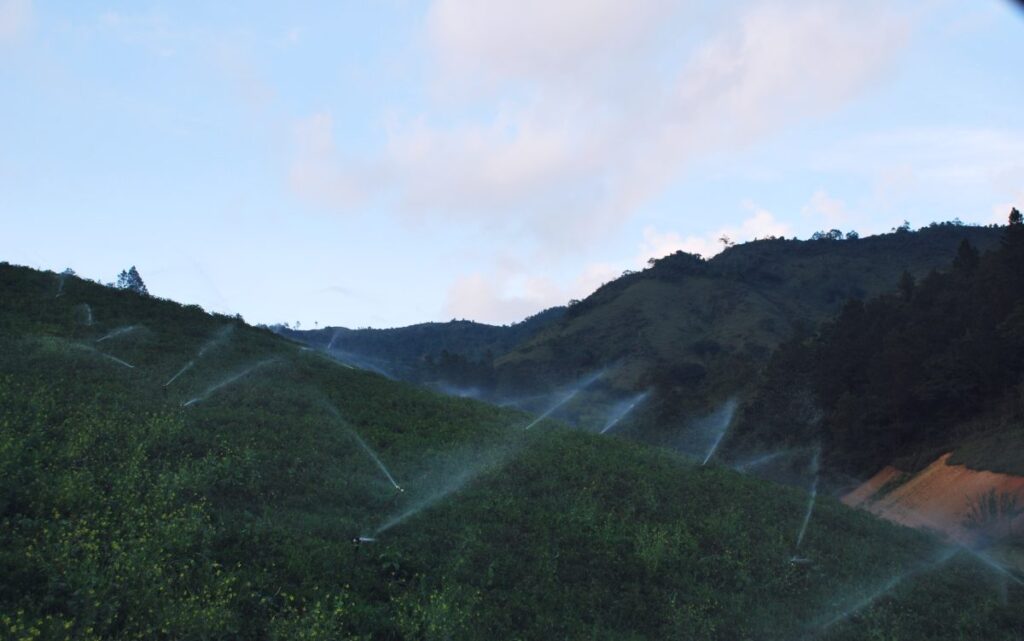
All the crops are equipped with irrigation systems. From time to time, lively, sparkling little fountains begin shooting above the beds…